
The key distinction is simple. Jaw discomfort can be confusing because the joint in front of each ear is small, yet it helps you speak, chew, and open your mouth. The term for that joint is often mixed up with the name for conditions that affect it or the surrounding muscles. Understanding the distinction can make symptoms easier to describe and an evaluation easier to navigate.
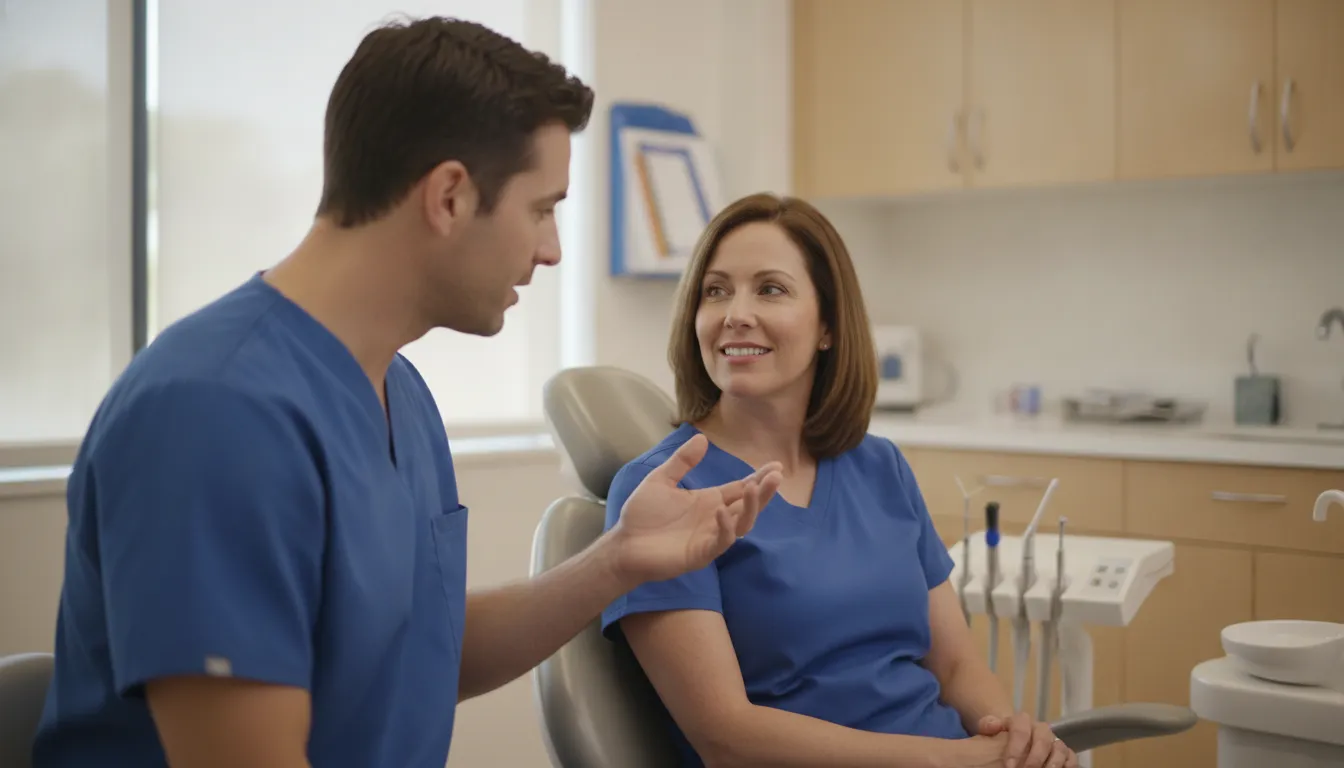
If you are wondering what is TMJ, it is the temporomandibular joint, the paired jaw joint that connects the lower jaw to the skull. TMD refers to disorders involving the joint, chewing muscles, or related headaches, and a symptom does not automatically establish that diagnosis. NIDCR explains the terminology and condition categories.
From clicking or stiffness to tenderness or changes in movement, symptoms can have different contributing factors. Start by looking at how the joint works, then consider what a calm, individualized dental evaluation may help clarify.
What Is TMJ? Start With the Joint, Not the Disorder
What is TMJ? TMJ is the abbreviation for the temporomandibular joint, the jaw joint itself. TMD, or temporomandibular disorder, is the term for disorders that affect the joint, the muscles that move the jaw, or both. Keeping those terms separate makes it easier to describe what you are noticing without turning a sound or sensation into a diagnosis. The National Institute of Dental and Craniofacial Research explains the distinction clearly.
Most people have two temporomandibular joints, one on each side of the jaw. They sit just in front of the ears and work together whenever you open your mouth, close it, speak, chew, or yawn. You can gently locate them by placing your fingers in front of your ears while opening and closing your mouth. Feeling movement there is normal; the joint is active throughout much of the day.
A joint that hinges and slides
The TMJ is often described as a sliding hinge. That comparison is useful, but it is not a complete picture. A simple hinge rotates, while the lower jaw also moves forward, backward, and from side to side. The temporomandibular joint connects the jawbone to the skull and coordinates these movements on both sides.
Inside each joint, the working bone surfaces are covered with cartilage and separated by a small shock-absorbing disk. The disk usually helps the joint move smoothly. This arrangement allows the jaw to combine rotation and sliding rather than relying on one motion alone. The Mayo Clinic describes the TMJ’s sliding-hinge anatomy in similar terms.
Why TMJ and TMD are not interchangeable
TMD is a broad category, not one single condition. NIDCR describes more than 30 conditions involving the jaw joint and the muscles controlling jaw movement. A person may have more than one condition at the same time. Broadly, they can involve:
- Disorders of the joints, including problems involving the disk
- Disorders of the muscles used for chewing
- Headaches associated with a TMD
That range is why a careful description matters. Jaw symptoms can have different explanations, and a term such as TMJ alone does not identify the cause. Understanding the anatomy first provides a clearer foundation for discussing any symptoms and deciding whether an evaluation would be useful.
How Does the Temporomandibular Joint Work?
Answer capsule: The temporomandibular joint is a paired jaw joint that combines hinge and sliding movements, helping you open your mouth, speak, chew, and swallow.
You have two temporomandibular joints, one on each side of your jaw. Each sits just in front of an ear, where you can gently feel movement by placing your fingers in that area while opening and closing your mouth. Together, these joints connect the lower jaw to the skull and coordinate movement on both sides. The National Institute of Dental and Craniofacial Research explains the basic anatomy and function of the TMJ.
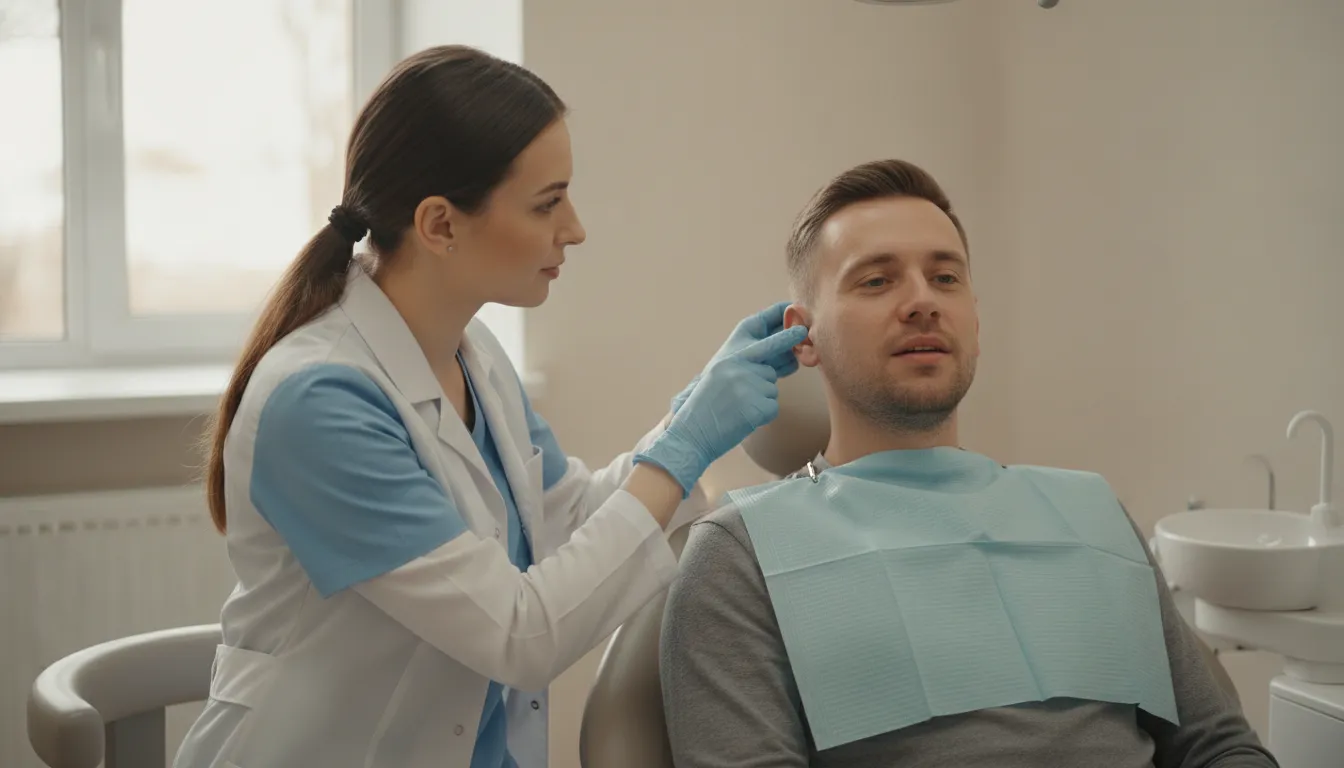
The joint is more than a simple hinge. The rounded end of the lower jaw moves against the base of the skull, and the contacting bone surfaces are covered with cartilage. A small, flexible disk sits between them. This disk helps distribute pressure and supports smoother motion as the jaw rotates and glides. The result is a coordinated movement rather than the lower jaw simply dropping straight down. The Mayo Clinic describes the TMJ as a sliding hinge that connects the jawbone to the skull.
During ordinary movement, the joints and chewing muscles work together to:
- Lower and raise the jaw when you open and close your mouth.
- Move the jaw forward, backward, and slightly from side to side.
- Coordinate the precise motions needed for speaking, chewing, and swallowing.
Understanding normal anatomy also helps clarify an important distinction. TMJ refers to the joint itself, while TMD refers to disorders involving the joint, the chewing muscles, or both. According to NIDCR, TMDs include more than 30 conditions and fall into three broad categories:
- Joint disorders, including problems involving the disk.
- Chewing-muscle disorders, involving the muscles used to move the jaw.
- Headaches associated with TMD.
These categories describe possibilities, not a diagnosis from a symptom or sound alone. A careful evaluation is needed to understand how the jaw is moving and what may be contributing to a concern.
What Symptoms Can Point to a TMD?
Jaw pain is the most useful signal to pay attention to, but no single symptom proves that a temporomandibular disorder is present.
TMD symptoms can involve the jaw joints, the muscles used for chewing, or related areas of the face and head. The National Institute of Dental and Craniofacial Research describes several possible signs, and people may experience more than one at a time. Symptoms can also vary in intensity or come and go, which is one reason an evaluation should consider your history and overall pattern rather than one isolated sensation.
- Pain or tenderness: discomfort in a jaw joint or chewing muscle may spread toward the face, temple, neck, or ear. Chewing or opening wide may make it more noticeable.
- Stiffness or restricted movement: the jaw may feel tight, open less than usual, or occasionally lock while opening or closing.
- Painful sounds: clicking, popping, or grating that occurs with pain or limited movement deserves attention.
- Ear-related symptoms: ringing in the ears, hearing changes, dizziness, or an ache around the ear can occur alongside jaw symptoms.
- Bite changes: you may notice that your upper and lower teeth no longer fit together as they normally do.
Clicking or popping by itself is different from a painful joint sound. According to NIDCR, painless clicking or popping is common and generally does not require treatment. Similarly, a headache or ear symptom can have causes unrelated to the jaw. For context on how these concerns may overlap, review jaw-joint symptoms and headaches, while keeping in mind that online information cannot determine the cause of your symptoms.
Consider arranging a dental evaluation if discomfort is persistent, movement becomes limited, or symptoms interfere with eating, speaking, sleeping, or daily activities. A clinician can listen to what you have noticed, assess jaw movement and tenderness, and decide whether further assessment is appropriate. That process helps separate a possible TMD pattern from other dental, ear, muscle, or nerve-related concerns without assuming that every jaw sound or ache has the same explanation.
What Is TMJ Caused By?
Answer capsule: TMD symptoms often have more than one possible contributor, and the exact cause is frequently unclear. Injury, clenching or grinding, stress, arthritis, and other health factors may play a role, but a symptom does not establish one definite cause.
It is also useful to separate the joint itself from the conditions affecting it. The temporomandibular joint is the structure, while temporomandibular disorders, or TMDs, describe a group of problems involving the joint, the chewing muscles, or both. Because these disorders vary, two people with similar jaw discomfort may have different contributing factors.
Common factors that may contribute
According to the National Institute of Dental and Craniofacial Research, symptoms may begin without an obvious reason. Research suggests that a combination of physical, psychological, and life factors can influence how TMD develops or persists. Possible contributors include:
- Clenching or grinding: Repeated tooth contact can place extra demand on the jaw muscles and joints. This habit is also called bruxism. Learn more about teeth grinding and jaw symptoms.
- Stress and related strain: Stress may coincide with increased clenching, muscle tension, or heightened awareness of pain. It may be one part of the picture rather than a complete explanation.
- Injury: A blow, strain, or other trauma involving the jaw joint can contribute to some TMDs.
- Arthritis and related conditions: Osteoarthritis, rheumatoid arthritis, connective-tissue conditions, fibromyalgia, and sleep disturbances may be associated with jaw symptoms in some people.
What about bite alignment or braces?
A common belief is that a “bad bite” or orthodontic treatment causes TMD. However, NIDCR states that available research does not support that claim. This does not mean bite changes are irrelevant to every person’s experience, but it does mean they should not automatically be presented as the underlying cause.
A careful history and examination can help place symptoms in context without assuming that one factor explains everything. Persistent jaw pain, tenderness, or difficulty moving the jaw deserves individualized attention, especially when the discomfort affects eating or daily activities.
When Should Jaw Symptoms Be Evaluated?
Many TMDs are short-lived, but persistent, sudden, or function-limiting jaw symptoms deserve a thoughtful evaluation rather than a guess about what is causing them.
A jaw sound by itself does not always signal a problem. Clicking or popping without pain or limited movement is common and may not require treatment, according to the National Institute of Dental and Craniofacial Research. The concern is greater when discomfort, tenderness, restricted movement, or difficulty using the jaw accompanies the sound.
Consider contacting a dental professional when symptoms are affecting daily activities, worsening, or failing to settle. An evaluation cannot be replaced by an online symptom list, since similar complaints can have different explanations. It can, however, help clarify what you are noticing and whether additional assessment may be appropriate.
- Seek prompt guidance for sudden or constant symptoms. The Mayo Clinic recommends medical attention for constant jaw pain or tenderness, sudden pain with movement, or tenderness that occurs during jaw movements. These symptoms do not prove a TMD, but they are reasonable reasons to ask for professional guidance.
- Arrange an evaluation if movement is restricted. Difficulty opening or closing the mouth completely, jaw stiffness, or a locking sensation should not be dismissed. This is especially true if the limitation is new or interferes with speaking or chewing. Do not force the jaw through painful movement while waiting to be evaluated.
- Call if chewing has become uncomfortable or difficult. Pain with chewing, concern about a changing bite, or tenderness that makes meals harder can provide useful information for a clinician. Note when the symptom began, which movements trigger it, and whether it is affecting one or both sides.
- Follow up when symptoms persist or recur. Many TMDs resolve in a short time, while some become chronic or long-lasting. Ongoing pain, repeated episodes, or a pattern that is gradually limiting normal jaw use merits an individualized discussion, even if the original symptom seemed mild.
These signs are reasons to seek clarity, not a diagnosis. A calm conversation about your symptoms and history can help determine the next appropriate step.
What Can a Dental Evaluation Clarify in San Diego?
Short answer: A dental evaluation can organize your symptoms, health history, jaw movement, bite, and muscle or joint observations so you can discuss appropriate next steps. It cannot determine the cause from one symptom or one test alone.
At a San Diego dental visit, the conversation may begin with what you have noticed and when it started. Pain while chewing, jaw soreness, headaches, clicking, locking, changes in how your teeth meet, or difficulty opening your mouth can provide useful context. Your health, medications, prior injuries, dental treatment, and habits such as clenching or grinding may also matter. This history helps place a concern in context without assuming that every facial or ear-related symptom comes from the temporomandibular joint.
The clinician may observe how your jaw opens and closes, whether movement is limited, and how your upper and lower teeth come together. They may also note tenderness or tension around the chewing muscles and jaw joints. These observations do not automatically establish TMD. They help determine what findings are present and whether additional assessment would be useful.

Marcos Ortega DDS reports TMJ and bite analysis as part of its diagnostic services. The practice also lists digital radiography and intraoral cameras for diagnosis and patient education. These tools can help the dental team examine structures, document findings, and explain what they see. However, no single image, camera view, or bite observation diagnoses TMD. Interpretation depends on your history, examination, symptoms, and the broader clinical picture. Further assessment may be considered when findings call for it.
Before an appointment, bring a short record rather than trying to label the problem yourself. Consider asking:
- What could my symptoms indicate, and what remains uncertain?
- What did you observe about my jaw movement, muscles, joints, or bite?
- Would imaging or another type of assessment add useful information?
- Should I monitor any changes or seek follow-up if symptoms continue?
For a closer look at next-step planning, read about dental evaluation for TMJ symptoms. An evaluation in Downtown San Diego can provide clearer information while keeping the plan individualized to your findings and goals.
TMJ and TMD Terms Patients Often Hear
Quick answer: TMJ refers to the jaw joint itself, while TMD refers to disorders involving that joint or the muscles used for chewing. The other terms below describe symptoms or contributing patterns, not a diagnosis by themselves.
| Term | Plain-language meaning |
|---|---|
| TMJ | The paired temporomandibular jaw joints. |
| TMD | Disorders involving the jaw joints, chewing muscles, or both. |
TMJ
TMJ stands for temporomandibular joint. You have two of these joints, one on each side of your face, just in front of your ears. Each joint connects the lower jaw to the skull and helps the jaw move for speaking, chewing, and opening.
TMD
TMD stands for temporomandibular disorders. It is an umbrella term for conditions affecting the jaw joints, chewing muscles, or both. Jaw discomfort, stiffness, limited movement, or changes in how the teeth meet may occur with TMD, but one symptom alone does not establish the cause.
Bruxism
Bruxism means clenching or grinding the teeth, often during sleep or periods of concentration and stress. It can place extra strain on the chewing muscles and jaw joints. People who notice stress-related jaw pain may want to mention clenching patterns during an evaluation.
Jaw locking
Jaw locking describes difficulty fully opening or closing the mouth, or an episode in which movement feels stuck. It can be temporary or persistent and may occur with other jaw symptoms. Sudden or ongoing difficulty moving the jaw warrants professional attention rather than self-diagnosis.
Referred pain
Referred pain is discomfort felt in an area that is not the original source. Jaw-related discomfort may be noticed in the face, temple, ear, or neck because nearby muscles and nerves share connected pathways. That pattern can have several explanations, so an evaluation helps clarify what may be contributing.
Have questions about your jaw symptoms? Request a no-pressure dental evaluation in San Diego.
Frequently Asked Questions
Is TMJ the same as TMD?
No. TMJ refers to the temporomandibular joint itself, and you have one on each side of your jaw. TMD refers to disorders involving the jaw joint, the chewing muscles, or both. A symptom near the joint does not by itself identify a specific disorder.
What is TMJ caused by?
There is not always one clear cause. An injury, arthritis, clenching or grinding, stress, and other factors may contribute, while symptoms can also begin without an obvious reason. An evaluation can help place your symptoms and history in context rather than assuming that your bite or one habit explains everything.
Is jaw clicking always a sign of a problem?
No. Clicking or popping without pain or limited jaw movement is common and does not automatically require treatment. Painful sounds, stiffness, restricted movement, locking, or a change in how your teeth meet are reasons to discuss the pattern with a dental professional.
When should I seek an evaluation for jaw symptoms?
Arrange an evaluation for constant or sudden jaw pain or tenderness, pain during jaw movement, or difficulty fully opening or closing your mouth. You should also mention recurring stiffness, locking, or painful clicking. These signs do not establish a diagnosis, but they can help a clinician decide what assessment may be appropriate.
Ready to Discuss Your Jaw Symptoms?
If jaw discomfort, limited movement, or facial symptoms have left you unsure about the next step. A dental evaluation can help clarify what may be contributing and which questions deserve attention. Request a no-pressure evaluation with our San Diego dental team to talk through your concerns and plan an appropriate next step. Contact us to get started.