
Morning jaw stiffness and chronic headaches are common signs that your bite is out of alignment. While these symptoms are often ignored, they can signal a deeper problem with your jaw joints and muscles.
Call (619) 295-4545 today to schedule your free TMJ consultation and find relief from chronic headaches and jaw pain.
An expert TMJ dentist Downtown San Diego can help find out if your chronic pain stems from temporomandibular disorders (TMDs), which cause intense jaw joint problems. About 11 million US adults feel pain in this region, yet many do not realize their symptoms are linked to an issue with their bite. Research from the University of Buffalo shows that TMJ-related headaches are often confused with tension, leading many to treat symptoms rather than the true cause. By focusing on jaw alignment and muscle health, an expert exam can find the source of your facial pain and provide a path toward relief. This specialized care helps you manage jaw tension and grinding to stop the cycle of daily headaches that can interfere with your busy life.
If you are tired of living with daily jaw pain or facial tension, finding the right care is the first step toward comfort. We will begin by exploring the basics of these complex conditions in our next section, Understanding TMJ and TMD: What Downtown San Diego Patients Should Know. The path begins with:
Tmj Dentist Downtown San Diego: How Does TMJ Cause Chronic Tension Headaches? What Downtown San Diego Patients Should Know
A TMJ dentist Downtown San Diego diagnoses and treats temporomandibular disorders that cause jaw pain. Headaches, and facial tension through non-surgical solutions like custom oral appliances and bite analysis.
Your jaw is a complex system of bones, muscles, and soft tissues. Most people have two joints that control jaw movement. These are the temporomandibular joints, or TMJ. You have one on each side of your face. You can feel them by placing your fingers just in front of your ears and opening your mouth. These joints connect the lower jaw bone to the skull. When these joints or the muscles around them do not work right, it leads to pain and trouble.
These health issues are called temporomandibular disorders, or TMD. A recent study found that about 11 to 12 million adults in the United States have pain in this area. TMD is not just one problem. It is a group of more than 30 types that cause jaw pain and loss of function. These issues can affect the joint, the chewing muscles, or both. This can make simple acts like eating, talking, or even smiling very hard for many people in our city.
The Mechanics of Your Jaw Movement
The TMJ acts like a sliding hinge. This joint is unique because it moves in two distinct ways. First, it lets your jaw swing open and shut like a door. Second, it lets the jaw slide forward and side to side. This complex range of motion is what lets you chew food, speak clearly, and yawn. The joint has a small pad of soft tissue, called a disc, that helps the movement stay smooth. This disc absorbs shock and keeps the bones from rubbing together.
When the system works well, you do not even think about how your jaw moves. But for busy people in Downtown San Diego, stress can take a toll on these delicate joints. High-pressure jobs and fast-paced urban lives often lead to jaw clenching or teeth grinding at night. Over time, this extra strain can wear down the disc or the joint itself. You might feel stiffness or a sense that your jaw is stuck. If you notice these signs, seeing a TMJ dentist in Downtown San Diego is a good first step toward relief.
Who Is Most Affected by TMD?
TMD does not affect everyone the same way. Research from the NIDCR shows it is twice as common in women as in men. Women between the ages of 35 and 44 are at the highest risk. Experts split these 30-plus types into three main groups based on where the pain starts. Some involve the jaw joints directly, such as bone issues or disc slips. Others focus on the muscles used for chewing, which can get tired, sore, or tight from stress.
The third type of TMD causes headaches that are linked to jaw pain. Many people have signs from more than one group at the same time. This can make finding the right care a bit of a challenge. Many patients find that their signs come and go over time. For some, the pain starts fast and goes away on its own after a few weeks. For others, the pain becomes a long-term problem that lasts for many months or years.
An expert exam is the best way to find out which type of TMD you might have. Knowing how your jaw works and the risks helps you make better choices for your health. This is why a full check of your bite and jaw is so important. Getting the right facts helps you find a clear path to a life without jaw pain.
How Does TMJ Cause Chronic Tension Headaches and Facial Pain?
TMJ disorders trigger chronic tension headaches when jaw misalignment irritates the trigeminal nerve, sending pain signals that the brain interprets as head pain rather than jaw pain.
Many people who suffer from daily headaches never think about their jaw. They reach for pain relievers and assume stress is the cause. But a growing body of research shows that the jaw joint can be a hidden source of chronic head pain. Understanding this connection can help you find real relief.
Your jaw muscles are among the most active in your body. They work every time you talk, chew, swallow, or yawn. When these muscles are tight or overworked from clenching or grinding, the tension spreads upward through your face and into your head. This can trigger headache pain that mimics tension headaches. A study from the University of Buffalo School of Dental Medicine found that TMJ-related headaches are often misdiagnosed as regular tension headaches. This means many people treat the wrong problem for years.
How Jaw Misalignment Triggers Head Pain
The trigeminal nerve is the main nerve pathway connecting your jaw to your brain. When your jaw is out of alignment, this nerve sends pain signals to the brain. The brain interprets these signals as head pain, even though the problem starts in your jaw. This process is called referred pain. It is why a TMJ issue can feel like a bad headache in your temples or behind your eyes.
The NIDCR notes that pain from TMD can spread to the face or neck. It can also cause ringing in the ears, hearing loss, or dizziness. Many patients report that their headaches start behind their eyes and spread across their forehead. Others feel a dull ache at the base of their skull that does not go away. These patterns are very common among people with untreated TMJ problems.
The Bruxism Connection
Bruxism is the medical term for teeth grinding and clenching. Many people do it at night without even knowing. The force from grinding can be many times stronger than normal chewing pressure. This constant strain wears down your teeth, tightens your jaw muscles, and triggers morning headaches. If you wake up with a sore jaw or a dull headache, nighttime grinding may be the cause.
Stress plays a big role in both bruxism and TMD. Busy professionals in Downtown San Diego often carry tension in their jaw without realizing it. Over time, this becomes a cycle: stress causes clenching, clenching causes jaw pain, and jaw pain causes more stress. Breaking this cycle requires treatment that addresses both the physical and stress-related aspects of the condition.
Comorbidities: TMD Does Not Happen Alone
Research shows that TMD often occurs alongside other health conditions. These include back pain, sleep problems, fibromyalgia, and irritable bowel syndrome. The NIDCR reports that TMDs can occur alone or at the same time as these other medical conditions. This overlap makes diagnosis challenging but also reinforces the importance of seeing a specialist who can connect the dots.
The three main classes of TMD, as defined by the NIDCR, include joint disorders, muscle disorders, and headaches associated with TMD. The third category is especially relevant for people who suffer from chronic tension headaches. If your headaches have not responded to typical treatments, a TMJ evaluation could provide the answers you have been looking for.
What Are the Signs You Need a TMJ Dentist in Downtown San Diego?
Common signs of TMJ disorders include jaw pain or stiffness, clicking or popping sounds, chronic morning headaches. Facial pain, ringing in the ears, and changes in how your teeth fit together when biting.
Jaw pain can feel heavy and hard to handle. You might wake up with a sore face or feel a sharp ache while you eat. Many people in San Diego live with these pains for a long time. They may not know that a dentist can help. If you have several signs at once, it is time to look closer at your health.
Common Jaw and Facial Symptoms
The most common sign of a TMJ problem is pain in the jaw joint or chewing muscles. This pain often moves around. It can spread through your face or down into your neck. You might feel a dull ache in your head that feels like a bad headache.
Some people also notice ringing in their ears or feel a bit dizzy. The National Institute of Dental and Craniofacial Research says these signs can point to a jaw issue. While some cases go away on their own, long term pain can make it hard to get through the day. For those who work in Downtown San Diego, this can be a big drain on your mood and comfort.
Joint Sounds and Jaw Stiffness
You might hear a clicking or popping sound when you open your mouth wide. This can happen when you yawn or chew tough food. It is good to know that sounds without pain are common and usually normal. Most people do not need help if the jaw just makes noise.
But stiffness can be a bigger worry. You may feel like your jaw is stuck or heavy when you wake up. In some cases, the jaw might lock in one place. This can make it hard to brush your teeth or talk. Restorative dentistry options can help address tooth damage caused by chronic grinding. If your jaw feels tight every day, it is a smart move to see a dentist. A TMJ dentist in Downtown San Diego can check how your joints move and look for signs of wear.
Changes in Your Bite
Have you felt that your teeth do not fit together the way they used to? A change in your bite is a key sign of a jaw issue. Your top and bottom teeth should meet in a smooth, easy way. When they do not, it can put extra stress on your jaw and face.
Finding the cause of these signs is not always easy. A full exam is the best way to find out what is wrong. Dr. Ortega has more than 34 years of work in San Diego. He looks at your teeth and joints with great care. He wants to find the best path for your care. Learn more about treating bite problems in San Diego. If you worry about your jaw, a free meeting can help you find the right path.
How Dr. Marcos Ortega Diagnoses TMJ Disorders: Comprehensive Bite Analysis
Dr. Marcos Ortega diagnoses TMJ disorders through digital imaging, bite analysis, symptom review, and individualized treatment planning to pinpoint the source of jaw pain and headaches.
Diagnosing TMJ disorders requires a careful and systematic approach. There is no single test that can identify all types of TMD. The NIDCR confirms that there is no widely accepted standard test available to diagnose TMDs. This makes the skill and experience of your dentist critical to getting the right answers.
Dr. Marcos Ortega begins each TMJ evaluation with a thorough review of your symptoms and medical history. He asks about your pain patterns, your daily habits, and any stress factors that might contribute to jaw tension. This conversation helps him understand the full picture of your condition. He knows that TMJ pain often has both physical and lifestyle components that need to be addressed together.
Digital Imaging and Bite Analysis
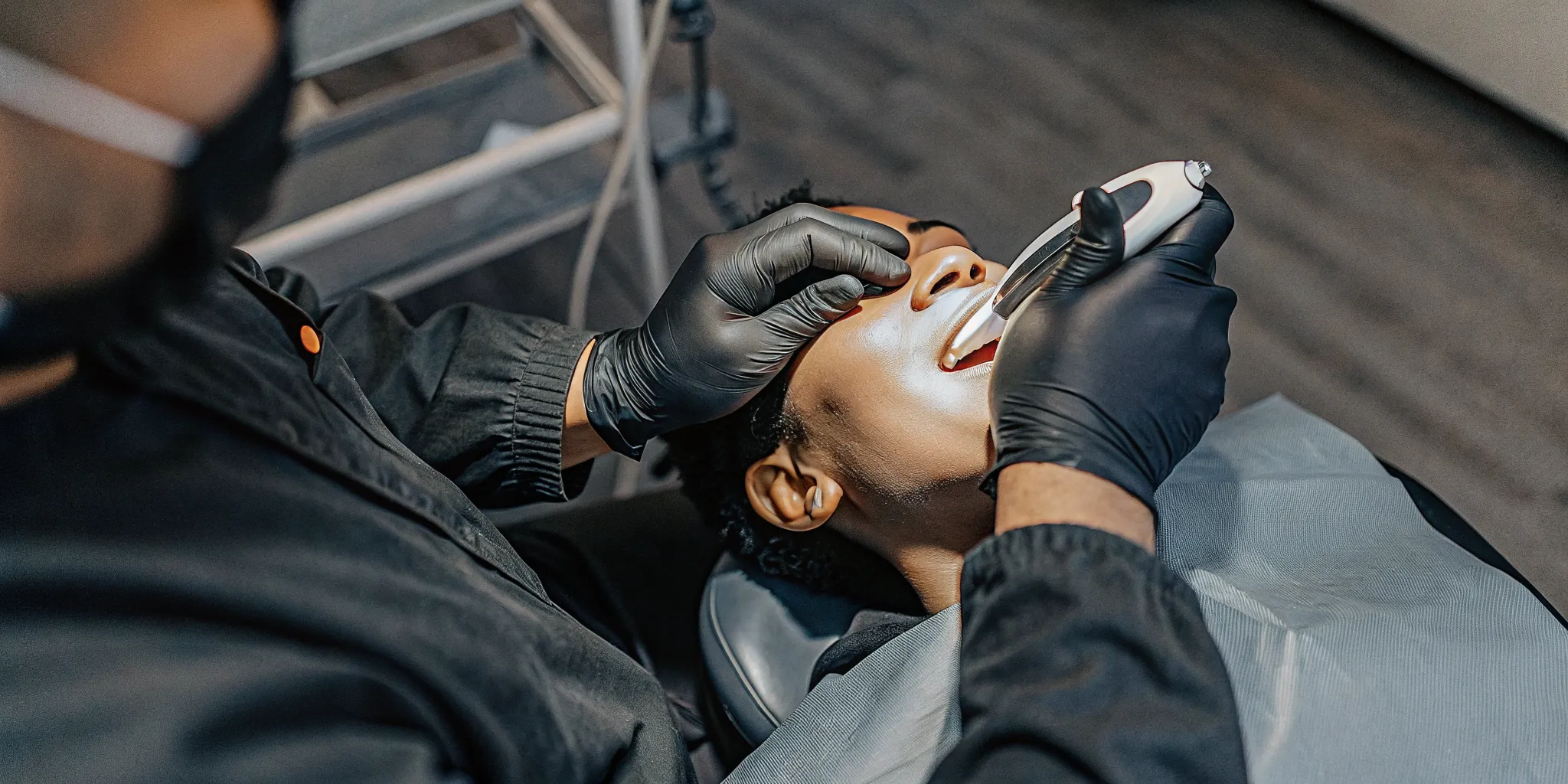
Modern diagnostic tools allow Dr. Ortega to see exactly what is happening inside your jaw joint. Digital X-rays provide clear images with up to 70 percent less radiation than traditional film X-rays. These images reveal the position of your jaw joint, the health of your teeth, and any signs of wear from grinding. Intraoral cameras give you a real-time view of your mouth so you can see what the doctor sees.
Bite analysis is a core part of the TMJ evaluation. Dr. Ortega examines how your upper and lower teeth come together when you close your mouth. A change in how the teeth fit together can be a sign of a temporomandibular disorder. He also checks for signs of tooth wear, which can indicate chronic grinding or clenching.
Individualized Treatment Planning
After gathering all the data, Dr. Ortega creates a personalized treatment plan based on your specific needs. Because the causes and symptoms of TMD vary so much between patients, a one-size-fits-all approach does not work. The practice emphasizes understanding patient needs through advanced diagnostics and individualized treatment planning. This means your care plan is built around your unique jaw structure, pain patterns, and health goals.
Comprehensive care under one roof is one of the advantages of choosing Marcos Ortega DDS. You do not need to visit multiple specialists for diagnosis and treatment. Everything from the initial exam to the final treatment can be handled at the same office. This saves time and ensures that every part of your care is coordinated by one team.
If you want to learn more about how a comprehensive bite analysis works. Read more about bite correction and TMJ care from an experienced TMJ dentist who has been helping San Diego patients for decades.
How Does Custom Oral Appliance Therapy Relieve TMJ Pain?
Custom oral appliance therapy uses a medical-grade device worn during sleep to prevent grinding. Reposition the jaw, reduce muscle tension, and allow the TMJ to heal without surgery or medication.
Most TMJ disorders can be treated without surgery. Non-surgical options focus on reducing jaw tension, protecting your teeth, and restoring comfortable jaw function. Custom oral appliance therapy is one of the most effective non-surgical treatments available for TMJ-related pain.
A custom oral appliance is a small device made from medical-grade materials that fits over your teeth. You wear it while you sleep to prevent grinding and clenching. The appliance holds your jaw in a position that reduces muscle tension and takes pressure off the TMJ. This helps your jaw muscles relax and allows the joint to heal from daily strain.
Below is a comparison of common TMJ treatment approaches to help you understand your options:
| Treatment Option | Best For | Invasiveness | Typical Timeline |
|---|---|---|---|
| Custom oral appliance therapy | Chronic grinding, morning headaches, bite misalignment | Non-invasive | 2-4 weeks to noticeable relief |
| Over-the-counter night guard | Mild occasional grinding | Non-invasive | Variable, less effective |
| Physical therapy with stretching | Muscle tension without joint damage | Non-invasive | 4-8 weeks |
| Oral conscious sedation with appliances | High anxiety patients with severe grinding | Non-invasive | Varies by case |
How Oral Appliance Therapy Works
The first step is getting a precise fit. Dr. Ortega takes digital impressions of your teeth to create a custom appliance that fits perfectly. Unlike over-the-counter night guards, a custom appliance is designed specifically for your bite pattern. It distributes pressure evenly across your teeth and prevents the muscle overactivity that causes morning headaches.
For patients with bruxism, the appliance acts as a protective barrier. The force of grinding can be up to 250 pounds of pressure per square inch. Over time, this wears down tooth enamel and can lead to cracked teeth, gum recession, and jaw pain. The appliance absorbs this force and protects your teeth from damage while your jaw muscles learn to relax.
Sedation Dentistry for Anxious TMJ Patients
Many people with TMJ disorders also experience dental anxiety. The stress of a dental visit can make jaw tension worse. Dr. Ortega is DOCS-certified in oral conscious sedation, which allows him to provide gentle, anxiety-free care. Patients can remain relaxed throughout their exam and treatment. This is especially important for those whose TMJ symptoms are tied to stress and muscle tension.
TMJ appliances and sleep apnea and snoring solutions are among the restorative and specialized offerings at the practice. Dr. Ortega can recommend the right type of appliance based on your specific symptoms. Some appliances are designed to reposition the jaw forward to open the airway, which also benefits patients with sleep-disordered breathing.
What to Expect From Your Treatment
Many TMDs are self-limiting and last only a short time, but some become chronic. Early treatment improves your chances of avoiding long-term pain. Most patients notice improvement within a few weeks of starting appliance therapy. The key is consistency: wearing the appliance as directed and following up with Dr. Ortega to ensure the fit and function remain optimal.
- Schedule a free consultation. Call (619) 295-4545 or book online to start your TMJ evaluation.
- Complete a comprehensive exam. Dr. Ortega reviews your symptoms, takes digital X-rays, and analyzes your bite to identify the source of your pain.
- Receive your custom treatment plan. Based on your exam, Dr. Ortega recommends the most effective non-surgical approach for your condition.
- Get fitted for a custom oral appliance. Digital impressions create a device tailored to your bite pattern.
- Follow up and adjust. After wearing your appliance, you return for a visit to ensure proper fit. Most patients feel relief within weeks.
- Monitor your progress. Regular follow-up visits ensure your appliance continues to provide optimal relief as your jaw heals and your bite stabilizes.
- Explore additional therapies if needed. Some patients benefit from combining appliance therapy with stress management or physical therapy for faster results.
- Maintain your long-term results. Once your symptoms are under control, periodic checkups help prevent TMJ symptoms from returning.
If you have been putting off treatment because you worry about surgery, take comfort in knowing that non-surgical options exist. A free consultation can help you understand which approach is right for your specific condition.
Why Do Downtown San Diego Patients Trust Marcos Ortega DDS for TMJ Care?
With 34 years of service in Hillcrest and Downtown San Diego, DOCS-certified sedation, AACD membership. And over 224 five-star reviews, Marcos Ortega DDS is a trusted provider of TMJ care.
Finding a reliable TMJ dentist in Downtown San Diego requires looking for skill and a focus on patient comfort. Dr. Marcos Ortega has served the San Diego area since 1986. With more than 34 years of local work, he helps people in Hillcrest, Downtown, Mission Hills, and Banker’s Hill find relief from jaw pain. His office at 306 Walnut Ave Ste 25 in Hillcrest offers a calm setting just minutes from the city center. Patients also enjoy free parking, which is a rare plus in this busy part of town.
Advanced Training and Local Expertise
Dr. Ortega is a graduate of UCSF and brings strong clinical skills to every case. He is a member of the American Academy of Cosmetic Dentistry (AACD). He also holds a certificate from the Doctors for Oral Conscious Sedation (DOCS). This background helps him provide full care for complex bite issues. Many people with jaw joint problems also feel high anxiety about dental work. His training in sedation helps these patients get care without extra stress. You can learn more about his comprehensive dental and TMJ services during an office visit.
Focus on Comfort and New Technology
The practice uses new tools to make your visit fast and easy. For example, digital X-rays provide clear images while using up to 70 percent less radiation than old films. The office also uses The Wand and other advanced patient comfort technologies to help with numbing. This tool gives medicine with more precision and less pain than a standard needle. This focus on tools helps create a stress-free dental environment. According to the National Institute of Dental and Craniofacial Research, TMJ disorders can involve the joints, chewing muscles, or related headaches. Dr. Ortega uses these tools to find the cause of your pain.
A History of High Patient Praise
People in San Diego give the practice high marks for both skill and kindness. The office has a 5.0-star rating based on over 224 reviews. Dr. Ortega balances clinical authority with a warm, patient-centered way of work. This reputation has also earned the practice the Dental Warranty Corp seal of approval. If you are looking for an experienced TMJ dentist, you can start with a free consultation. This first visit is valued at $300 and covers TMJ or sedation needs. It is a no-pressure way to learn about your care and meet the team.
Call (619) 295-4545 or book your free consultation online to discuss your TMJ symptoms and start your journey toward headache relief today.
Frequently Asked Questions
Can a dentist help with TMJ headaches?
Yes. Specialized dentists can find the source of jaw pain and tension. Many people mistake jaw issues for simple tension headaches. According to the National Institute of Dental and Craniofacial Research, these disorders affect about 11 million adults in the United States. A dentist can check your bite to see if your jaw joint causes your head pain. They often use non-surgical tools like mouth guards to help you feel better.
What does a TMJ dentist in Downtown San Diego do?
A TMJ dentist looks at how your jaw joints and muscles work together. They search for signs of teeth grinding or a bad bite that might cause pain. Dr. Marcos Ortega has over 34 years of experience helping patients in Hillcrest and Downtown San Diego. He uses special tests to check your jaw movement and bite alignment. Most care plans use non-surgical tools to relax your muscles and stop the pain without the need for surgery.
Are there non-surgical treatments for TMJ in San Diego?
Yes. Most patients get relief through non-surgical care. Common options include custom oral appliances that you wear while you sleep. These guards keep your teeth from grinding and help your jaw muscles relax. Dr. Ortega also offers sedation options to help anxious patients stay calm during their dental exams. Most jaw pain is self-limiting and gets better with conservative care. You can start with a free consultation to find the best plan for your needs.
How do I find a top-rated TMJ dentist in Downtown San Diego?
Look for a dentist with deep experience and a focus on patient comfort. You should choose a provider who has served the local area for many years. Dr. Marcos Ortega has worked in San Diego for more than three decades. It is also wise to find a dentist with advanced training in sedation and cosmetic care. This helps ensure your treatment is both effective and stress-free. Checking patient reviews can also show you how the office treats people with jaw pain.
Ready to find relief from TMJ pain and headaches in San Diego?
Leaving jaw pain alone leads to tooth wear and sleep issues that get worse each week if you do not seek help from a dentist. Starting your care now helps you find the cause of tension and protect your teeth from more harm before the joint becomes harder to fix. Taking the first step today ensures better comfort and stops daily headaches so that you can enjoy your life in San Diego without constant pain.
Ready to feel better? Call (619) 295-4545 to schedule a free TMJ consultation at our office so you can start your path to a pain-free smile today. We look forward to seeing you at our San Diego practice.