
Can dental implants get cavities? No. An implant and its replacement tooth are made from materials that do not decay like natural tooth enamel. But that does not mean an implant is maintenance-free: plaque can collect around the restoration, and the gum and bone that support it still need attention. This guide explains what can and cannot happen, how to care for an implant at home, and when to ask a dental professional for an evaluation.
Why can’t an implant get a cavity?
An implant is not a natural tooth. The materials used for its parts do not have the living enamel and dentin that cavity-causing decay damages.
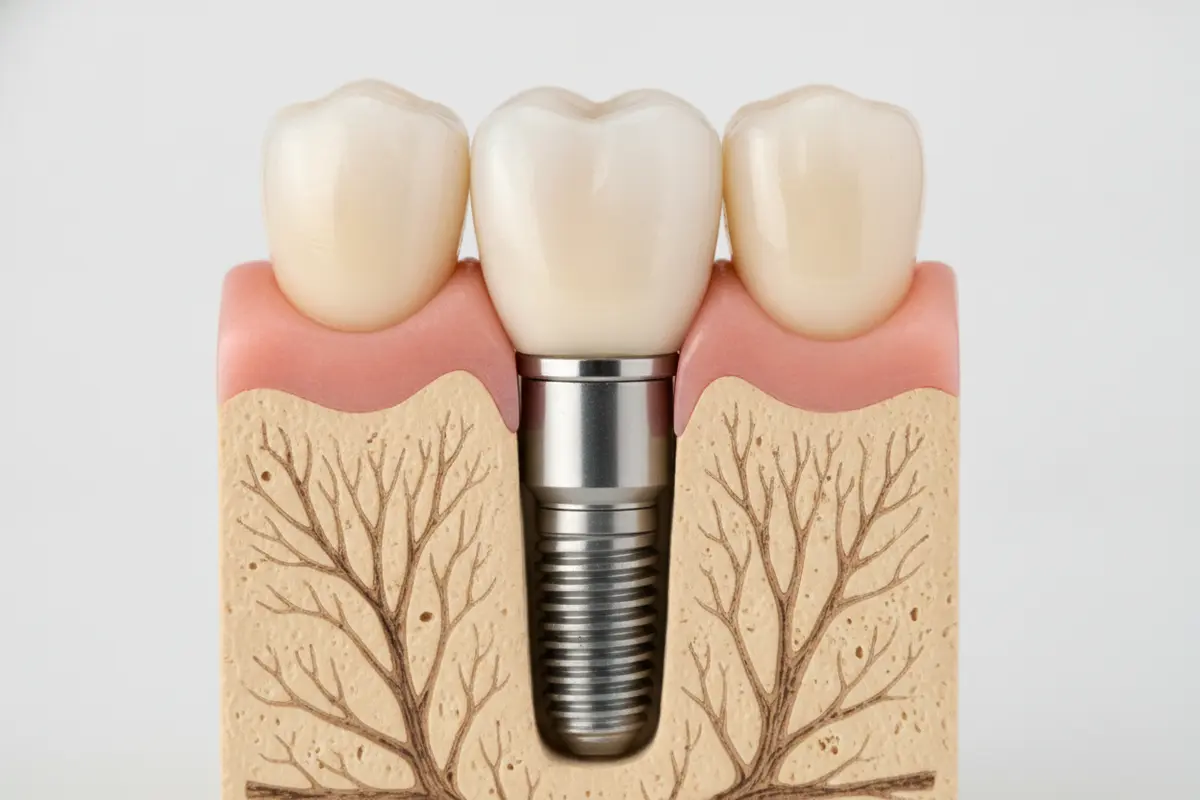
A natural tooth has an outer enamel layer and inner structures. When acids produced by mouth bacteria act on tooth surfaces over time, decay can develop and form a cavity. A dental implant is different: a small implant fixture is placed in the jawbone, an abutment connects it to the visible replacement, and a crown or other restoration replaces the visible tooth. The fixture and restoration are made of dental materials, not natural tooth tissue.
So, strictly speaking, a cavity cannot form in the implant fixture or implant crown. This is the direct answer to “can dental implants get cavities?” However, the parts around an implant are living tissue. Natural teeth nearby can still get cavities, and the gums around an implant can become inflamed if plaque builds up. The bone and gum are important to the implant’s support, so daily cleaning and professional follow-up still matter.
The American Dental Association offers patient information about oral health and dental care. Your own dentist can explain how general home-care guidance applies to your implant, restoration, and other teeth.
What can happen around an implant instead?
Although the implant itself cannot decay, the tissue around it and the restoration’s fit and condition deserve routine attention.
Plaque is a sticky film of bacteria that can collect at the gumline and between teeth. If it is not removed regularly, gum tissue around an implant may become irritated or inflamed. Dental professionals may use the term peri-implant mucositis for inflammation limited to the soft tissue around an implant. In some cases, inflammation can involve the supporting bone; this is called peri-implantitis. Only a dental professional can evaluate what is happening and recommend care.
It is also possible for a restoration to chip, loosen, wear, or need adjustment. These are not cavities, but they can affect comfort or function and should be checked. A natural tooth next to an implant can still develop decay, particularly around a filling or near the gumline. Regular examinations help your dental team assess the implant, nearby teeth, and surrounding tissues together.
- Implant fixture: The part placed in the jawbone cannot develop tooth decay, but its support should be monitored.
- Abutment: The connector does not get a cavity, though it and the areas around it need to be kept clean and checked.
- Implant crown: The restoration itself does not decay, but it may collect plaque or become damaged or loose.
- Natural teeth and gums: These remain vulnerable to their own oral health problems and need ongoing care.
How do you clean a dental implant at home?
Clean the implant restoration and the gumline every day, just as part of a complete oral hygiene routine; follow any specific instructions your dental team gives you.
Implant care is not complicated, but a consistent routine matters. Brush twice a day with a soft-bristled toothbrush, taking care to clean all sides of the crown and gently along the gumline. Use a fluoride toothpaste unless your dental professional has recommended something different for you. Fluoride helps protect natural teeth around the implant, even though it does not prevent a cavity in the implant itself.
Clean between teeth daily. Depending on the shape of your restoration and the spaces beneath it, your dentist or hygienist may suggest floss, an interdental brush, or another tool. Ask for a demonstration if you are unsure how to reach an area without hurting your gums or damaging the restoration. Some implant designs, including bridges supported by implants, may need a particular approach.
- Brush gently along the gumline and around the full visible surface of the implant crown.
- Clean between the implant and neighboring teeth, and beneath the restoration if your dental team instructs you to do so.
- Brush and clean all natural teeth too; an implant does not protect nearby teeth from decay.
- Use any additional cleaning aids only as directed, and ask your clinician to check your technique at a visit.
Do not use a sharp object to scrape the implant or force a cleaning tool into a tight space. If cleaning causes pain or persistent bleeding, ask a dentist or hygienist for advice rather than stopping all cleaning or trying to diagnose the cause yourself. For more on implant home care, see the practice’s guide to cleaning dental implants.

What can affect the care plan for an implant?
Implants share basic cleaning needs, but your restoration, health history, and ability to clean each area can shape the maintenance plan.
There is no single home-care tool or visit schedule that is right for everyone. A single implant crown may be easy to reach with a regular toothbrush and floss, while a bridge or a restoration with a space beneath it may need an additional cleaning aid. The shape and position of the restoration also affect how well you can reach the gumline. Ask your dentist or hygienist to look at the specific spaces and show you a practical method rather than buying specialized products without guidance.
Your overall oral health matters too. A history of gum problems, changes in general health, a dry mouth, or difficulty using a toothbrush can be useful information for your dental team. These details do not automatically mean an implant will have a problem, but they can help the clinician recommend a routine that fits your needs. If mobility or dexterity changes, ask whether a different brush handle or cleaning aid could make daily care easier.
- Ask which areas around your restoration need extra attention.
- Bring your current brush, floss, or interdental cleaner to an appointment if you want a technique check.
- Tell the dental team if a tool is uncomfortable or hard to use; do not force it beneath the restoration.
- Let the team know about new symptoms or health changes that may affect your mouth or daily routine.
Care advice can change after an implant crown is adjusted, replaced, or connected to a different restoration. Ask whether your cleaning technique should change too. Keeping instructions specific to your own restoration can make the routine more effective and reduce guesswork.
A short written reminder from your dental team can help you repeat the recommended steps at home, especially if the restoration is difficult to reach.
How is implant maintenance different from care for natural teeth?
The daily basics are similar, but an implant does not respond to decay in the same way as a natural tooth, and its surrounding tissues need their own assessment.
Both natural teeth and implant restorations benefit from brushing, cleaning between teeth, and regular dental visits. The key difference is what can be affected: natural tooth structure may decay, while implant components cannot. The gum and bone around an implant can still be affected by inflammation, and a crown can have a mechanical problem. This is why “it cannot get a cavity” should not be mistaken for “it does not need care.”
- Natural tooth: Can get a cavity. Care focuses on decay prevention, gum health, and routine examination.
- Implant crown or fixture: Cannot get a cavity. Care focuses on plaque removal, restoration condition, and surrounding tissue health.
- Gum and bone around an implant: Cannot get a cavity, but can develop other problems. Care focuses on home cleaning and professional monitoring.
The precise cleaning tools and recall schedule depend on factors such as the type of restoration, your gum health, and your history. Your dental team may examine the gum tissues, check the restoration, and take images when clinically appropriate. The goal is to spot changes and address them with a plan suited to your situation, not to assume that every implant needs the same service or interval.
If you are considering an implant or already have one, the practice’s dental implant service page describes the treatment. The restorative dentistry page provides more context about restoring teeth. An exam is needed to discuss an individual case.
What signs mean you should contact your dentist?
Do not try to diagnose an implant problem from a symptom alone; contact a dental professional if you notice a new or persistent change.
Routine maintenance visits are useful even when nothing feels wrong. In between visits, call your dentist if you notice ongoing redness, swelling, bleeding, tenderness, or discomfort around an implant. Also ask for guidance if the implant crown feels loose, your bite has changed, you notice damage, or cleaning becomes difficult. These signs can have more than one cause, and an examination is the way to determine what should happen next.
Prompt professional advice is especially important if symptoms are getting worse or interfere with eating. If you have severe or rapidly increasing swelling, significant bleeding, or another urgent health concern, seek timely care appropriate to the situation. This article cannot determine whether a symptom is caused by an implant or another condition.
- Note when the change began and whether it is improving, worsening, or recurring.
- Describe what you notice, including discomfort, bleeding, swelling, or a change in how the restoration fits.
- Do not try to tighten, glue, file, or otherwise repair an implant restoration yourself.
- Ask whether you should be seen and what to do about cleaning while you wait for guidance.
How do professional visits help protect an implant?
Dental visits let the team assess the implant restoration and its supporting tissues, then tailor maintenance to your needs.
At a maintenance visit, the dental team can review your medical and dental history, ask about changes, and examine the implant and nearby areas. They may check how the restoration fits and functions, look at the gum tissue, and evaluate other teeth for issues such as decay. Imaging may be recommended when useful for assessment. The appropriate steps depend on the findings; there is no single checklist that applies to every person or implant.
Professional cleaning around an implant should be performed with methods and instruments chosen for the restoration and tissues. Tell the hygienist that you have an implant, especially if you visit a new office. Bring up changes in your routine, dry mouth, tobacco use, medical conditions, or medicines when relevant, as these details can help the clinician plan care. Do not change prescribed medicines based on general dental information; ask the prescribing clinician about medication questions.
At Marcos Ortega DDS, care is planned around the individual. The practice has served San Diego for more than 34 years and offers comprehensive dental care, including implant services. Patients can ask about a no-charge implant consultation and discuss their questions before making a treatment decision. See the practice background or overview of dental services to learn more.
Request an implant care consultation
Frequently asked questions
Can an implant crown get a cavity?
No. An implant crown is made from dental materials rather than natural tooth enamel, so it does not develop a cavity. It can still collect plaque or become worn, chipped, or loose, and the gum and bone around it need care.
Can a natural tooth next to an implant get a cavity?
Yes. Nearby natural teeth remain susceptible to decay. Brush and clean between all teeth, and keep up with examinations so your dental team can assess both the implant and the surrounding teeth.
Can gums around a dental implant become infected or inflamed?
The gum tissue around an implant can become inflamed, and more involved problems may affect supporting bone. Symptoms alone do not establish a diagnosis. Contact a dental professional for an evaluation if you notice persistent bleeding, swelling, tenderness, or other changes.
Do dental implants need professional cleaning?
They need ongoing professional monitoring and cleaning as advised by your dental team. The interval and approach depend on your restoration, oral health, and examination findings. Ask which cleaning tools and schedule are appropriate for you.
What should you remember about cavities and dental implants?
The implant itself cannot get a cavity, but healthy tissues and nearby teeth still depend on daily care and regular professional attention.
Brush carefully, clean between teeth, and follow the guidance provided for your specific implant restoration. Pay attention to new or persistent changes and ask a dental professional rather than trying to diagnose or repair the issue yourself. An individualized maintenance plan can help you care for the implant and the rest of your smile.