
Knowing how to clean dental implants helps you care for the implant crown and the gum tissue around it as part of your daily oral hygiene. The routine is similar to caring for natural teeth, but the right interdental tool and professional maintenance plan may depend on the shape of your restoration and your mouth.
Request an implant care consultation

Why does daily cleaning around dental implants matter?
In brief: Clean the implant crown and the gumline every day, including the spaces your toothbrush cannot reach.
A dental implant replaces a missing tooth root, while a crown, bridge, or denture sits above the gumline. Food debris and plaque can collect around the visible restoration and nearby tissue. Daily cleaning is important even when the implant feels comfortable or looks like a natural tooth.
Implants do not decay like natural teeth, but the surrounding gums and supporting bone still need care. Inflammation or changes in the tissues around an implant deserve attention. Home care helps remove everyday buildup; it does not replace dental checkups or determine whether a symptom is a problem.
Care also varies by restoration. A single implant crown may have accessible spaces around it. An implant-supported bridge or denture can have areas underneath that need a specific cleaning method. Your dentist or hygienist can show you how to reach those areas without irritating the tissue or damaging the restoration.
- Clean the implant and nearby natural teeth, not just the visible crown.
- Pay attention to the gumline and the spaces between teeth.
- Ask for a demonstration if a restoration is difficult to reach.
How to clean dental implants at home
A steady, gentle routine is more useful than scrubbing hard or relying on one tool.
Brush twice a day with a soft brush
Use a soft-bristled manual toothbrush or an electric toothbrush, whichever lets you clean comfortably and thoroughly. Place the bristles at the gumline and make small, gentle movements around the implant crown, the neighboring teeth, and the back and chewing surfaces. Take your time along the edge where the crown meets the gum.
Choose a toothpaste that feels comfortable and is appropriate for your overall dental needs. If you are unsure whether a particular toothpaste or brush is right for your restoration, ask your dental team. Avoid forceful scrubbing: more pressure does not mean a better clean, and it can make the gums sore.
Work in a repeatable pattern. For example, start on the outside of the upper teeth, move around the arch, then clean the inside and chewing surfaces before repeating on the lower teeth. Pause at the implant instead of rushing past it. A consistent order makes it easier to notice whether you are missing a surface, especially when the crown is toward the back of the mouth.
Keep the brush at a comfortable angle and use enough light to see the gumline. If the implant is at the back, gently pull the cheek aside rather than forcing the brush into a painful position. An electric brush can help some people maintain a steady motion, while a manual brush may offer more control in a tight area. Either choice can work when you can reach all surfaces with a gentle technique.
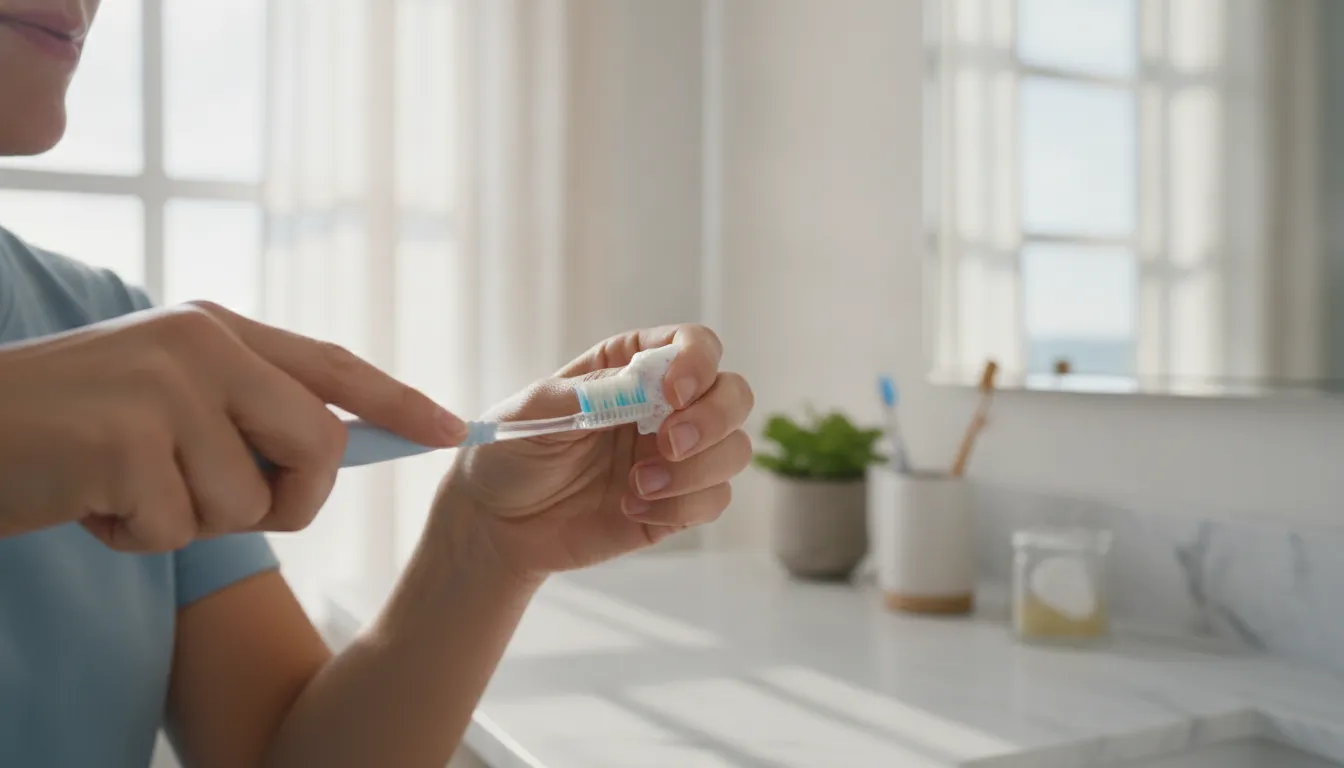
Clean between teeth every day
A toothbrush may not reach the contact points between teeth or the underside of some restorations. Depending on the available space, a dentist or hygienist may recommend dental floss, an interdental brush, or another cleaning aid. The best fit depends on the size and shape of the space; a brush should pass through gently rather than being forced.
For floss, guide it carefully between the teeth and clean the sides of the teeth near the gumline. If you have an implant bridge or a larger space beneath a restoration, ask whether a floss threader or another approach is suitable. Technique can differ, so request a hands-on demonstration at your visit.
Let the space determine the tool. A tight contact may call for floss, while a wider gap may allow an interdental brush. A tool that is too large can feel uncomfortable or catch, and a very small brush may not contact the surfaces you need to clean. Do not force a brush through a space that resists it. If you are uncertain, bring the tools you use to your appointment so the dental team can check their fit.
When using floss, move slowly and avoid snapping it against the gum. For a bridge, the cleaning path may need to pass beneath the replacement tooth, rather than only between the neighboring teeth. A threader or another device can help guide floss under the restoration, but the method depends on the design. Ask to practice the motion while a clinician can see what you are doing and make adjustments.
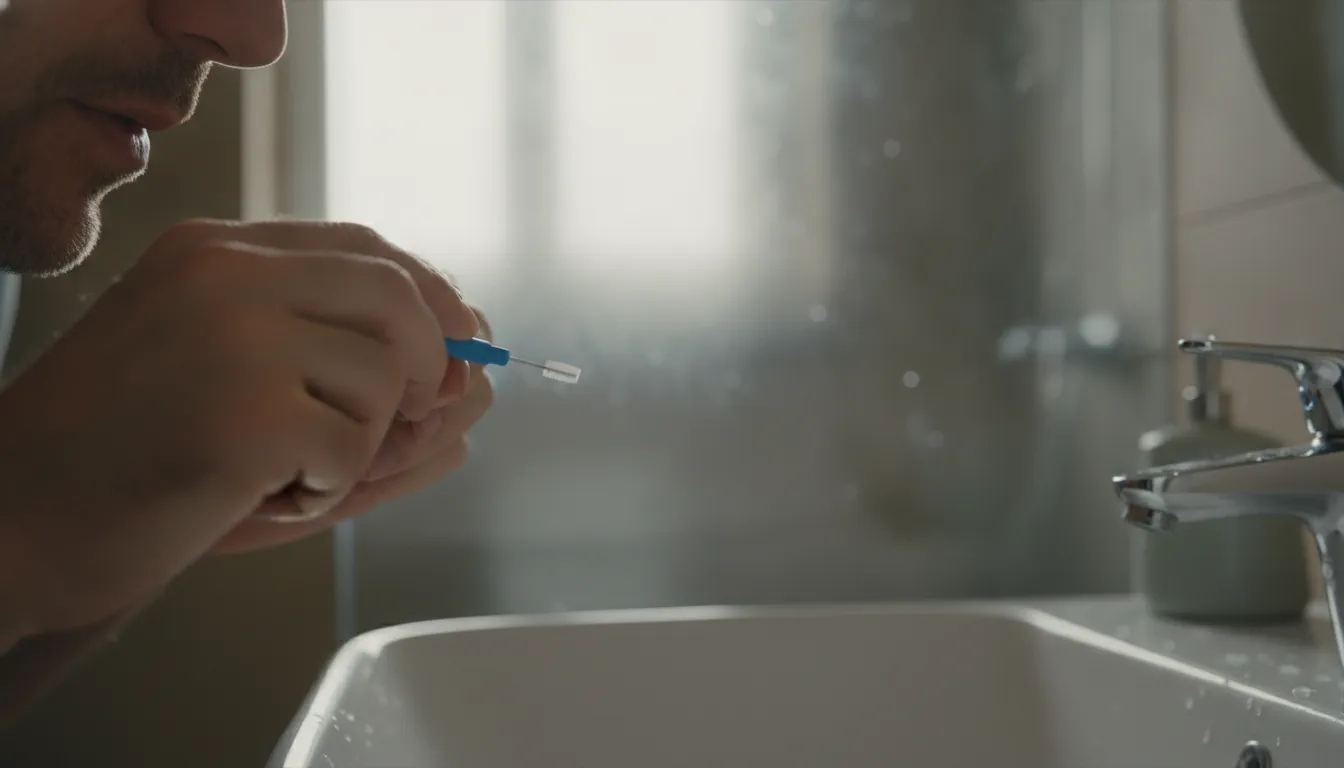
Consider other tools as directed
A water flosser may be a useful addition for some people, especially when a restoration is hard to reach. It should not automatically replace brushing or the between-teeth method recommended for your mouth. Ask your clinician what setting and technique to use, and whether the device is appropriate for your restoration.
Use tools designed for oral care and follow the product directions. Do not scrape around an implant with sharp or improvised objects. If cleaning causes persistent soreness or bleeding, do not respond by scrubbing harder; contact your dental office for individualized guidance.
A simple routine can help you cover each area without rushing:
- Brush the outer, inner, and chewing surfaces of your teeth, including the implant crown.
- Pause at the gumline around the implant and use small, gentle movements.
- Clean between each tooth and around the implant with the tool your dental team recommended.
- If your restoration has an underside, use the demonstrated method to reach it without forcing the tool.
- Rinse and check in a mirror for areas you may have missed, then clean your tools as directed.
This sequence is a general reminder, not a substitute for instructions tailored to your restoration. If the steps feel awkward, ask your hygienist to watch your technique and suggest an adjustment. Small changes, such as choosing a different brush size or changing the angle of approach, may make a hard-to-reach area easier to clean. Avoid continuing a method that causes pain or seems to catch on the restoration; stop and ask the office for advice.
How to clean dental implants with different restorations?
The parts you need to reach depend on whether your implant supports a single crown, a bridge, or a denture.
For a single crown, clean its chewing surface, the sides, and the edge where it meets the gum, just as you do around neighboring teeth. Check the contact areas on both sides. If floss catches or shreds repeatedly, do not keep pulling forcefully; tell your dental team, since the fit of the space and the technique may need review.
For an implant-supported bridge, the area underneath the replacement teeth may need a separate step. Your clinician can show you where to guide floss or another cleaning aid and how to move it along the underside. Take a moment to identify the entry point and direction during a demonstration. Trying to guess the path can make a daily task frustrating and may leave a surface untouched.
For an implant-supported denture, ask whether your particular restoration is removable or fixed and what the daily cleaning instructions are. If it is designed to be removed by the patient, follow the instructions you received for taking it out and cleaning the restoration and tissues. Do not attempt to unscrew or detach a fixed restoration yourself. A dental professional can clarify which parts you should handle at home.
These distinctions matter because a tool that works around one implant may not reach beneath another restoration. If the restoration has changed, you have had it repaired, or you are using a new cleaning aid, ask whether your technique should change too. Keep the instructions somewhere easy to find until the steps become familiar.
Which cleaning tools may help with different implant restorations?
The restoration’s design and the space around it guide tool choice. Use this as a conversation starter, not a substitute for a personal demonstration.
These are general examples, not a prescription. Different implant restorations have different contours, and the same person may need more than one tool. A dental professional can assess access and show you how to clean around your specific restoration. Marcos Ortega DDS offers restorative dental care in the Hillcrest and Downtown San Diego area.
What should you expect from professional implant maintenance?
At maintenance visits, your dental team can review your home-care technique and check the implant restoration and surrounding tissues.
Professional follow-up is part of caring for an implant. The recommended interval depends on your oral health, restoration, and clinician’s assessment; there is no single schedule that fits everyone. At visits, share any changes you have noticed and bring the cleaning tools you use if you would like feedback on their fit or technique.
Your clinician may review the condition of the gums and the restoration, discuss plaque control, and decide whether additional evaluation is needed. Research has examined dental hygienists’ clinical and knowledge-seeking practices in implant maintenance, underscoring that implant care is a distinct topic in professional hygiene practice. Read the PubMed-indexed study on dental hygienists and implant maintenance.
To make a maintenance appointment more useful, note your questions before you go. If one particular spot is hard to reach, identify it in the mirror or take note of which tool catches there. You can also show the exact brush, floss, or water flosser you use. This gives the hygienist a clearer picture of your routine than trying to recall each detail from memory.
During a visit, you can ask:
- Which brush and between-teeth tool fit this implant restoration?
- Can you show me how to clean underneath or around the crown?
- How often should I return for professional maintenance based on my situation?
- What symptoms should prompt me to call before my next appointment?
You can ask the clinician to watch you demonstrate the motion with the tool, then repeat the steps yourself. If there is more than one way to reach an area, ask which method is simplest for your restoration and whether there are signs that you are pressing too hard. A brief demonstration can help turn general advice into a routine you can repeat at home.
If dental visits make you uneasy, let the office know when you schedule. The practice emphasizes patient comfort and offers patient comfort options; suitability for any care approach is assessed individually. The office also provides information about Dr. Marcos Ortega and the practice’s background.
What signs around an implant should you have evaluated?
New or persistent changes around an implant are a reason to contact a dental professional rather than trying to diagnose the cause at home.
Contact your dentist if you notice ongoing redness, swelling, tenderness, bleeding when cleaning, a bad taste or drainage, or a change in how the implant restoration feels. A loose-feeling crown or bridge also deserves professional assessment. These signs can have different causes, and only an examination can help determine what is happening.
Seek prompt dental advice for a sudden change, worsening discomfort, or an injury involving the implant area. If you have facial swelling, fever, or difficulty swallowing or breathing, seek urgent medical attention. Do not try to tighten or adjust an implant restoration yourself.
When you call, describe what changed, when it began, and whether it is getting better or worse. Mention the type of restoration if you know it. These details help the office advise you on an appropriate next step without guessing at a diagnosis.
It can help to be specific about what you observe rather than trying to label the problem. For example, note whether bleeding occurs only when using one particular tool, whether swelling is new, or whether the bite feels different. Tell the office about recent changes in your cleaning routine or restoration, too. If you are unsure whether to wait for a scheduled visit, call and ask the dental team what timing is appropriate. A description by phone does not replace an examination, but it can help the office guide your next step.
How can you make implant cleaning easier to maintain?
Pair your implant care with a consistent daily habit and get practical help when a tool or area is hard to manage.
- Keep your brush and recommended interdental tool where you will use them.
- Clean at a time you can repeat each day, such as after breakfast and before bed.
- Use a mirror and good lighting to check that you are reaching the gumline.
- Replace a worn toothbrush or brush head according to its instructions.
- Bring questions or tools to your next appointment rather than changing technique based on discomfort alone.
If dexterity, limited access, or a complex restoration makes cleaning challenging, say so. Your dental team may be able to suggest a tool or a modified technique. The goal is a routine that is effective and manageable for your needs.
Busy schedules can make a new care routine easy to forget. Keep the tools together, add the steps to the brushing routine you already follow, and use the same sequence each time. If you travel, pack the brush and any prescribed cleaning aid so you do not have to substitute an improvised object. If you miss a step, return to your regular gentle routine rather than trying to compensate with extra pressure or prolonged scrubbing.
If hand movement is limited, try sitting where your arm can rest comfortably and use a mirror that gives you a clear view. Ask whether a larger handle or another tool design could make the motion easier. If another person helps with your oral care, have them attend an appointment so the dental team can explain the recommended technique to both of you.
Plan your implant care with a dental professional
Marcos Ortega DDS has served the San Diego community for more than 34 years and provides comprehensive care in the Hillcrest area. A consultation can help you discuss your implant restoration, review cleaning questions, and understand what follow-up is appropriate. Care recommendations depend on an examination, oral health, and your individual needs.
Patients can learn more about dental implants and treatment planning, explore dentures and implant-supported options, or read about the practice through patient testimonials. The office offers free parking, and its team can explain next steps for your situation.
Contact the office to discuss implant maintenance
Frequently asked questions
Can you brush dental implants like natural teeth?
Yes, brushing the implant crown and nearby teeth is part of routine home care. Use a soft-bristled brush and gentle technique, then clean between teeth with the tool recommended for your restoration. Ask your dentist or hygienist to demonstrate if an area is hard to reach.
How often should you clean dental implants?
Brush twice a day and clean between teeth daily, unless your dental professional gives you different instructions. Professional maintenance intervals vary according to your oral health and restoration, so confirm a schedule that is appropriate for you.
Is a water flosser enough to clean around an implant?
Not necessarily. A water flosser may help some people reach difficult areas, but it may be an addition rather than a replacement for brushing and the recommended between-teeth method. Ask your clinician whether it suits your implant restoration and how to use it.
What if my gums bleed when I clean around an implant?
Persistent or new bleeding should be discussed with your dental office. Do not scrub harder or assume you know the cause. A professional can assess the area and advise you on cleaning technique and any follow-up that may be needed.
What should you remember?
Clean the implant crown and surrounding gumline gently every day, use an appropriate method between teeth, and keep up with individualized professional maintenance. If you notice a persistent change or are unsure how to clean a particular restoration, ask your dental team for an examination and a practical demonstration.