
If you are wondering, can you whiten porcelain veneers, the short answer is no: whitening products do not lighten porcelain the way they can lighten natural tooth enamel. That difference matters if you already have veneers, are considering them, or want to brighten teeth that show beside a restoration. Shade planning with a dentist can help you consider the natural teeth and porcelain together before choosing a next step.
Schedule a shade-planning consultation
Can you whiten porcelain veneers with whitening products?
Whitening agents can affect natural tooth structure, while porcelain restorations keep the shade selected when they were made.
Professional whitening and many over-the-counter products use bleaching ingredients designed to affect discoloration in natural enamel. A porcelain veneer is a restoration made with a chosen color and surface. It does not lighten in response to bleaching in the same way. The American Dental Association provides general information about tooth whitening and dental care at ADA.org; your own treatment options still depend on an individual dental evaluation.
If natural teeth become brighter while veneers stay their original shade, the difference may become more noticeable. This does not mean every person with veneers will see an obvious mismatch. The result depends on where veneers sit, how much natural tooth shows, the starting shades, lighting, and your personal goals. A dentist can examine the teeth and restorations and discuss whether whitening is appropriate for natural teeth before any shade decisions are made.
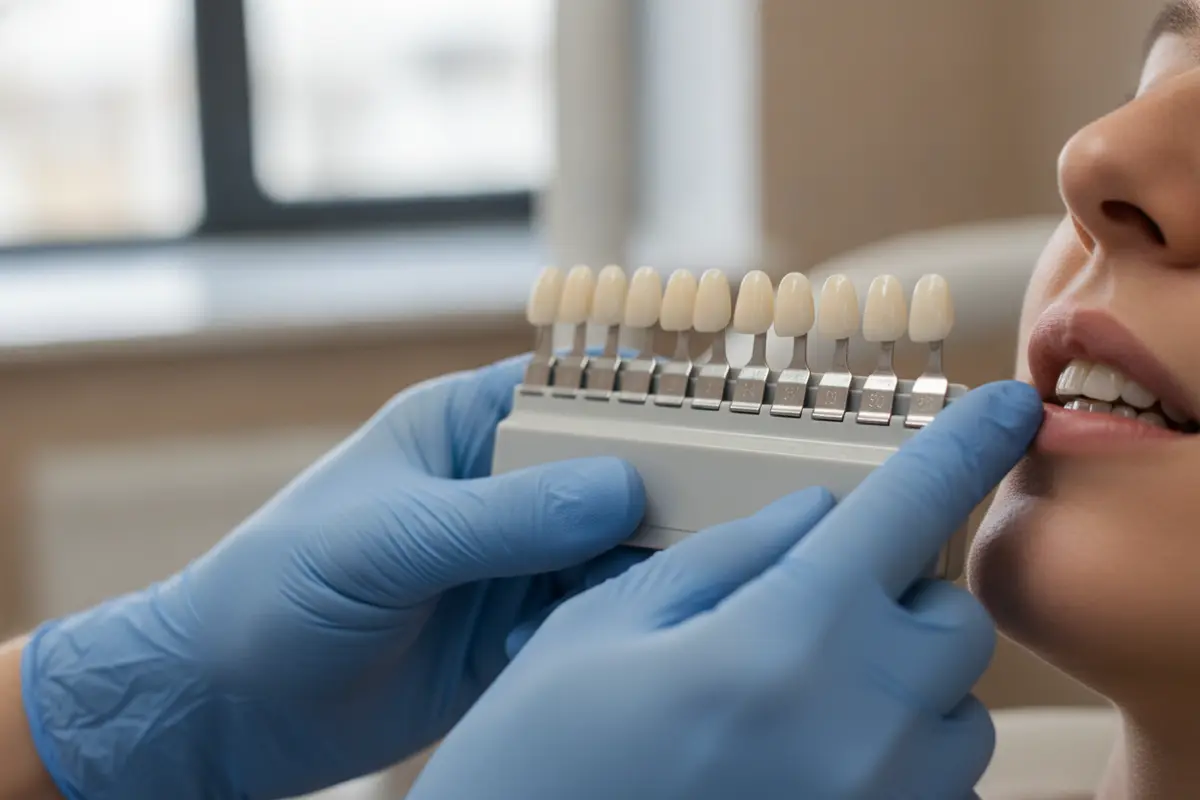
Can you whiten porcelain veneers if natural teeth are also treated?
Sometimes natural teeth can be whitened, but the veneers themselves will not change shade, so coordination matters.
Whitening may be considered for natural teeth that are visible alongside veneers. Before starting, ask a dentist to assess your oral health, the condition and location of the veneers, and the shade difference you hope to address. Whitening is not suitable for every person or every situation. It may cause temporary sensitivity or gum irritation, and the likely response can vary. Follow product directions and professional guidance rather than increasing use in an attempt to affect porcelain.
It is helpful to separate surface cleaning from bleaching. A dental cleaning may remove some external deposits from teeth and restorations, but it does not change the underlying porcelain shade. A veneer that looks dull may need an assessment to determine whether deposits, surface changes, lighting, or another issue contributes to its appearance. Avoid abrasive home remedies or harsh products; they may harm tooth or restoration surfaces without delivering the shade change you want.
- Natural enamel: May respond to whitening, depending on the cause of discoloration and individual circumstances.
- Porcelain veneer: Retains its manufactured shade; bleaching does not make it lighter.
- Surface deposits: A dental professional can advise whether cleaning is appropriate, but cleaning is not the same as changing veneer color.
If you are considering professional whitening, read about teeth whitening options and bring up your veneers when discussing suitability. A service description cannot determine what is right for your teeth; that requires a conversation about your health and treatment history.
How should you plan whitening before getting veneers?
If you are considering both treatments, discuss your desired natural tooth shade before selecting the veneer color.
Planning the order can help avoid choosing porcelain that looks darker or lighter than surrounding teeth after whitening. In many cases, a dentist may discuss whitening natural teeth first, then allow time for the shade to settle before matching planned restorations. The appropriate sequence and timing depend on your teeth, treatment plan, and clinical findings. It is not necessary or appropriate for everyone to whiten before veneers.
- Explain your goal. Tell the dentist whether you want subtle brightening or a broader change, and identify which teeth show when you smile.
- Review teeth and restorations. An exam can help distinguish natural teeth, existing veneers, crowns, and other restorations that may not respond to bleaching.
- Discuss whitening suitability. Your dentist can consider sensitivity, gum health, existing dental work, and the cause of discoloration.
- Plan the shade match. If veneers are planned, discuss when to select their shade and how it should relate to surrounding teeth.
- Review the result before proceeding. Ask what options could be discussed if your natural teeth and restoration shades do not appear uniform.
For a broader introduction to materials and treatment planning, see the practice’s guide to what veneers are and how they are used. You can also explore cosmetic dentistry services as part of a conversation about your goals. The order of care should be based on an exam rather than a general rule.
What if your existing veneers look darker than your teeth?
Start with an evaluation rather than trying to bleach the veneer or changing surrounding teeth on your own.
A perceived shade difference can have several explanations. Natural teeth may have changed over time, lighting can affect how colors appear, or the veneer surface may have accumulated deposits or changed with use. Sometimes the difference is mainly noticeable in certain rooms or photographs. A dentist can assess whether the veneer is intact and whether cleaning, whitening of suitable natural teeth, or another approach merits discussion. The appropriate option depends on examination findings and your goals.
It can help to describe when you first noticed the change, whether it affects one veneer or several, and whether anything else has changed, such as a rough edge or a feeling that the veneer is loose. These details do not establish a cause, but they help focus the appointment. Bring photographs only as helpful context; lighting and camera settings can alter color, so photos cannot replace an examination.
Do not use household bleach, abrasive powders, or unapproved polishing tools on veneers. These approaches cannot reliably change porcelain color and can damage oral tissues or restoration surfaces. If a veneer is chipped, feels loose, or has a rough edge, contact a dental professional for an assessment instead of attempting a repair at home. Avoid repeatedly testing products on a restoration because a lack of visible change is not a reason to increase strength or frequency.
- Note which teeth have veneers and which are natural.
- Describe what changed and when you noticed it.
- Ask whether the concern appears to be surface deposits, a shade difference, or a restoration issue.
- Ask what can reasonably be monitored and what would warrant follow-up.
Which factors affect shade planning?
Shade is only one part of a plan; the health and condition of teeth and restorations matter too.
- Veneer location: Front teeth that show beside natural teeth may make color differences more apparent.
- Number of restorations: A single veneer has different matching considerations than several neighboring restorations.
- Cause of tooth discoloration: Different types of discoloration may respond differently, and whitening cannot address every cause.
- Restoration condition: A dentist can check for damage, surface changes, or other concerns that influence possible next steps.
- Personal priorities: Your preferred brightness, natural appearance, and comfort should all be part of the conversation.
- Timing: If treatment is planned in stages, ask how changes in natural tooth shade may affect decisions about the restoration.
- Daily habits and maintenance: Oral hygiene and routine dental care support oral health, but they do not bleach porcelain to a new shade.
Patients sometimes expect whitening to make every visible tooth the same color. In practice, natural teeth and restorations can react differently, so shade planning means discussing what each treatment can and cannot change. The goal is to make an informed choice, not to promise an exact color match or a particular cosmetic result.
Marcos Ortega DDS is an established Hillcrest practice serving San Diego for more than 34 years, with cosmetic dentistry experience and comprehensive care. A consultation can help you understand options without assuming that a particular treatment is right for you. The practice emphasizes individualized planning and patient comfort. Free parking is available for patients visiting from Hillcrest, Mission Hills, Banker’s Hill, or Downtown San Diego.
Whitening and veneer shade planning at a glance
This comparison explains what each option may and may not do; it is not a substitute for an individual examination.
- Whitening natural teeth
- May affect some natural tooth discoloration.
- Does not lighten porcelain veneers.
- Review suitability and timing with a dentist.
- Professional cleaning
- May affect some external deposits.
- Does not bleach underlying veneer shade.
- Ask whether deposits or another issue explain appearance.
- New or replacement veneer planning
- Can address planned restoration shade as part of treatment.
- Does not mean replacement is automatically needed.
- Consider surrounding teeth, goals, and exam findings.
- At-home abrasive remedy
- No reliable porcelain shade change.
- May irritate tissues or harm surfaces.
- Avoid unless a dental professional specifically advises a product.
What should you ask at a consultation?
Specific questions can clarify the limits of whitening and make the next step easier to understand.
You do not need to arrive with a treatment decision already made. You can explain what you notice and ask the dentist to walk through the options in plain language. Consider bringing a short list so that concerns about appearance, health, and timing all get addressed.
- Which of my visible teeth are natural, and which have restorations?
- Could whitening affect the natural teeth that show beside my veneers?
- Would whitening be appropriate for my oral health and current dental work?
- If I am considering veneers, when should we choose their shade?
- Could cleaning or maintenance help if the surface looks dull?
- What should I do if I have sensitivity or notice a change in a veneer?
- What are the limits of each option, and what findings would change the plan?
Marcos Ortega DDS provides cosmetic and sedation dentistry as part of comprehensive care. If dental visits make you anxious, mention that when arranging an appointment; the team can discuss comfort considerations and whether an approach is suitable for you. Learn about Dr. Ortega, explore patient comfort options, and review smile examples as background for a conversation, not as a promise of an individual result.
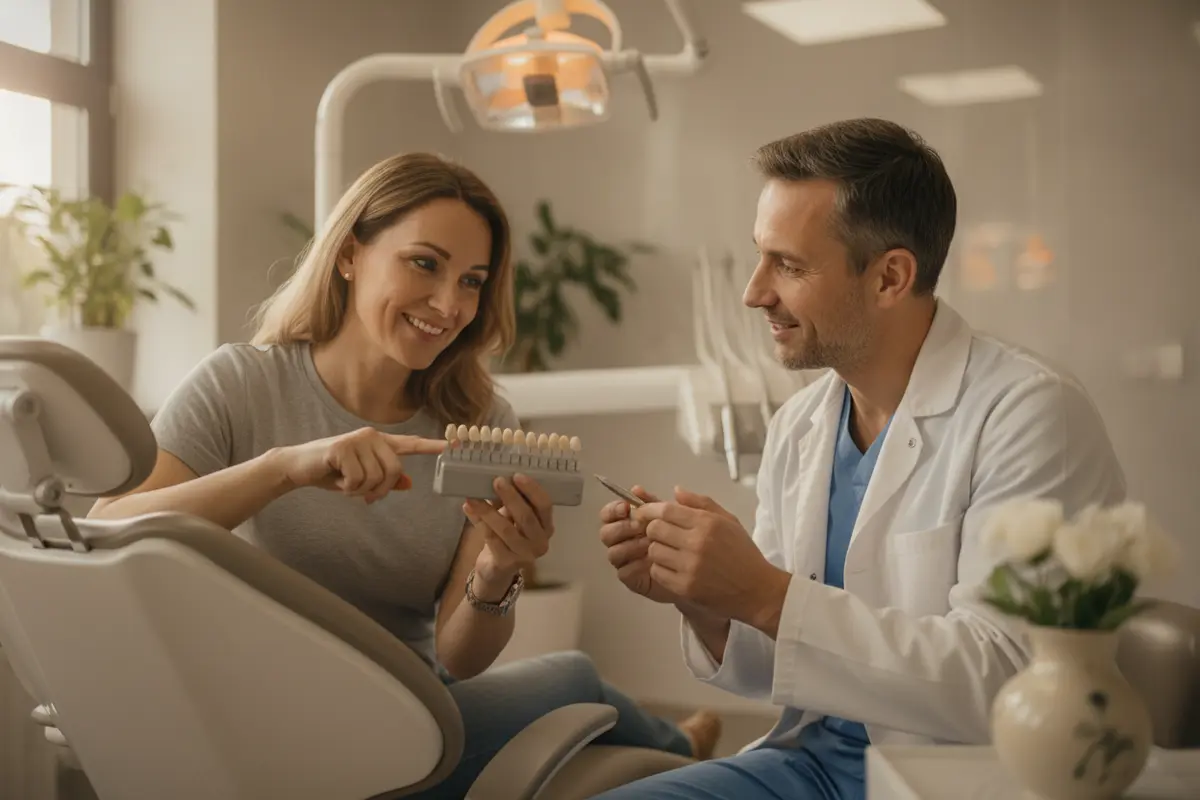
For a practical next step, write down whether your concern is about natural teeth, a veneer, or the contrast between them. Note any sensitivity, roughness, or recent change, and bring the list to your appointment. That gives the dentist a clearer starting point than trying several products at home. You can also think about the outcome you would prefer in ordinary daylight, rather than choosing a shade from a single photograph or a bright store display. If you are planning an event, mention the date early; the dentist can explain whether your requested sequence and timing are realistic for your clinical circumstances. There is no need to settle every detail before the consultation, and an exam may lead to a different plan than you expected.
Ask about veneer and whitening shade planning
Frequently asked questions
Can whitening toothpaste make porcelain veneers lighter?
No. Whitening toothpaste may help remove some surface stains on natural teeth, but it does not bleach porcelain to a lighter shade. Avoid abrasive products on restorations unless your dental professional recommends them.
Can a dentist polish veneers to make them whiter?
Polishing may help remove certain surface deposits when clinically appropriate, but it does not change the underlying porcelain color. A dentist should assess the restoration and recommend suitable care.
Should I whiten before getting veneers?
If you want both whitening and veneers, discuss the sequence before treatment. Your dentist may recommend considering natural tooth whitening before selecting a veneer shade, depending on your exam and plan.
Do veneers need to be replaced if they look darker?
Not necessarily. A shade difference alone does not establish that replacement is needed. An exam can help identify the cause and whether maintenance or another option should be discussed.
Can whitening damage my veneers?
Whitening products are not intended to change porcelain shade. Ask a dentist which products are appropriate for your teeth and restorations, and follow instructions; do not use stronger or more frequent applications in an attempt to lighten a veneer.
What should you remember?
Porcelain veneers do not whiten like natural teeth, so coordinating shade changes is important when whitening is part of your plan. A dental evaluation can help you understand what is contributing to a color difference and which options fit your oral health and goals.