
A fixed dental bridge stays in place, so its artificial tooth can leave a space beneath it that a regular toothbrush may not reach easily. Cleaning that area does not need to mean pushing a tool through by force; the right path and cleaner depend on your bridge and your dentist’s instructions.
Contact the dental team for personalized bridge-care guidance.
To learn how to floss under a dental bridge, gently guide floss beneath the bridge with a floss threader or another method recommended by your dentist. Then move it carefully along the underside to clear debris. Do not snap or force it; ask your dentist or hygienist to demonstrate the technique for your bridge.
Understanding why this small daily step matters can make the routine feel more manageable and help you choose an approach that fits your restoration.
Why Do You Need to Clean Under a Dental Bridge?
The underside of a fixed bridge can be difficult to reach with a regular toothbrush. So gentle cleaning beneath it helps clear debris and plaque from that tucked-away area.
A fixed dental bridge replaces one or more missing teeth and stays in place rather than being removed for cleaning. Its artificial tooth, called a pontic, spans the gap. Because the pontic sits over that space, its underside is not as accessible as the visible chewing surface. Brushing the top and sides is important, but a toothbrush may not reach the area beneath the pontic effectively. The American Dental Association notes that interdental cleaners help remove debris and plaque from hard-to-reach areas. Learn more about cleaning between teeth.
Cleaning below the bridge is useful for a few practical reasons:
- It reaches a surface your brush may miss. A suitable interdental cleaner can reach the space under the artificial tooth, where food debris and plaque may collect.
- It supports a more complete daily routine. Brushing and cleaning between teeth address different areas. The goal is to gently clear the space, not to push hard or force a tool under the bridge.
- It helps manage plaque buildup. The ADA explains that plaque left in place can harden into tartar, which requires professional cleaning for removal. Read the ADA’s guidance on flossing and interdental cleaning.
This is a focused home-care question, not a decision about which type of bridge to choose or whether a bridge should be replaced. A dentist or hygienist can show you where the underside is and how to clean it without irritating the surrounding area. The right approach can depend on the bridge’s shape and your needs, so ask for an individualized demonstration if you are unsure. Marcos Ortega DDS provides restorative dentistry and bridges in Hillcrest and Downtown San Diego, with care guidance tailored to the patient.
What Tools Help You Floss Under a Dental Bridge?
A floss threader, pre-threaded bridge floss, a correctly sized interdental brush, or a water flosser may help clean around a fixed bridge. The right choice depends on the bridge’s shape, the available space, and your dentist’s instructions.
Because a fixed bridge stays in place, cleaning tools need to reach the area beneath its replacement tooth as well as the spaces around the supporting teeth. No single tool is right for everyone. The American Dental Association notes that interdental-cleaning technique should be selected with the patient’s individual characteristics in mind.
| Tool | How it may help |
|---|---|
| Floss threader | Guides floss beneath a fixed bridge. |
| Interdental brush | Cleans a space only when the size and direction are appropriate. |
| Water flosser | Directs water around dental work when recommended for your bridge. |
- Floss threader: A reusable threader has a flexible loop that guides ordinary floss beneath the bridge. Once the floss is through, move it gently along the underside rather than snapping it against the gums. The National Institute of Dental and Craniofacial Research lists threaders as a way to pass floss through tight spaces around a fixed bridge.
- Pre-threaded bridge floss: Some floss products have a stiffened end or thicker cleaning portion, so they may be easier for some people to handle beneath a bridge. Ask your dentist whether that shape suits your bridge and how to guide it without forcing it.
- Interdental brush: These small brushes are made to clean between teeth. Use one beneath or around a bridge only if there is enough space and your dentist has shown you the appropriate size and direction. If it feels tight or catches, do not push it through.
- Water flosser: An oral irrigator may help clean between teeth and around bridges, and may be useful when dental work makes string floss difficult. It should not automatically be treated as a complete substitute for the cleaning method recommended for your bridge. See our guide to water flosser care options.
These tools work in different ways: a threader carries floss into a narrow space. A brush contacts surfaces where it fits, and a water flosser directs a stream around dental work. Your bridge design and the space beneath it determine what can reach safely. If you are unsure which option to use, ask your dentist or hygienist to demonstrate it with your own bridge rather than experimenting with force.
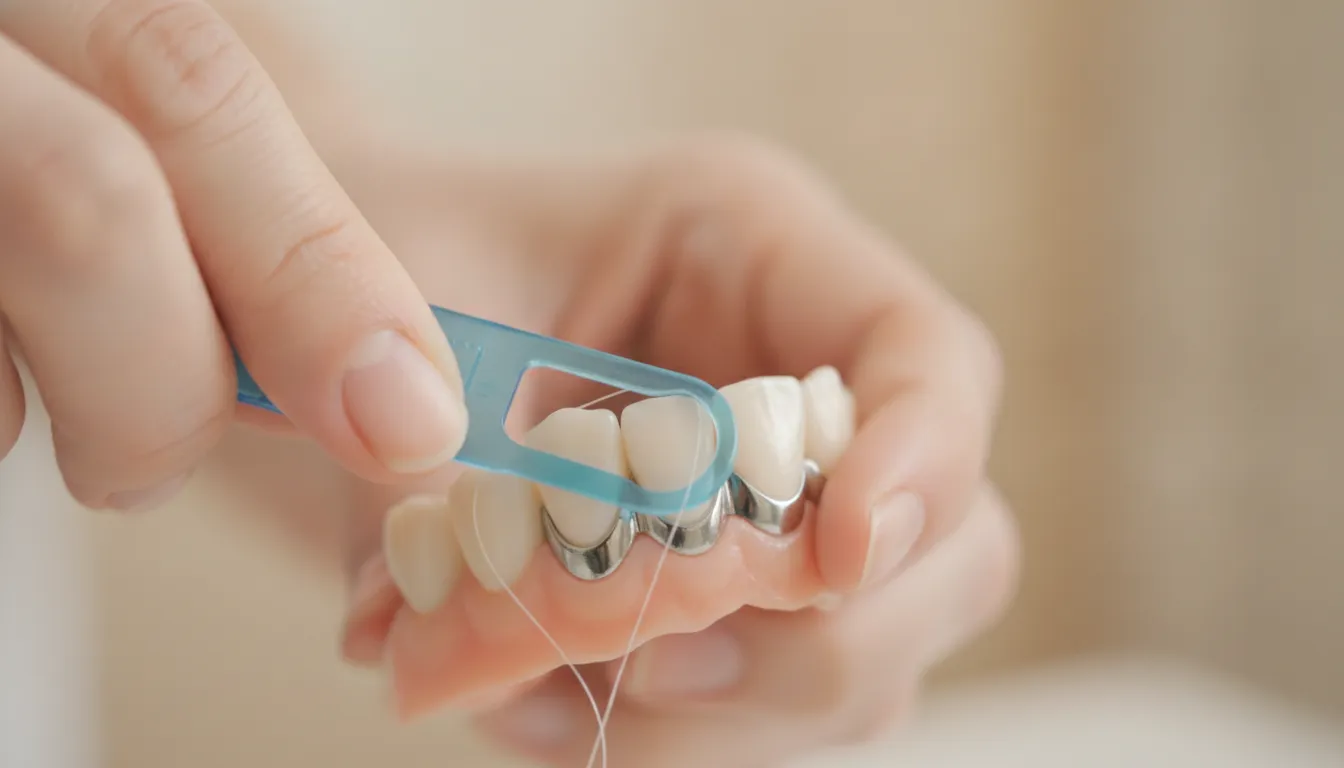
Start with gentle pressure and stop if a tool will not pass comfortably. Guidance on floss threaders, oral irrigators, and interdental brushes can help explain the options, but your dental team can match a tool and technique to your specific bridge.
How to Floss Under a Dental Bridge, Step by Step
A floss threader can guide floss beneath a fixed bridge, but the path and removal motion should match your bridge and your dentist’s instructions.
Work slowly and use a clean piece of floss. A threader helps carry it through the narrow space under the bridge; it is not a reason to push against the gum or pull hard. The National Institute of Dental and Craniofacial Research includes floss threaders among the tools that can help thread floss around a fixed bridge. If you are not sure where to guide it, ask your dental professional to demonstrate with your bridge before practicing at home.
- Wash and prepare. Wash your hands, then cut a piece of floss long enough to hold comfortably at both ends. Check that the floss and threader are intact and clean.
- Load the threader. Pass one end of the floss through the threader’s loop. Leave enough floss on either side to hold and control it without letting go during the cleaning motion.
- Find the opening. Position the threader’s stiff end at the space between the bridge and gum where your dental professional has shown you to enter. Do not assume every bridge has the same access point or that the floss should be pushed through a tight contact.
- Guide it gently beneath the bridge. Ease the threader through with light pressure. Once the floss follows beneath the bridge, hold its ends and draw it into position. Do not snap it against the gum or force it past resistance; gentle handling helps avoid injuring gum tissue, as the NIDCR flossing guide advises.
- Clean with a small, controlled motion. Move the floss carefully along the underside of the bridge to loosen debris, keeping the motion comfortable and controlled. The available space and shape vary, so use the path your dental professional demonstrated rather than trying to make the floss wrap around the underside.
- Clean the sides of the supporting teeth. Where you are cleaning beside a natural tooth, keep the floss in contact with that tooth’s side and curve it around the tooth as appropriate. The familiar C-shape technique applies to cleaning along the side of a tooth, not as a prescribed motion for the underside of the bridge.
- Remove the floss the way you were shown. Draw it out slowly using the exit path recommended for your bridge. Some bridge designs may need a particular removal motion, so do not yank upward or pull against the bridge if the floss catches.
- Finish and check. Remove and discard the used floss, then rinse the threader if you plan to reuse it according to its instructions. If you cannot thread or remove the floss comfortably, stop and ask your dental team to show you the correct route and motion.
Bridge design and access vary, so a demonstration is more useful than guessing. For broader information about care for a fixed dental bridge, see the practice’s bridge guide. If you have questions about which flossing method is right for you, the Mayo Clinic recommends discussing them with your dentist.
How Often Should You Clean Beneath a Bridge?
As a general routine, clean between your teeth once a day and brush twice daily. The best way to clean beneath a bridge depends on its design, so ask your dentist to tailor the technique.
Daily care is a useful baseline, not a one-size-fits-all prescription for every bridge. Interdental cleaning helps remove debris and plaque from areas a toothbrush may not reach well. For general oral hygiene, Mayo Clinic recommends cleaning between teeth once a day and brushing twice a day. Your dentist can show you how to apply that routine around your particular bridge. Ask whether a threader, another tool, or a combination is appropriate. Mayo Clinic guidance on flossing and American Dental Association guidance on flossing provide general context.
Brush gently over the bridge and nearby teeth with a soft-bristled toothbrush, taking care to reach the surfaces you can access comfortably. For the space beneath the bridge, follow the method your dental team demonstrates rather than forcing floss or a device through a tight area. A water flosser may be helpful when dental work makes string floss difficult, but whether it suits your bridge-specific routine is a question for your dentist.
One practical approach is to make the between-teeth step part of a routine you already remember, then brush in the morning and evening. Work carefully around the bridge instead of rushing over it, and use the specific tool and route your dental team has shown you. If you are uncertain whether you are cleaning the right area, a mirror can help you see what you are doing while you practice. The aim is steady, gentle cleaning rather than pressure or repeated passes that irritate the area.
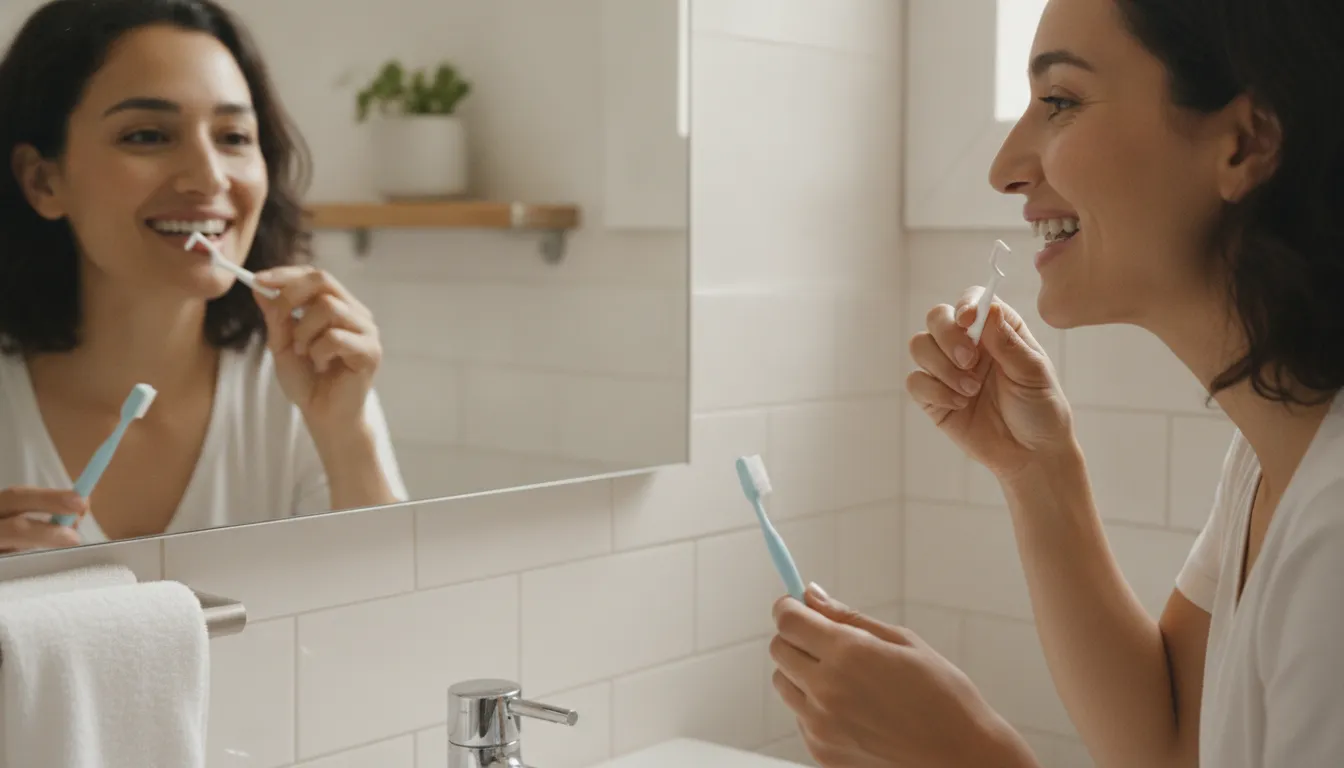
Keep the routine manageable and consistent. If you are unsure whether you are reaching the underside, ask your dentist or hygienist to demonstrate the path and observe you trying it. Bridge design and individual needs can affect which technique is suitable, so general advice cannot replace that demonstration. You can also review these daily flossing habits for general interdental-care context, or learn more about care for a fixed dental bridge.
Professional follow-up should also be individualized; there is no single appointment interval that fits every person. If you would like help adapting your home routine, contact the dental team and ask for guidance specific to your bridge.
When Should You Ask Your Dentist to Check Your Technique?
If a cleaning tool does not pass easily, causes ongoing discomfort, or the bridge feels different, pause and ask your dentist or hygienist to check your technique.
A floss threader should guide floss beneath the bridge without force. If the threader will not pass, catches repeatedly, or you find yourself pushing or pulling hard, stop rather than trying to work through the resistance. A dentist can show you the path that fits your bridge and recommend whether a different cleaner may be more suitable. General guidance also recommends talking with a dentist when you are unsure which flossing method is right for you (Mayo Clinic flossing guidance).
Ask for a demonstration if you have a new bridge, have recently changed cleaning tools, or have developed difficulty doing a routine that used to feel manageable. You can bring your threader or other cleaner to an appointment and ask the dental team to watch how you use it. They can explain how to guide it gently and where to clean, based on your specific restoration.
- The threader will not pass without force or keeps catching in the same place.
- You notice persistent discomfort or irritation while cleaning, or the area remains uncomfortable afterward. If irritation involves the gums, see the National Institute of Dental and Craniofacial Research information on gum disease; it is not a substitute for an exam.
- Cleaning has become newly difficult or you are uncertain whether your tool is appropriate.
- The bridge seems loose or its fit feels changed. Describe what you notice and arrange professional guidance instead of testing or adjusting the bridge yourself.
There is not one technique that suits every bridge. The recommended bridge design depends in part on the location of the missing tooth and the condition of the teeth, mouth, and gums. Cleaning instructions may also need to be individualized (Canadian Dental Association overview of bridges). The team at Marcos Ortega DDS can explain restorative options and care through its restorative dentistry and bridges services.
If you would like someone to review your approach, bring your questions to your next visit or contact the practice for guidance.
Ask the dental team about your bridge-cleaning technique
Frequently Asked Questions
How often should I floss under a dental bridge?
Clean beneath your fixed bridge every day as part of your regular oral hygiene routine. A floss threader, bridge threader, or specialized under-bridge flosser can help guide the cleaning material beneath the pontic and along the gumline. Use gentle pressure and avoid snapping the floss into the tissue.
What is the best tool for cleaning under a fixed bridge?
The most useful tool depends on the design of your bridge, the space beneath it, and your comfort with each method. Options may include a floss threader with dental floss, super floss, an interdental brush, or a water flosser. Your dentist or hygienist can show you which option fits safely without forcing a tool into a tight space.
Can I use a water flosser under my dental bridge?
A water flosser may help flush debris from beneath a bridge and around the supporting teeth. Follow the device instructions and use a setting that feels comfortable rather than directing forceful pressure at irritated gums. It should complement, not automatically replace, the cleaning method recommended for your bridge.
What should I do if my gums bleed when I clean under the bridge?
Do not stop all cleaning, but avoid forcing floss or an interdental tool through a painful or unusually tight area. Occasional bleeding can have several causes, including irritation or inflammation. Contact your dental office if bleeding persists, increases, or occurs with swelling, tenderness, bad taste, or a loose-feeling bridge.
When should I ask my dentist how to floss under a dental bridge?
Ask for individualized guidance if the bridge is new, your cleaning method is uncomfortable. You cannot reach beneath the restoration, or you notice recurring bleeding, odor, food trapping, sensitivity, or movement. A dental professional can inspect the bridge and demonstrate a technique suited to your mouth.
Contact us for bridge-cleaning guidance
Cleaning beneath a fixed dental bridge can feel unfamiliar, especially when you are unsure whether your floss threader, interdental brush, or other tool is reaching the area safely. Individualized guidance can help you build a comfortable routine suited to your bridge and oral health. Contact us to ask Marcos Ortega DDS for personalized guidance on cleaning beneath your fixed dental bridge.