
An overbite can affect your smile, chewing, and comfort. Schedule a free Invisalign consultation with Marcos Ortega DDS to discuss your bite and treatment options.
Can Invisalign Fix Overbite? A San Diego Patient Guide
The question “can Invisalign fix overbite” has a case-dependent answer. Yes, clear aligners may help move the teeth into a more functional alignment, but suitability depends on the cause and severity of the bite. An overbite may involve tooth position, jaw structure, or other oral health factors, so an examination is essential before choosing treatment.
Understanding the difference between a mild dental overlap and a more complex bite discrepancy can make the decision clearer. The first step is to look at what an overbite means, what Invisalign can reasonably address, and when a different approach may be considered.
Can Invisalign Fix an Overbite? The Short Answer
Yes, Invisalign can be a treatment option for some patients with an overbite. Clear aligners may guide the teeth toward a more functional bite, but they are not appropriate for every case. The likely approach depends on how much the upper teeth overlap the lower teeth and how the teeth fit together. It also depends on whether the bite is influenced by jaw position or other oral health concerns. A dentist must examine your teeth and supporting structures before recommending treatment.
An overbite is a vertical bite relationship in which the upper front teeth cover more of the lower front teeth than is considered ideal. A small amount of overlap is normal. One commonly cited reference describes a typical overbite as the upper incisors covering approximately one-third to one-half of the lower incisors. When the overlap is substantially deeper, it may be described as a deep bite or excessive overbite. This is different from an overjet, which describes the horizontal distance between the upper and lower front teeth.
The question is not simply whether Invisalign can move teeth. It is whether controlled tooth movement can address the specific cause and severity of your overbite. In some cases, aligners can help move teeth into a healthier relationship. In others, the bite may involve jaw structure, missing teeth, significant crowding, or another factor that requires a different plan or additional treatment. Research has documented the use of Invisalign appliances in overbite management, but an individual study does not predict the result for every patient.
During an evaluation, your provider may assess your bite from several angles, review your dental history, and use digital records or imaging when appropriate. This helps distinguish a concern that may respond primarily to tooth movement from one that needs more comprehensive planning. It also allows the treatment goals to include function and dental health, not appearance alone.
Marcos Ortega DDS provides Invisalign clear braces for patients in the Hillcrest and Downtown San Diego area. A consultation can help you understand whether aligners are a reasonable option for your bite and what alternatives may be worth discussing.
Takeaway: Invisalign may help correct some overbites, but only an in-person examination and individualized treatment plan can determine whether it fits your needs.
How Does Invisalign Correct an Overbite?
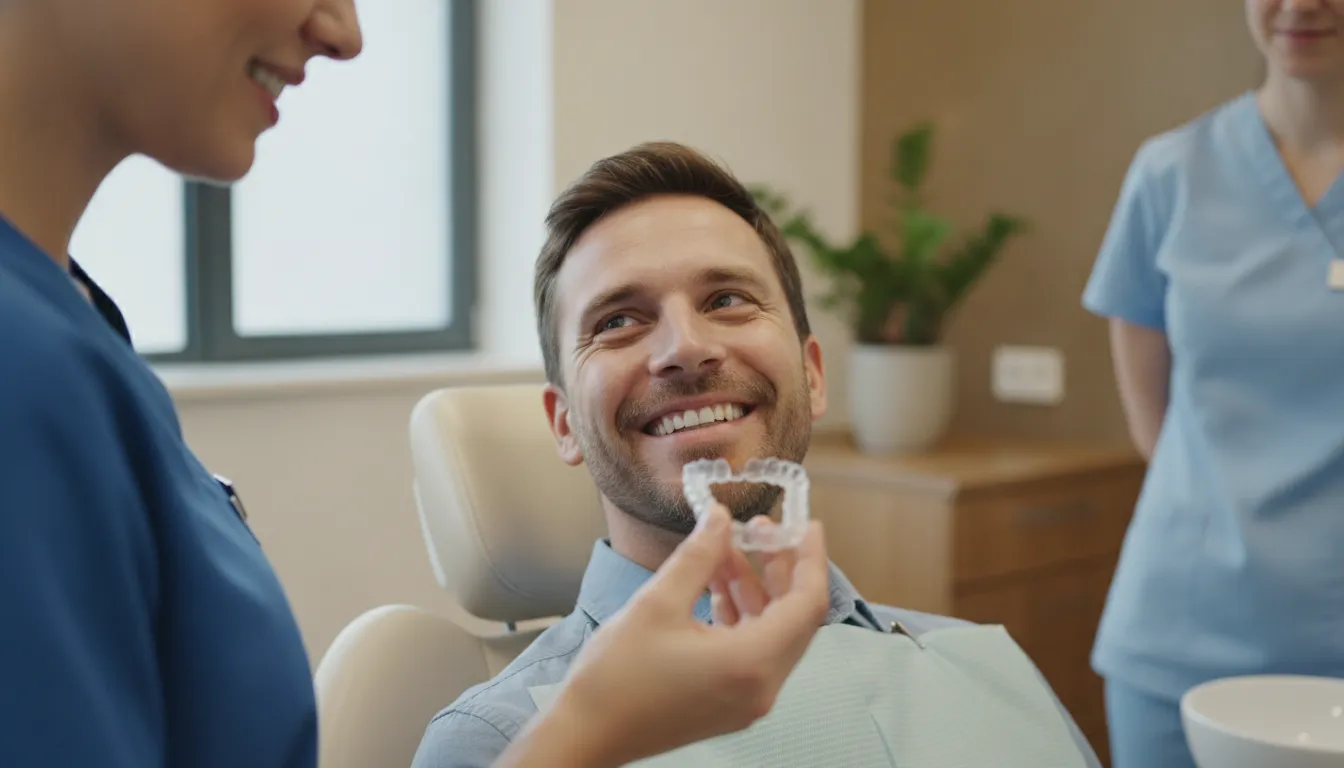
Invisalign uses a planned series of clear, removable aligners to guide teeth toward a more functional bite. Each aligner is shaped slightly differently, applying controlled pressure to selected teeth. Over the course of treatment, those small changes can help improve how the upper and lower teeth meet. Clear aligners are used for a range of tooth-straightening and bite concerns, including overbite and overjet, although the right approach depends on the findings from an individual examination. Learn more about the bite issues aligners may address.
Staged movement, not a single adjustment
Your provider maps the intended tooth movements before treatment begins. You then wear each set of aligners in sequence, allowing the plan to address alignment and bite relationships progressively. In some cases, small tooth-colored attachments give an aligner additional grip. Elastics may also be recommended when a case needs extra guidance between the upper and lower arches. These features are not appropriate for every patient, so their use is based on the treatment plan rather than a standard formula.
The purpose is more than a straighter-looking smile. Orthodontic treatment aims to correct malocclusions, or bite misalignments, to support oral function and dental health. Research has also documented the use of Invisalign appliances in overbite management, but published evidence does not mean every overbite will respond in the same way. Your dentist must assess tooth position, jaw relationships, gum health, and other clinical factors before recommending an approach.
How wear time and monitoring affect progress
Because Invisalign aligners are removable, you take them out to eat, brush, and floss. They still need consistent wear to follow the planned sequence. The customer-supported guidance for Invisalign is typically 20 to 22 hours each day, with visits commonly scheduled every 4 to 6 weeks. At these visits, your provider checks fit, tooth movement, oral health, and whether the next stage remains appropriate. If an aligner is not fitting as expected, the plan can be reviewed before moving forward.
- Wear the current aligner as directed, removing it for meals and daily oral hygiene.
- Keep aligners clean and store them safely whenever they are out.
- Attend monitoring visits so your provider can evaluate bite changes and make case-specific adjustments.
Takeaway: Invisalign can improve an overbite by combining carefully staged tooth movement with consistent wear and professional monitoring. To see the process in more detail, read how Invisalign works.
Who Is a Good Candidate for Overbite Correction?
Many teens and adults may be candidates for clear aligner treatment, but suitability depends on what is causing the overbite and how much movement the teeth require. A deeper overbite can sometimes be improved by guiding the teeth into a more functional alignment. Clinical research has examined deep-bite reduction in adolescent Invisalign treatment and the management of vertical bite discrepancies with clear aligners. But those findings do not make every case appropriate for the same approach.
The key distinction is whether the problem is primarily dental or related to the jaws. Dental factors involve the position, angulation, or eruption of individual teeth. Jaw-related, or skeletal, factors involve the relationship and growth pattern of the upper and lower jaws. A deeper overbite in teenagers and adults may relate to jaw structure or missing lower teeth, according to Invisalign’s clinical overview. When skeletal factors are significant, aligners alone may not provide the complete correction a patient needs. That is why an examination and careful treatment plan matter before choosing an appliance.
What does an evaluation consider?
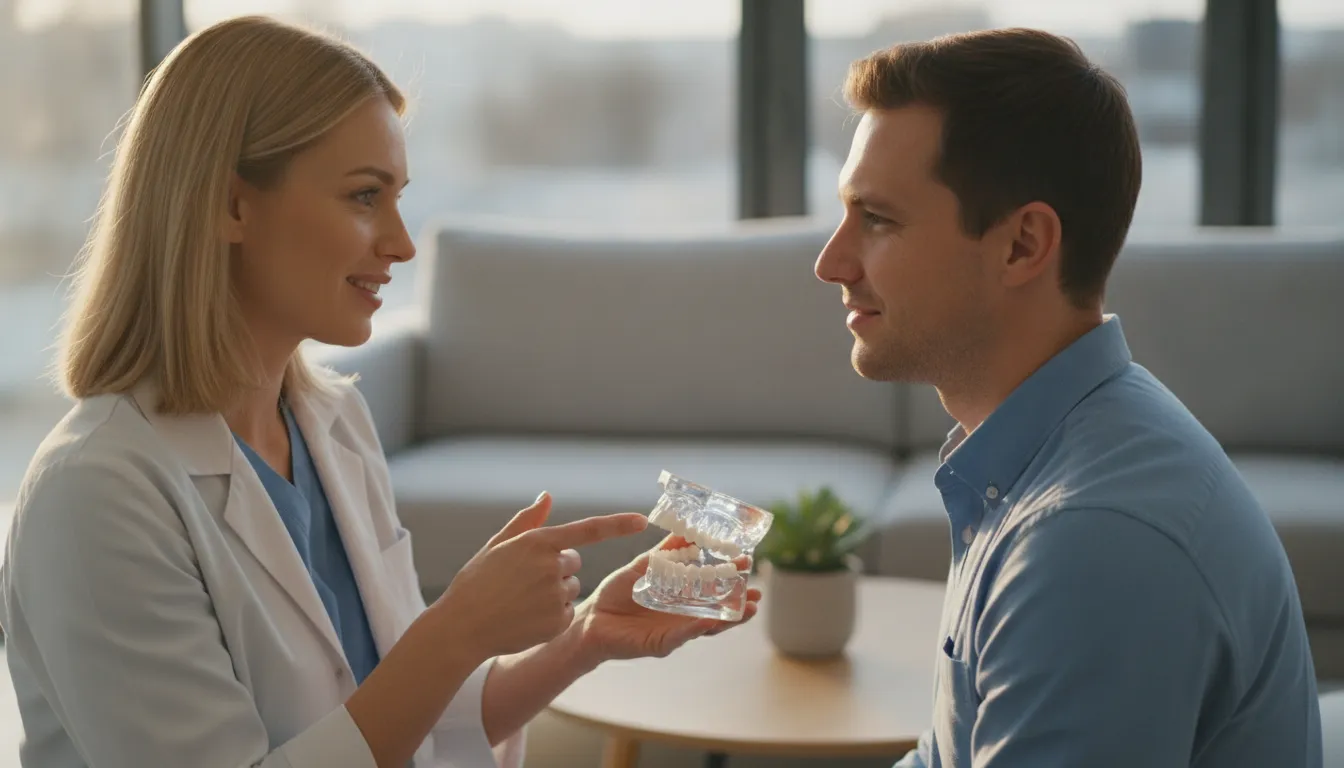
A provider will review the bite, tooth position, gum and bone support, existing dental work, and overall oral health. Cavities, active gum disease, damaged teeth, or other untreated concerns may need attention before orthodontic movement begins. The evaluation also considers whether the desired changes are realistic for the available space and jaw relationship. A digital scan, photographs, and other records may help the provider understand the bite from several angles.
- Teens may be candidates when their dental development and treatment goals are appropriate for aligner planning.
- Adults may be candidates even if they have had orthodontic treatment before, provided their teeth and supporting tissues can be evaluated and managed safely.
- Patients with anxiety can ask about comfort-focused or sedation-assisted care when appropriate, subject to a suitability assessment.
- Patients with complex or severe bite concerns may need a different orthodontic approach, additional treatment, or referral for more specialized assessment.
Compliance is another practical part of candidacy. Aligners are removable, so treatment depends on wearing them according to the prescribed guidance, keeping them clean, and attending monitoring visits. A patient who frequently removes the aligners or cannot follow the plan may not get predictable progress, even when the tooth movements themselves appear suitable.
A good candidate is not defined by age alone. The strongest starting point is healthy teeth and gums, realistic goals, and a bite that can be addressed safely with the planned movements.
For a closer look at the factors providers review, read this guide to Invisalign candidacy. A consultation can clarify whether clear aligners are a reasonable option for your overbite, or whether another treatment path deserves consideration.
What Should You Expect During Treatment?
The process is planned around your bite, your goals, and how your teeth respond over time. For adults at Marcos Ortega DDS, Invisalign treatment is typically 6 to 12 months, although your examination and digital treatment plan determine the more useful estimate. This is a general practice guideline, not a promise.
- Evaluation and records. Your visit begins with an examination of your teeth, bite, gums, and overall oral health. The dentist may gather photographs, digital scans, and other records to understand how your upper and lower teeth meet. This step helps distinguish a tooth-position concern from a more complex jaw relationship and confirms whether aligners are appropriate for your needs.
- Digital planning. Your records are used to map a series of planned tooth movements. The plan should show how each stage is intended to improve alignment and support a more functional bite. If your overbite is related to factors that aligners may not address predictably, your dentist can explain the limitations and discuss other options before treatment begins.
- Wearing and changing aligners. You will receive a sequence of removable clear aligners. They are taken out for eating, brushing, and flossing, then worn again as directed. The customer-supported guidance for this practice is typically 20 to 22 hours per day. Consistent wear matters because the planned sequence depends on each aligner being used as instructed.
- Monitoring progress. Follow-up visits are generally scheduled every 4 to 6 weeks. At these appointments, your dentist checks fit, tooth movement, bite changes, and oral health. The plan may be adjusted if your teeth are responding differently than expected. In some cases, attachments or additional aids may be recommended, depending on the movements required.
- Refinements when needed. Treatment plans are estimates based on your starting records. If small areas need further movement, refinement aligners may be part of the process. That does not mean treatment has failed. It means your provider is comparing the planned result with your actual progress and adapting care responsibly.
- Retention after active treatment. Once active aligner treatment is complete, retainers help hold the teeth in their new positions. Your dentist will explain the recommended retainer schedule and how to care for the appliances. Retention is an important part of protecting the alignment achieved through treatment.
Cost and timing depend on the treatment plan, the complexity of the bite, and how consistently aligners are worn. For more context, review this guide to Invisalign cost and timeline, then discuss your individual estimate during an evaluation. You can also review cosmetic dentistry services if your smile goals include more than bite alignment.
Invisalign or Braces: Which Option Fits an Overbite?
Both clear aligners and fixed braces can be used to address bite discrepancies, including some overbites. Research has examined both approaches, but that does not make them interchangeable for every patient. The better choice depends on how the teeth meet, how much movement is needed, the condition of the supporting teeth and gums, and how consistently the treatment plan can be followed. Invisalign and traditional braces each have practical strengths worth discussing during an examination.
| Clear aligners | Fixed braces |
|---|---|
| Removable and less noticeable, with responsibility for consistent wear. | Remain in place and can offer continuous control for selected movements. |
| Eating, brushing, and flossing are done without the trays. | Cleaning requires care around brackets and wires. |
| May suit some tooth-position-related bite concerns. | May be considered when movements or bite complexity call for fixed control. |
When Invisalign may be appealing
Clear aligners are discreet and removable. You can take them out for meals and for brushing and flossing, which may make it easier to maintain your usual hygiene routine. That flexibility also comes with responsibility. Aligners need to be worn according to the treating clinician’s instructions, and removing them too often can interfere with the planned sequence of tooth movements.
- Aligners may suit patients who value a less noticeable orthodontic option.
- Removability allows easier access for brushing and flossing.
- They can be convenient for eating and for selected social or professional situations.
- The plan may include attachments or other components when additional control is needed.
Invisalign is not automatically the right choice simply because an overbite appears mild. The software-designed sequence still needs to match the biology and mechanics of the individual case. A clinician must determine whether the planned tooth movements can address the bite safely and predictably.
When fixed braces may offer an advantage
Braces remain a valuable option because brackets and wires stay in place throughout treatment. That can give the clinician continuous control over tooth position and may be useful when an overbite involves more complex movements or requires close management of several teeth at once. Since the appliance cannot be removed by the patient, progress does not depend on remembering to put aligners back in after eating or cleaning.
Fixed braces do require careful cleaning around brackets and wires. They may also be more visible, and certain foods or habits may need to be modified during treatment. These considerations matter, but appearance alone should not decide a treatment plan. The goal is to select an approach that fits the bite, oral health, daily routine, and ability to follow care instructions.
Takeaway: Invisalign and braces can both play a role in overbite correction, but the most discreet option is not always the most suitable one. An in-person evaluation helps connect the appliance to the actual bite problem.
What Are the Benefits and Limits of Treatment?
For the right patient, clear aligners can offer a discreet way to guide the teeth toward a more functional bite. Invisalign treatment may correct a deep bite by moving teeth into improved alignment, but the goal is not simply a more even-looking smile. Bite planning also considers how the upper and lower teeth meet during chewing, biting, and speaking. Malocclusions can contribute to chewing difficulties and speech problems, so a clinician evaluates function as well as appearance. Learn more about how Invisalign addresses overbite concerns.
The main benefit is flexibility: aligners can support carefully planned tooth movement while fitting more discreetly into daily life. Whether they are appropriate depends on the cause and complexity of the bite.
What practical benefits can aligners provide?
Because aligners are clear, many patients appreciate that treatment is less noticeable than traditional braces. They are also removable, which allows you to take them out for meals and complete your normal brushing and flossing routine. That flexibility can make it easier to maintain oral hygiene during treatment, although the aligners must be worn as directed and replaced promptly after eating or cleaning.
- Discreet appearance: Clear trays can be less visually prominent during conversations, work, and social activities.
- Hygiene flexibility: Removing the trays makes brushing and flossing more straightforward than cleaning around fixed brackets and wires.
- Functional planning: Treatment can be designed around improving the relationship between the upper and lower teeth, not only straightening visible teeth.
- Personalized movement: The sequence of aligners is planned for the individual tooth positions and bite concerns identified during an examination.
When might another approach be considered?
Aligners do not correct every overbite in the same way. A deeper bite may be influenced by jaw structure, missing teeth, tooth position, or other factors that cannot be assessed from appearance alone. More complex cases may require a different appliance, additional orthodontic techniques, or a coordinated treatment plan. Fixed appliances and clear aligners are both used for correcting bite discrepancies, and the better choice depends on the movements needed and how predictably they can be controlled.
A consultation should therefore include an examination and appropriate records before any recommendation is made. Your clinician may discuss alternatives if aligners would not provide the control your case requires, or if dental health needs attention first. Treatment is also a shared responsibility: wearing trays consistently, attending monitoring visits, and following instructions all affect how the plan proceeds. These steps support the plan, but they cannot guarantee a particular result or timeline.
How Can San Diego Patients Start Planning Treatment?
Start with a conversation about your bite, smile goals, and daily needs rather than trying to determine your Invisalign candidacy from photos or online information. An overbite can have different causes and degrees, so a dentist needs to evaluate your teeth and bite before recommending a treatment approach. That evaluation helps distinguish a concern that may be addressed with clear aligners from one that may require a different plan.
For patients in Hillcrest, Downtown San Diego, and nearby neighborhoods, Marcos Ortega DDS provides comprehensive care with more than 34 years of experience serving the community. Invisalign is offered as part of the practice’s cosmetic dentistry services, with treatment planning tailored to your oral health and goals. You can learn more about Invisalign clear braces before your visit. Patients considering restorative needs can also explore restorative dentistry as part of a broader treatment conversation.
What happens at an initial consultation?
A consultation is an opportunity to discuss what you have noticed, what you want to improve, and whether aligners are appropriate for your situation. Your dentist can explain the planning process, expected responsibilities, alternative approaches when relevant, and what additional information may be needed before treatment begins. Treatment time and the method used to address an overbite vary by case, so an individualized plan matters more than a general estimate.
Comfort is also part of planning. If dental anxiety has caused you to postpone care, mention it when scheduling. Marcos Ortega DDS offers comfort-focused care and can discuss whether sedation support is suitable for your appointment and treatment needs. This allows the team to plan around your concerns without assuming that the same approach fits every patient.
A free Invisalign consultation can help you take the next step with clear information and no pressure. Bring questions about aligner wear, cleaning, follow-up visits, and how your bite may influence the recommended plan. The best answer to whether Invisalign can fix an overbite comes from an in-person evaluation.
Schedule your free Invisalign consultation with Marcos Ortega DDS to discuss your bite and treatment options. You can also call (619) 295-4545 to speak with the San Diego office.
Frequently Asked Questions
Can Invisalign fix an overbite?
Invisalign can be a treatment option for some patients with an overbite, including certain deep bites. Whether it can address your bite depends on the severity, tooth position, jaw structure, and overall oral health. A dental examination and individualized treatment plan are needed before determining whether clear aligners are appropriate.
How does Invisalign correct an overbite?
Custom clear aligners apply planned pressure to move teeth gradually toward a more functional alignment. Depending on the bite pattern, treatment may involve additional features such as attachments or elastics. Aligners are removable for eating, brushing, and flossing, but they must be worn as directed for the plan to work as intended.
How long does Invisalign take to fix an overbite?
There is no single timeline for overbite correction because treatment length varies with the complexity of the bite and the planned tooth movements. For adults at Marcos Ortega DDS, Invisalign treatment is typically 6 to 12 months, but your examination and plan determine the more useful estimate. This is a general practice guideline, not a promise (Invisalign). Your provider can give a more useful estimate after an examination and treatment planning.
Is Invisalign better than traditional braces for overbites?
Neither option is universally better. Clear aligners offer a removable, more discreet approach, while fixed braces may provide advantages for some complex tooth movements or bite discrepancies. Research describes both clear aligners and fixed appliances as methods used for bite correction (clinical research). The right choice depends on your anatomy, goals, and ability to follow the treatment plan.
Who is a candidate for Invisalign overbite correction?
Candidacy is decided through an individual evaluation, not by age alone. Some adults and teens with tooth-position-related overbites may be candidates. A deeper bite related to jaw structure or missing teeth may require a different or more comprehensive approach. A consultation can clarify the available options without assuming that aligners are suitable for every case.
Schedule Your Invisalign Consultation
An evaluation can help clarify whether clear aligners may fit your overbite treatment goals and what your options could involve. Treatment recommendations depend on your bite, oral health, and individual plan. Schedule a free Invisalign consultation to discuss your questions with the Marcos Ortega DDS team in San Diego.