
A dental night guard can show signs of wear long before it breaks in half. If you are wondering when to replace a dental night guard, look for changes in its surface, fit, comfort, and cleanliness—and have your dentist assess concerns rather than relying on a fixed calendar. A guard that no longer fits or has visible damage may not be appropriate to keep using. Marcos Ortega DDS has served San Diego for more than 34 years, with a comfort-first approach to dental care.
Schedule a night guard evaluation
When should you replace a dental night guard?
There is no single replacement date that fits every guard. Replace it when a dentist recommends doing so, or when significant damage, poor fit, or persistent hygiene problems make continued use questionable.
Some guards may last longer than others. The material, how often you wear it, how strongly you clench or grind, and how you clean and store it all affect its condition. A clear guard can also develop wear gradually, so it helps to inspect it in good light and pay attention to how it feels when seated.
Arrange a dental check if you notice a new crack, a sharp or rough edge, a hole, a thin spot, a piece that has broken away, or a change in how the guard fits. These signs do not tell you the cause by themselves, but they are good reasons to ask whether repair, adjustment, or replacement is appropriate. A guard with damage may not cover or cushion the teeth as intended.
Do not wait for a guard to split completely. A small crack can widen with repeated use, and an uneven edge may rub the gums or cheek. If it suddenly feels tight, loose, or painful, do not force it into place. Contact your dental office for advice. If the guard is still intact and fits normally, bring it to your next regular visit so it can be checked.
What wear signs should you look for?
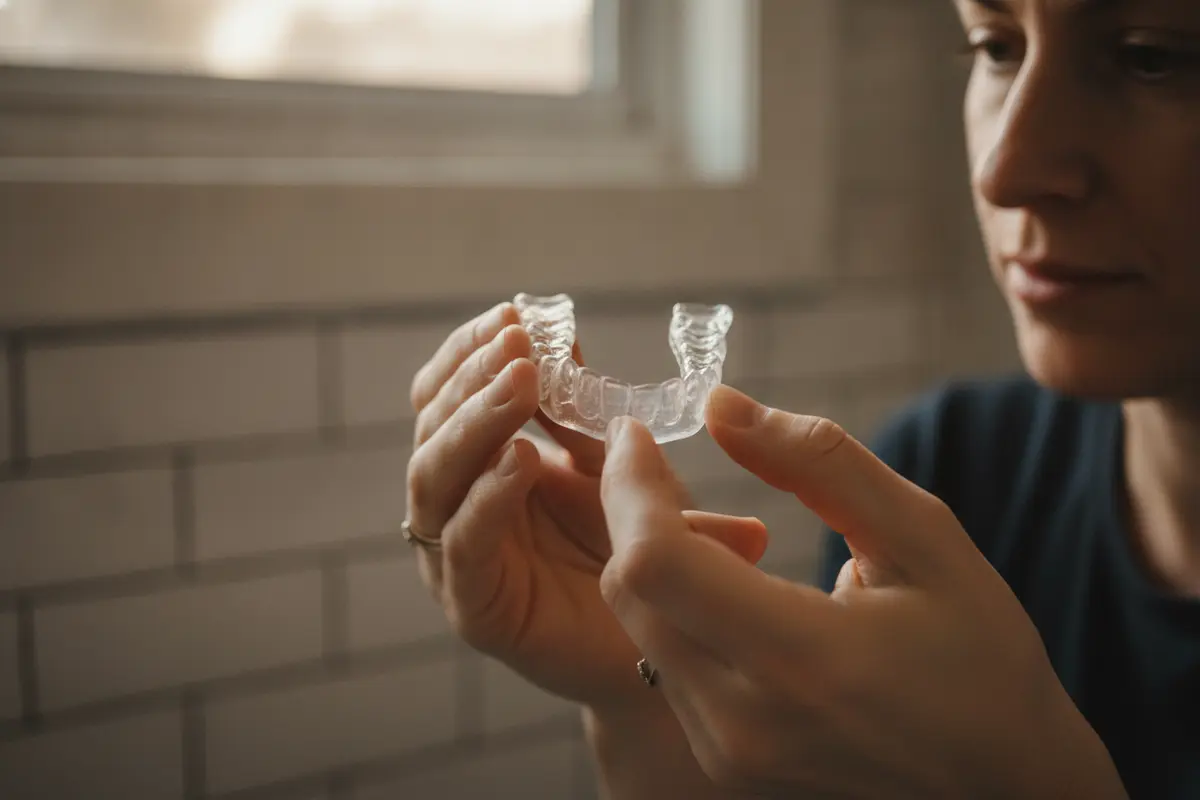
Check the whole appliance, not just the front surface. Look for changes in its shape, thickness, edges, and the way it sits over your teeth.
- Cracks or splits: Inspect both sides and the edges. Hairline marks, spreading cracks, or a section that flexes differently deserve a professional review.
- Holes, grooves, or deep tooth impressions: These may indicate repeated pressure or material loss. Your dentist can assess whether enough of the guard remains intact.
- Thinning or uneven areas: Compare left and right sides and look for an area that appears markedly thinner than when the guard was new.
- Sharp, rough, or jagged edges: An edge that catches on your tongue or irritates soft tissue may need attention, even if the rest looks sound.
- Warping or a changed outline: A guard that has bent or no longer follows the shape of your teeth should not be forced into place.
- Persistent odor, film, or staining: These can be hygiene concerns. Staining alone does not prove a guard must be replaced, but buildup that remains after proper cleaning warrants a discussion.
A quick home check is useful, but it is not a substitute for an examination. Some surface marks are cosmetic, while other changes may affect fit or durability. Your dentist can inspect the device and your teeth, then explain whether monitoring, adjustment, or a new guard makes sense.
How can you tell if the fit has changed?
A guard should seat as it was designed to. New pressure, looseness, rocking, or discomfort can signal a change in the appliance or in your mouth.
Pay attention to how the guard goes in and comes out. It should not require unusual force or feel unstable once seated. A fit concern may come from a warped or damaged guard, but changes in teeth, dental work, or oral tissues can also affect how an appliance feels. Only an examination can sort out the likely reason.
- The guard will not seat fully or has become difficult to remove.
- It rocks, slips, or feels looser than it did before.
- One tooth or a small area feels unusually pressured when the guard is in place.
- You notice new soreness in your teeth, jaw, gums, or cheeks after wearing it.
- Your bite feels different after removing the guard or the change persists into the day.
Stop and seek dental guidance if the appliance causes pain, appears damaged, or no longer fits securely. Avoid trimming or heating it at home; changing its shape can make the fit less predictable. If you have jaw discomfort or other symptoms, share when they occur and how long they last. You can read more about evaluation of jaw concerns in this guide to TMJ and jaw symptoms.
What can affect a night guard’s lifespan?
Wear depends on the appliance and the person using it. Daily habits and changes in your dental health matter as much as the amount of time since it was made.
People who clench or grind heavily may put more force on an appliance than people with less frequent or less intense habits. The type and thickness of material, whether the guard is designed for the upper or lower teeth, and how often it is used also play a part. A dentist can explain what is expected for your specific device; avoid assuming that another person’s replacement schedule applies to yours.
Care and storage matter, too. Follow the product-specific instructions you received. In general, rinse the appliance after use, clean it as directed, let it dry, and keep it in a clean protective case. Do not expose it to high heat, which can distort some materials. Avoid abrasive cleaners or chemicals unless the manufacturer or your dental team says they are suitable.
Changes in your mouth may affect an otherwise intact guard. A new filling, crown, or other dental work can change the way teeth meet or alter the fit. If you have had treatment since your guard was made, bring it to your follow-up visit. For questions about restorative care, see the practice’s general dentistry services information.
How should you inspect and care for your guard?
A short routine makes it easier to catch changes early and keep the appliance clean between dental visits.
- Rinse after wearing it. Use cool or lukewarm water, unless the instructions for your particular appliance say otherwise.
- Clean it as directed. Use the method recommended by your dentist or the manufacturer. Avoid improvised cleaners that could damage the material.
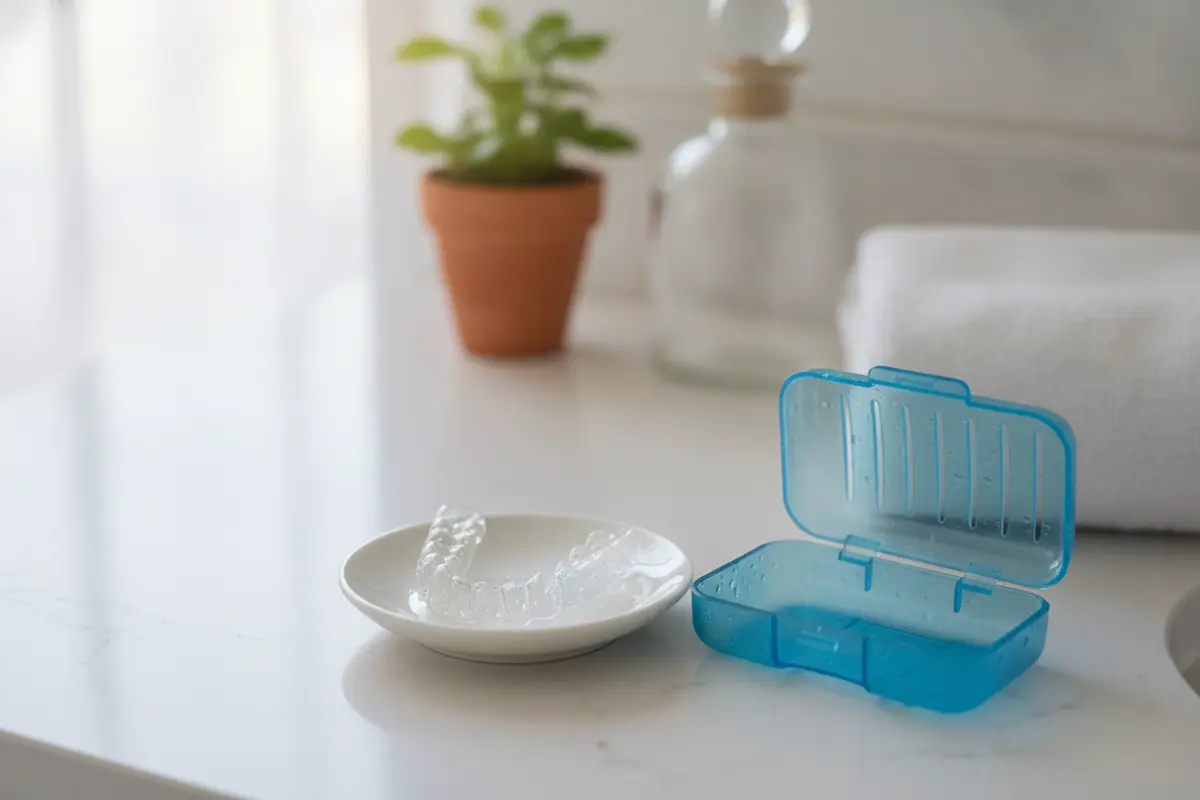
- Let it dry before storage. Store it in a clean case that protects it from crushing and contamination.
- Inspect it in good light. Check the inside and outside for cracks, holes, thinning, sharp edges, and residue.
- Check the fit gently. Notice whether it seats as usual. Never bite down hard or force a guard to test whether it fits.
- Bring it to appointments. Your dentist can check the appliance and make recommendations based on its condition and your exam.
Keep the case clean, too, and do not leave the guard where a pet can chew it or where it may be crushed. If you travel, use the case rather than wrapping the appliance in a napkin, where it can be lost or thrown away. When you are unsure whether a cleaning method is safe, check the instructions or ask your dental office before trying it.
What should you do if the guard is damaged?
Do not rely on a damaged or poorly fitting guard until you have received guidance. Save the appliance and ask your dentist what to do next.
If the guard has a new crack, a missing piece, a sharp edge, or a sudden fit change, stop wearing it and contact your dental office. Describe what changed and when you first noticed it. If a fragment is missing, mention that as well. Do not glue broken parts together, file down edges, or heat the guard to reshape it. These fixes can alter the appliance or create new rough areas.
If the guard is intact but uncomfortable, do not assume that discomfort is something you need to get used to. Take it out and arrange an assessment, especially if discomfort continues or your bite feels different. Tell the dentist whether the issue happens immediately or after several hours, whether it is on one side, and whether any recent dental work preceded the change.
Teeth grinding can be associated with tooth damage, jaw discomfort, and other symptoms. The National Institute of Dental and Craniofacial Research notes that severe bruxism can lead to damaged teeth, jaw pain or tiredness, and headache. Read its bruxism overview for general information. Symptoms can have different causes, so a dental evaluation is the right way to discuss your own situation.
How do common guard conditions compare?
Use these examples as prompts for a conversation, not as a diagnosis or a replacement schedule.
| What you notice | What to do | Why it matters |
|---|---|---|
| Intact, clean, and fits as usual | Continue care as directed and bring it to routine visits | Regular review helps track changes |
| Staining or light surface marks | Clean as directed and ask at your next visit if unsure | Appearance alone may not show whether fit is affected |
| Crack, hole, sharp edge, or missing piece | Stop using it and contact the dental office | Damage may affect comfort or function |
| Loose, tight, painful, or changed fit | Do not force it; arrange a dental assessment | The appliance or your mouth may have changed |
Your dentist may recommend continuing to use a sound appliance, adjusting it when appropriate, or replacing it. The choice depends on the guard’s condition, how it fits, your oral health, and what you need it to do. There is no universal age at which every night guard becomes unusable.
What happens during a dental guard evaluation?
An evaluation connects the condition of the appliance with the health of your teeth and the way the guard fits.
Your dentist may ask how often you wear it, when you received it, what cleaning routine you use, and whether you have noticed new symptoms or dental work. The guard can be checked for cracks, uneven wear, sharp edges, and fit. The dentist may also examine your teeth and bite and ask about jaw discomfort or headaches. The findings guide the next step; replacement is not automatic just because a particular amount of time has passed.
Bring the appliance and its case, and share the instructions you were given if you still have them. It can also help to note when the fit changed and whether the guard has been exposed to heat or pressure. If you feel anxious about dental visits, ask about comfort options before your appointment. Marcos Ortega DDS provides comfort-focused care, and the practice has served the Hillcrest and Downtown San Diego community for more than 34 years. Learn about the office’s patient comfort approach or meet Dr. Ortega.
How can you prepare for a night guard replacement discussion?
A few helpful practical details about your current appliance and your routine can help make the conversation more useful.
Before the visit, note when the guard was made, how often you wear it, and when you first noticed a change. Describe whether the issue is visible damage, a different fit, discomfort, odor, or difficulty cleaning it. Bring the guard even if you have stopped wearing it. A dentist can learn more by examining the appliance directly than by relying on a description alone.
- Bring the guard and storage case, plus care instructions if available.
- List any recent fillings, crowns, or other dental work since the guard was made.
- Explain whether you wear it nightly or only at certain times, and what cleaning products you use.
- Ask whether the current appliance can be adjusted or if replacement is the safer choice.
- If a new guard is recommended, ask how to check the fit and what to do if it feels uncomfortable.
It is reasonable to ask what the dentist observed and how that finding affects the recommendation. Ask how your oral health and symptoms factor into the plan, and how to handle the appliance while waiting for follow-up. The right guard decision should be based on the appliance, your exam, and your needs—not on pressure to replace a device that is still suitable or to keep using one that is damaged or uncomfortable.
Frequently asked questions about night guards
Is there a standard schedule for replacing a night guard?
No single interval applies to everyone. Materials, use, grinding or clenching, care, fit, and dental changes all affect how long a guard remains suitable. Ask your dentist to assess its condition rather than replacing it by a calendar alone.
Can I keep wearing a guard with a small crack?
Do not assume a cracked guard is safe to keep using. Stop wearing it and contact your dental office for advice, particularly if the crack is spreading, an edge is sharp, or the fit has changed.
Does discoloration mean I need a new night guard?
Not necessarily. Color changes can occur, but staining by itself does not show whether the appliance still fits or functions as intended. Clean it according to its instructions and ask your dentist if staining persists or you notice odor, buildup, or other changes.
Can I adjust or repair my night guard at home?
Avoid cutting, filing, gluing, or heating it. Home changes may affect its shape and fit. Have your dentist inspect the appliance and advise whether it can be adjusted or should be replaced.
What should you remember about replacing a night guard?
Inspect your guard regularly, follow its care instructions, and pay attention to new damage, poor fit, discomfort, or persistent hygiene concerns. If anything changes, stop forcing the appliance and ask your dentist to evaluate it; the right next step depends on the guard and your oral health.