
When does a general dentist refer you to a specialist? Usually after the exam shows the treatment requires training beyond dental school, your health history changes the setting, or another office needs your records. A referral is not a sign that your dentist gave up on the tooth. Plenty of problems never leave the office. At Marcos Ortega DDS in Hillcrest, one visit can cover an exam, a filling, a crown, or a root canal. It can also cover an implant with bone grafting or a sinus lift when the case fits, or a calmer plan if you are nervous.
Book a Hillcrest exam on the contact page
When does a general dentist refer you to a specialist?
A referral is for care that needs extra specialty training, a medical risk your dentist wants another clinician to manage, or records another office must review. It is not the default for a cleaning, a filling, or a routine broken tooth.
The National Commission on Recognition of Dental Specialties and Certifying Boards, part of the American Dental Association, recognizes specialties only where the skills go beyond pre-doctoral dental school. There are 12 recognized dental specialties. A general dentist still diagnoses the problem, explains the options, and stays your home base.
Common reasons a referral comes up:
- The tooth nerve is unusually hard to treat. A bent canal, a calcified canal, or a failed first root canal may go to an endodontist. That dentist focuses on the pulp and the tissue around the root.
- Surgery is more than a simple extraction. An impacted wisdom tooth or a jaw cyst may go to an oral surgeon. A sinus lift or bone graft for an implant can be planned here when the exam supports it. A hospital setting is a different question, and that depends on your health history, not on the graft itself.
- Gum disease is advanced. Deep pockets, loose teeth, or grafting around exposed roots may go to a periodontist.
- A child needs care this office does not provide. Pediatric dentists train for very young patients and complex growth. This practice is family-friendly. It is not a pediatric dental specialty office.
- The bite or jaw pain needs a focused workup. Orofacial pain and some orthodontic problems have their own specialists. Tooth movement here is planned with Invisalign when aligners fit. Not every appliance is offered.
- Your medical history changes the plan. Recent heart surgery, a bleeding disorder, or IV bone-strengthening medicine can change the setting. Hospital-level anesthesia can too.
A referral can also be paperwork. Some insurance plans and some surgeons ask for a note from your dentist before they will schedule you. The note does not mean the treatment is urgent, and it does not mean you must accept the first specialist you are given.
Which problems can stay with your Hillcrest dentist?
Cleanings, fillings, many crowns, many root canals, implants, dentures, and emergency pain visits can start, and often finish, at this office.
Dr. Marcos Ortega has practiced in downtown San Diego since graduating from the UCSF School of Dentistry in 1986. The office at 306 Walnut Ave, Suite 25, serves Hillcrest, Mission Hills, Banker’s Hill, Park West, Middletown, and downtown. General dental care on the Hillcrest page is the local home for that full visit, from a checkup to cosmetic and restorative treatment.
People in Hillcrest often ask for a referral because a friend had one, not because the tooth needs one. Start with the problem you can describe. A chipped tooth, a loose crown, bleeding gums, or a dull ache can all be examined here first.
The general dentistry page lists the everyday work done in this office:
- Six-month exams and cleanings, including an oral cancer screening.
- Tooth-colored fillings.
- Crowns for cracked or heavily filled teeth.
- Root canal treatment when the canal shape fits general-practice care.
- Night guards for grinding.
- Laser periodontal therapy for gum disease that still fits in-office care.
That list is the everyday menu. It is not a limit on what the exam can find.
Restorative dentistry covers crowns, bridges, dentures, and implants when a tooth is too damaged to repair with a filling. Implant placement and the crown that goes on it are both offered here, so a missing tooth does not automatically mean an outside surgical office. A free implant consultation is listed on the site. The fee for any implant still depends on the exam, the X-rays, and the bone.
Comfort is part of the decision, not an add-on. Dr. Ortega is an active member of the Dental Organization for Conscious Sedation (DOCS). Oral sedation, The Wand computerized anesthetic, and trans-dermal numbing patches are used when a patient wants a calmer visit. Sedation still requires a screening. It is not a promise of a painless procedure, and it is not a reason to skip a specialist when the procedure itself is outside this office.
Bring a short list to that first visit. It makes the plan easier to follow:
- What hurts, and when it started.
- Any swelling, fever, or a bad taste.
- Medicines, including blood thinners and bone-density drugs.
- Whether you want to save the tooth or talk about replacing it.
- Whether fear of the visit has kept you away.
That list is enough. You do not need the name of a specialist before you sit down. If the exam shows a straight path, treatment can be scheduled here. If it shows a limit, you will hear that before anyone books a second office.
What should you bring to a specialist visit?
Bring the referral note, recent X-rays, a medication list, and your questions. Ask the specialist to send the findings back to your dentist.
You do not need to diagnose yourself before you call. You do need a clear packet so the second office does not repeat work or guess.
- Ask what the referral is for. Is it a second opinion, a single procedure, or a handoff of the whole tooth? Write down the tooth number if your dentist gives you one.
- Take copies of recent X-rays. A panoramic film or a 3D scan, if one was taken, saves a repeat image. Ask the front desk to send them before you leave Hillcrest.
- List medicines and health changes. Include blood thinners, bone-density drugs, heart valves, joint replacements, and allergies. The specialist uses that list to decide on anesthesia and timing.
- Ask who does the final tooth. An endodontist may finish the root canal and send you back for the crown. An oral surgeon may remove a tooth and send you back for the implant crown. Knowing the handoff prevents a gap in care.
- Keep your follow-up on the calendar. The contact page lists Monday through Thursday, 7:30 a.m. to 4:30 p.m., and Friday through Sunday closed. Book the return visit before you leave the specialist if healing has a deadline.
A specialist visit is still your choice. You can ask why the referral was made, whether this office can do the procedure, and what happens if you wait. Waiting is sometimes reasonable. Swelling, fever, trouble swallowing, or pain that stops you from sleeping is not a wait-and-see problem. Call the office or, if you cannot breathe or swallow, seek emergency care.
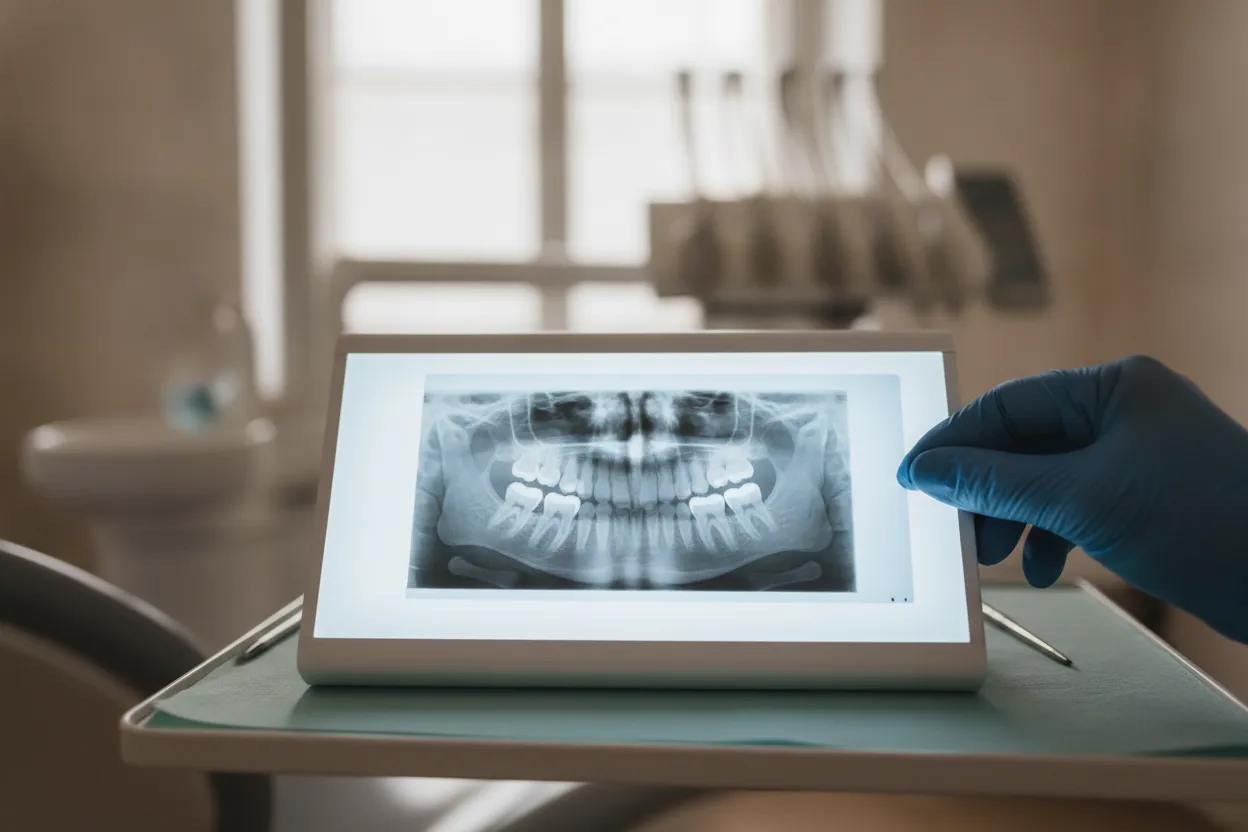
When does a general dentist refer you to a specialist instead of treating you here?
A specialist has formal advanced training in one area. A general dentist is the clinician who sees the whole mouth and decides when that extra training is needed.
The National Commission defines a specialty as training greater than dental school and distinct from the other specialties. The current list is dental anesthesiology, dental public health, endodontics, oral and maxillofacial pathology, oral and maxillofacial radiology, oral and maxillofacial surgery, oral medicine, orofacial pain, orthodontics and dentofacial orthopedics, pediatric dentistry, periodontics, and prosthodontics. Cosmetic dentistry is not one of those 12. It is an interest area many general dentists study after school. Dr. Ortega is a member of the American Academy of Cosmetic Dentistry and of local implant and cosmetic study groups, including the Seattle Institute for Advanced Dental Education. That training supports veneers, whitening, and implant planning. It does not replace a recognized specialty when the case needs one.
| Where the visit usually stays | Typical examples |
|---|---|
| This Hillcrest office | Fillings, many crowns, straightforward root canals, implants with bone grafting or a sinus lift when the exam supports it, and Invisalign when aligners fit. |
| A dental specialist | A failed or sharply bent root canal, jaw surgery, a deep wisdom-tooth impaction, advanced gum grafting, or care that needs a hospital. |
| Back here after the specialist | The crown after a root canal, the replacement tooth after an extraction, and the recall visits once healing is on track. |
Problems that often stay in general practice
- Mild tooth pain or a small cavity. The visit is usually an exam, a filling, or a crown if the crack is larger. A referral is rare unless your medical history changes the plan.
- A straightforward infected tooth nerve. A root canal can stay here when the canals are reachable. A calcified, bent, or failed canal is the case more likely to see an endodontist.
- A missing tooth with enough bone. An implant, bridge, or denture can be planned in this office, including bone grafting or a sinus lift when the exam supports that step.
- Bleeding gums with moderate pockets. Cleaning and laser care can stay here. Advanced bone loss or a gum graft is the point where a periodontist is more likely.
- Crooked teeth that aligners can move. Invisalign stays here when the bite fits clear aligners. Jaw growth or complex tooth movement is more often an orthodontist visit.
Problems that often need a specialist
- Jaw surgery or a deep impaction. This office can take the exam, send the records, and plan the replacement tooth. An oral surgeon usually does the surgery itself.
- A root canal that already failed. A separated instrument, a canal the first film could not show, or a sharp bend is a common reason to see an endodontist.
- Hospital-level anesthesia. Recent heart surgery, a bleeding disorder, or IV bone-strengthening medicine can move the visit out of a dental office even when the tooth itself is routine.
- Very young children or complex growth. This practice welcomes families. It is not a pediatric dental specialty office, so some children are better seen by a pediatric dentist.
Use those lists as a starting map, not a rule. Two patients with the same tooth number can get different plans after an exam. One root canal is routine. The next has a separated instrument or a canal the first film could not show. That is why the office will not quote a referral, or refuse one, from a photo alone.

What happens after the specialist sends you back?
Your Hillcrest dentist should get the report, finish any restoration that belongs here, and put you back on a recall schedule.
A referral is a loop, not a goodbye. After an endodontist finishes a root canal, the tooth often still needs a crown so it does not crack. After an extraction, the socket may need a few months before an implant or a bridge. After periodontal treatment, cleanings may come more often than twice a year.
Ask these questions at the return visit:
- Did the specialist send notes and images?
- What still has to be done in this office, and what can wait?
- Does the tooth need a crown, a night guard, or a different bite adjustment?
- How will you know healing is off track?
Free consultations are posted for oral sedation, implants, Invisalign, and cosmetic dentistry. They are consultations, not a diagnosis and not a locked-in fee. Interest-free financing is listed on the about page for patients who qualify, and the office accepts major cards. Call to confirm whether your specific plan is in network before you count on a benefit. The phone is 619-295-4545, and free parking is available at the Walnut Avenue office.
A good return visit is short if the notes arrived. You should leave knowing the next date, the tooth that was treated, and the sign that means you should call sooner. Soreness for a day or two can be normal after a root canal or an extraction. Swelling that spreads, a fever, or pain that wakes you up is a reason to call the same day. Do not wait for the specialist’s office to reopen if those signs show up over a weekend. Ask what to do if symptoms change while this office is closed, and use the contact page hours when you book.
If you already have a specialist in mind, say so. If you do not, the team can point you to the right type of office and still keep your records. You should not have to retell the whole story at every front desk.
Request a visit on the contact page or call (619) 295-4545 and ask whether this tooth needs a specialist.
Frequently asked questions
Does a referral mean my dentist cannot treat the tooth?
Not always. Many referrals are for one hard step, such as a bent root canal or a wisdom tooth close to a nerve. Your general dentist may still do the exam, the crown, and the checkups. Ask which parts stay here.
Can I see a specialist without a referral?
Sometimes yes. Some specialists and some insurance plans require a dentist’s note, and others will see you directly. A note still helps because it includes X-rays and the reason for the visit. Call the specialist’s office and your plan before you assume either way.
Will Marcos Ortega DDS refer me for implants or root canals?
Often no. Implants, many root canals, bone grafting, and sinus lifts are part of the in-office implant plan when the exam supports them. A referral is more likely for a failed or sharply bent canal, jaw surgery, or a medical history that makes hospital-based care safer. The exam decides.
What if I am nervous about both visits?
Tell the team before you book. Oral sedation is available after a screening, and the office uses The Wand and numbing patches for injections. Sedation does not remove the need for a specialist when the procedure itself is outside general practice.
How fast should I act on a referral?
Ask for a timeframe at the visit. A cracked tooth with swelling or fever needs prompt care. A second opinion on a crown can usually wait for a convenient Monday-through-Thursday appointment. If pain, swelling, or trouble swallowing gets worse while you wait, call 619-295-4545.