
What is peri-implantitis? It is inflammation around a dental implant that can involve damage to the supporting tissues and bone. Early signs may be subtle, so a change around an implant deserves attention even when it does not hurt. If you have an implant in Hillcrest, Mission Hills, or elsewhere in San Diego, regular professional checks and careful daily cleaning help your dental team monitor its health.
What happens during peri-implantitis?
In brief: inflammation begins in the gum tissue around an implant; in more advanced cases, supporting bone may also be affected.
An implant replaces a missing tooth root. A crown, bridge, or denture may attach to it. Healthy tissue around an implant still needs ongoing care. Bacterial plaque can collect at the gumline, much as it does around natural teeth. If inflammation persists, the tissue can become swollen or bleed. Peri-implantitis refers to inflammation around an implant with progressive loss of supporting bone.
This differs from peri-implant mucositis, which describes inflammation limited to soft tissue without bone loss. A dental exam and imaging, when appropriate, help a clinician assess what is happening. Symptoms alone cannot confirm either condition. A NIH-hosted review of peri-implantitis describes how the condition may damage soft and hard tissues around implants, including bone.
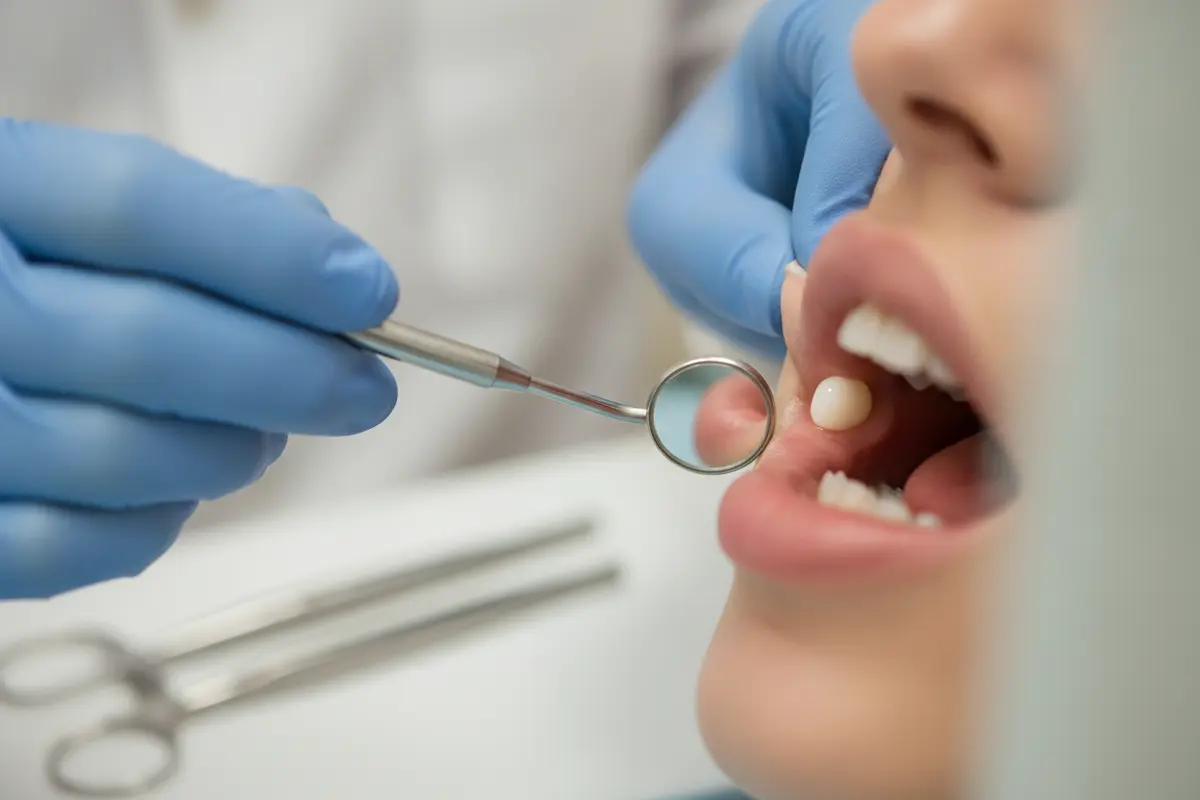
Which signs around an implant should you notice?
In brief: bleeding, redness, swelling, tenderness, or discharge around an implant should be discussed with a dental professional.
Some changes are easy to overlook, particularly if they develop gradually. Pay attention to:
- Gums that bleed during brushing or cleaning between teeth.
- Redness, puffiness, or tenderness around the implant.
- Persistent unpleasant taste or discharge near the site.
- A change in how the implant-supported tooth or denture feels when you bite.
- New discomfort or difficulty cleaning the area.
These signs can have several causes and do not by themselves establish peri-implantitis. An implant that feels loose, worsening swelling, or significant pain calls for prompt dental advice. Do not wait for pain: tissue changes may need assessment even when mild. Note when the change began and whether it is progressing.
What can contribute to peri-implantitis?
In brief: plaque is a key concern, while personal oral-health history, habits, and access to effective cleaning can shape risk.
There is not one cause that applies to everyone. Plaque accumulation around an implant can contribute to inflammation. Other factors a dental team may consider include a history of gum disease, difficulty cleaning around the restoration, smoking, and health or medication factors that affect healing. Implant position and the shape of an attached crown or denture can also influence how accessible the area is for home care.
These factors do not mean that a person will develop disease, and a person without them can still have an implant problem. Avoid using a checklist as a diagnosis. Your dentist can review your medical and dental history, examine the tissue, and compare current findings with prior records.
How can you help prevent inflammation around an implant?
In brief: clean gently every day, keep scheduled professional visits, and ask for a method suited to your specific restoration.
Implant care is a partnership between home habits and professional monitoring. A practical routine may include:
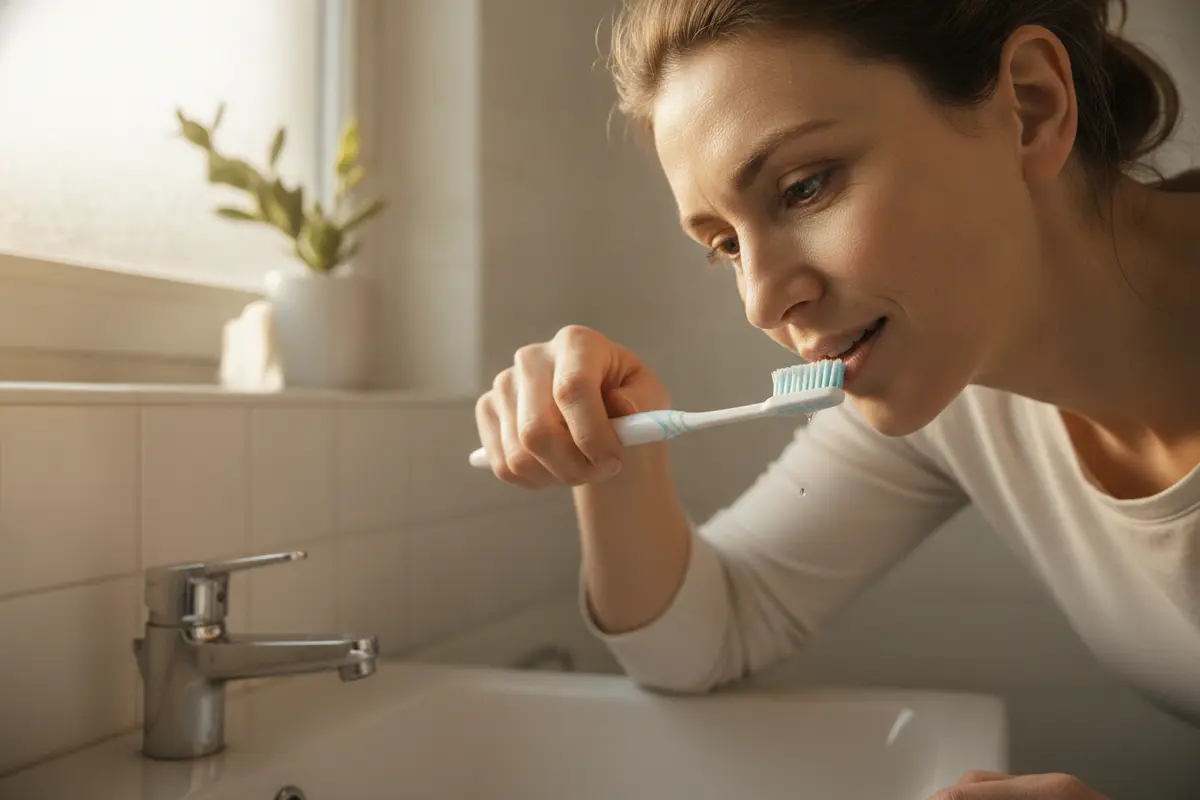
- Brush twice a day. Use a soft-bristled brush and clean the gumline and accessible surfaces without scrubbing aggressively.
- Clean between teeth and around the implant daily. Your dental team can demonstrate whether floss, an interdental brush, or another aid fits the space.
- Attend recommended maintenance visits. The schedule may vary with your oral health, restoration, and clinical findings.
- Report changes. Tell the dentist about bleeding, soreness, swelling, changes in fit, or trouble reaching the area.
- Discuss tobacco use and health conditions candidly. Your clinician can explain how these may affect your individual care plan.
A device that works well for one implant may not suit another. A bulky brush may not reach under some bridges, while an incorrectly sized interdental brush may irritate tissue. Ask for a demonstration rather than forcing a tool into a tight space. If you wear a removable implant-supported denture, ask how to clean both the appliance and the parts that remain in your mouth. For additional guidance, review the practice’s general dentistry and maintenance care.
How do routine checks and home care compare?
In brief: daily care removes surface debris, while professional visits assess implant health in ways home care cannot.
| Care step | What it helps with | What it cannot do alone |
|---|---|---|
| Daily brushing | Removes plaque from accessible tooth and restoration surfaces | Cannot assess bone or diagnose inflammation |
| Interdental cleaning | Reaches spaces around the implant and restoration | Cannot replace a clinical exam |
| Dental maintenance visit | Allows tissue evaluation and professional cleaning as appropriate | Does not remove the need for daily home care |
| Prompt evaluation | Helps determine the cause of a new change | Cannot guarantee a particular treatment outcome |
The right combination depends on the restoration and your clinical findings. The practice’s dental implant care in San Diego page explains its implant services. During routine visits, mention specific trouble spots rather than simply saying that brushing is difficult. A clinician or hygienist may be able to suggest a different angle, tool size, or sequence that is easier to repeat at home.
What may happen during an evaluation?
In brief: a dentist reviews your history, examines the area, and decides whether additional assessment or care is appropriate.
At an appointment, expect questions about when you noticed the change, whether it has progressed, and how you clean around the implant. The clinician may inspect gum tissue, check the restoration and bite, and compare the area with previous measurements or images. X-rays may be considered when useful to evaluate supporting structures. The exact assessment depends on the exam.
If inflammation is present, the next step depends on its extent, the implant and restoration, and your overall oral health. Options may include improving access for cleaning, professional debridement, closer monitoring, or other treatment. More involved disease may require a specialist opinion or a different plan. No single approach fits every case, and outcomes cannot be promised. Ask what was found, what the options are, and how progress will be checked.
Marcos Ortega DDS has served San Diego for more than 34 years and offers comprehensive care in a comfort-focused setting. Patients can ask about evaluation and planning through the practice’s restorative dentistry service. The Hillcrest office offers free parking.
How should you prepare for an implant-health appointment?
In brief: bring a clear account of your symptoms, current health information, and questions about cleaning and follow-up.
- Note when the change began and whether it is improving, worsening, or unchanged.
- List current medicines and relevant health changes.
- Bring details of the restoration if known, including when it was placed.
- Describe your brushing and interdental-cleaning tools.
- Write down questions about findings, options, maintenance, and follow-up timing.
Clear information helps the dental team understand the context, but an appointment is needed to evaluate tissue. If you are concerned or a symptom is changing, contact a dentist rather than trying to diagnose it at home. Marcos Ortega DDS is an established Hillcrest practice with comprehensive care and a long-standing San Diego presence; learn about the practice before your visit.
What questions can you ask about implant maintenance?
In brief: ask about your personal findings, a workable cleaning routine, and when to return.
A short list of questions can make an appointment more useful. You do not need to know clinical terms. Describe what you see and ask for an explanation in plain language. Consider asking:
- Is the tissue around my implant healthy, or is there inflammation to monitor?
- Do my current findings suggest any change in the supporting bone?
- Which brush, floss, or interdental aid best fits my restoration?
- Can you show me how to clean under or around this specific crown, bridge, or denture?
- How often should I return for maintenance based on my history?
- What change should prompt me to call sooner?
It can help to repeat the instructions back or demonstrate the technique before leaving. If dexterity, vision, or limited opening makes a tool difficult to use, say so. A routine that is clinically appropriate but impractical is hard to maintain; the team can discuss alternatives that suit your situation.
How might implant restoration design affect cleaning?
In brief: crowns, bridges, and implant-supported dentures create different spaces, so cleaning instructions should fit the restoration rather than follow a one-size-fits-all rule.
A single implant crown may have accessible sides but a narrow gumline area. A bridge supported by implants can create an underside that needs a specific cleaning aid. A removable implant-supported denture has both an appliance to clean and implant components in the mouth. The design, tissue shape, and available space all affect which method is practical.
At home, avoid assuming that ordinary floss reaches every surface. For instance, a person with a bridge might need instruction on threading a cleaning aid beneath it, while someone with a removable appliance may need guidance on taking it out and cleaning the attachment areas. These are examples, not universal directions: follow the advice given for your own restoration.
- Ask which surfaces need daily attention and which tools can reach them.
- Request a demonstration using your actual restoration when possible.
- Tell the clinician if a tool causes bleeding, pain, or persistent irritation.
- Ask how to care for removable parts and how to store them safely.
Difficulty reaching an area is useful information for your dental team. It may call for a change in technique, a different aid, or an assessment of the restoration; do not try to adjust or force a component yourself. The practice’s dentures service information can help patients understand the range of restoration care to discuss.
What changes should prompt a call sooner than your next check?
In brief: do not wait for a scheduled cleaning if an implant area is changing, painful, swollen, or difficult to use.
A routine maintenance interval is not a reason to ignore a new problem. Contact a dental professional if you notice recurring bleeding, persistent swelling, discharge, increasing tenderness, or a shift in how the restoration meets opposing teeth. If the restoration seems loose or you cannot clean the area, explain that when you call. The team can help determine how soon an examination is appropriate.
Before calling, make a brief note of the symptom, its start date, whether it is getting worse, and any recent changes in your health or medicines. Avoid poking the tissue, applying unprescribed products, or trying to tighten an implant component at home. If discomfort is severe or swelling is progressing, seek prompt professional guidance rather than waiting to see whether it resolves.
New symptoms do not automatically mean peri-implantitis. A crown or denture can feel different for reasons unrelated to bone or gum disease. The purpose of an exam is to distinguish possibilities and determine what, if anything, needs attention. If the issue is stable but concerning, still bring it up at the earliest practical appointment.
Contact the office to discuss implant care
Frequently asked questions
Is peri-implantitis the same as gum disease?
They are related inflammatory problems, but peri-implantitis affects tissues around a dental implant. Gum disease affects supporting tissues around natural teeth. A dental professional can distinguish the causes and recommend appropriate care.
Can peri-implantitis occur without pain?
Yes. A lack of pain does not rule out tissue inflammation. Bleeding, redness, swelling, or other changes around an implant merit discussion with a dentist.
Can peri-implantitis be prevented?
Daily cleaning and professional monitoring can help reduce plaque and identify changes, but no routine can guarantee prevention. Your dental team can tailor cleaning instructions and visit timing to your needs.
Does a loose implant mean peri-implantitis?
Not necessarily. A loose-feeling crown, denture, or implant can have different causes, so it needs an examination. Contact a dentist promptly if an implant-supported restoration feels unstable.
What should you remember?
Peri-implantitis is inflammation around an implant that may involve loss of supporting bone, and early changes can be subtle. Clean the area as instructed, keep recommended dental visits, and seek evaluation for bleeding, swelling, tenderness, discharge, or a change in fit. A dentist can assess the cause and explain next steps based on your individual findings.