
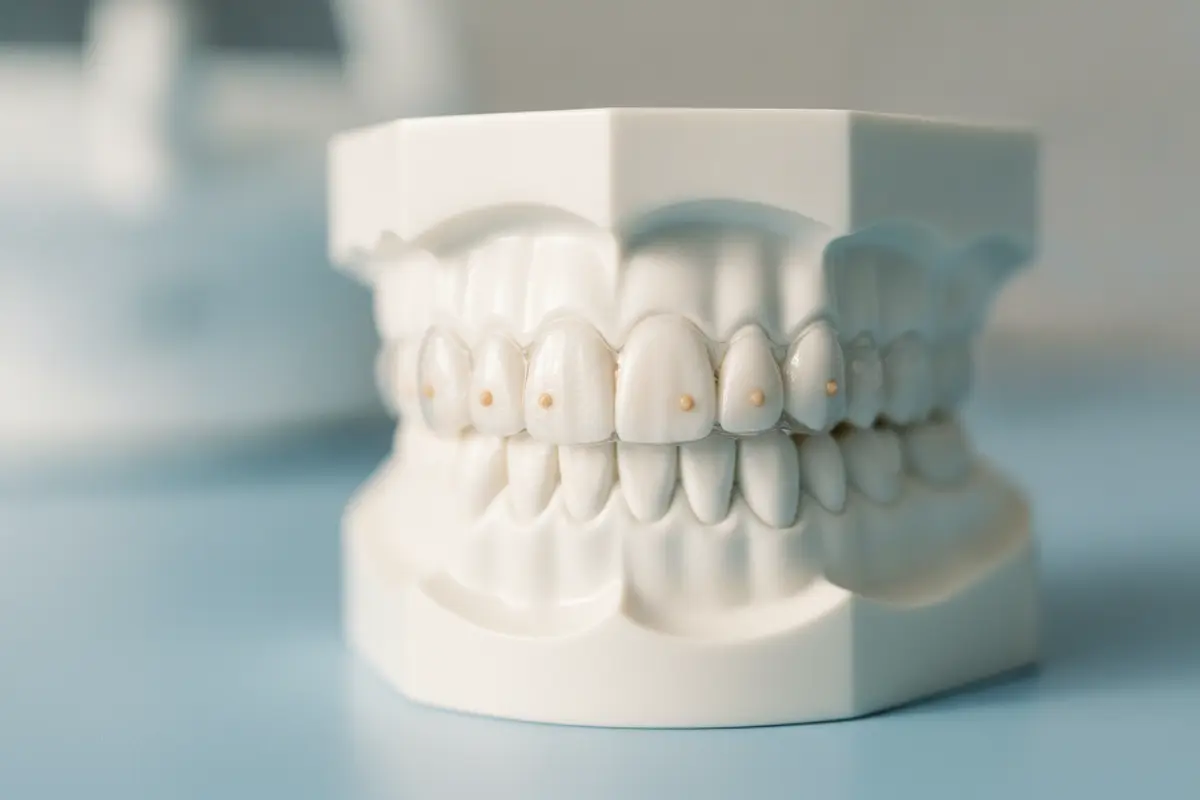
If you have been told you may need Invisalign, you might wonder: what are Invisalign attachments, and why are small tooth-colored shapes planned on some teeth? Attachments are bonded composite shapes that can help an aligner apply force in a more controlled direction. Whether they are useful depends on your teeth, bite, and treatment plan.
Schedule a consultation to discuss your Invisalign plan
What are Invisalign attachments?
In brief: attachments are small, tooth-colored composite features bonded to selected teeth so aligners can engage them while guiding planned movement.
An aligner fits over the teeth like a clear removable tray. Its surface can press on teeth, but certain movements may need more grip or a particular direction of force. A dentist may plan an attachment to give the tray a surface to work against. Attachments are not braces brackets: they are shaped tooth-colored material, and the aligner remains removable.
Attachment size, shape, position, and number vary. Some plans use several; others use few or none. The treatment simulation and clinical examination help determine what is appropriate. The purpose is not cosmetic decoration, and an attachment alone does not determine the result.
The word “attachment” can sound more complicated than the actual feature. It is not a separate tooth or a permanent restoration. It is a small amount of bonded composite placed according to the aligner plan. At a consultation, you can ask which teeth may receive attachments, whether they will be visible when you smile, and how they fit into the planned sequence of trays.
How do attachments help aligners move teeth?
Their role is to help the aligner engage a tooth for selected movements; the details are individualized.
Tooth movement is planned in stages. Each aligner is designed to fit a particular stage, and attachments may provide additional contact for movements that benefit from it. The research literature has examined attachment designs and their effectiveness for particular movements, but findings about one movement or design should not be treated as a promise about an individual case.
Attachments may be included when a clinician believes they can help with control of a planned movement. The exact plan depends on factors such as tooth position, bite, and how teeth respond as treatment progresses. Your provider may check fit and progress and adjust the plan when needed.
- They are plan-specific: not every patient needs the same attachments.
- They work with the aligner: the tray needs to seat fully as directed.
- They do not replace follow-up: progress checks help assess fit and movement.
- They are one part of treatment: wearing trays as instructed and attending reviews also matter.
For background on research into attachment design and particular tooth movements, see this retrospective study of Invisalign attachments. A study is not a substitute for an individual assessment, and research about a group of patients cannot predict how a specific treatment plan will progress.
How are Invisalign attachments planned?
Planning begins with an examination and a review of the movements the aligners are intended to make.
Before attachments are placed, your provider reviews your oral health, tooth positions, bite, and goals. Digital records or other diagnostic information may be used to help plan the sequence. The planned attachment is then matched to a particular tooth and stage of treatment. Not every shape is used for every movement, and not every planned feature must remain for the entire course.
This planning conversation is a useful time to talk about appearance, removal, cleaning, and any concerns about dental visits. Marcos Ortega DDS provides patient comfort options for people who feel nervous about dental care. Comfort needs should be discussed before an appointment so the team can explain what to expect and assess which options are suitable.
- Discuss your goals and review the condition of your teeth and gums.
- Examine the bite and the tooth movements being considered.
- Review the expected tray sequence and any planned attachments.
- Explain how to wear, remove, clean, and store the aligners.
- Set expectations for follow-up and what to do if fit changes.
Invisalign is not a one-size-fits-all process. A service page can provide general background about Invisalign and clear braces, but the appropriate plan is determined through an examination and discussion of your needs.
How are Invisalign attachments placed?
Placement is a planned in-office step, with the tooth surface prepared and composite shaped to the treatment design.
Your provider first reviews the plan and identifies where attachments are intended to go. The tooth surfaces are prepared, and tooth-colored composite material is applied using a template or other placement method. The material is shaped and hardened. The aligner is then checked to confirm that it seats over the teeth and attachments as expected.
- Review which teeth are planned to receive attachments and why.
- Prepare the tooth surface according to the clinical protocol.
- Place and shape the composite material.
- Harden the material and check the fit of the aligner.
- Review insertion, removal, and wear instructions.
Ask what sensations to expect and what to do if an aligner will not seat. Do not force a tray that does not fit correctly; contact the dental office for guidance. If you feel anxious about dental visits, discuss comfort needs before the appointment. Marcos Ortega DDS offers Invisalign consultations and individualized care in Hillcrest, serving patients across Downtown San Diego and nearby neighborhoods.
You can also review the office tour before your visit if seeing the setting in advance would make the appointment easier to manage. The practice has provided dental care in San Diego for more than 34 years, and the team can explain each step in plain language.
Are Invisalign attachments noticeable?
They are tooth-colored, but visibility can vary with placement, lighting, and the person looking at your smile.
Attachments are designed to blend with the teeth, but they are not always invisible. A person may notice them at close range, especially when several are placed on front teeth. When the aligner is in, its plastic may also reflect light. The appearance varies with tooth shade, attachment shape, and location.
During your consultation, you can ask which teeth may have attachments and how they may appear when you speak or smile. If appearance is a concern, say so early. Your provider can explain what is clinically appropriate, but should not promise that attachments will be unnoticeable.
It may help to think about visibility in two situations: with the trays in and with the trays out. The aligner can change how light reflects from the teeth, while the composite itself may be easier to see when you remove the tray. Your provider can show you the planned locations and discuss whether the features are expected to be on front or back teeth.
What should you expect when wearing aligners with attachments?
Good fit, consistent use as directed, and careful cleaning all matter during aligner treatment.
New trays can feel snug, and attachments can change how the aligner grips the teeth. You may need practice removing and inserting trays without bending them or pulling forcefully on one spot. Follow the instructions from your provider for wear time and changing trays; do not change stages early just because a tray seems comfortable.
- Wash your hands before handling aligners.
- Remove trays for meals and beverages other than water, unless your provider gives different instructions.
- Clean the teeth and aligners as directed before putting trays back in.
- Store aligners in their case when they are out of your mouth.
- Contact your provider if an attachment comes off, a tray cracks, or the aligner no longer seats as expected.
Attachments may collect debris around their edges, so pay attention to brushing along the tooth surface. Avoid using hot water on aligners, which may distort the plastic. For broader questions about your clear aligner care or candidacy, review the practice’s Invisalign service information and arrange a clinical conversation.

What if an aligner does not fit over an attachment?
A tray that will not seat fully should be checked rather than forced.
An aligner may feel different when you begin a new stage, but a visible gap, rocking tray, sharp edge, or sudden change in fit deserves attention. Several things may contribute, including an attachment that has changed, a tray that is damaged, or teeth that have not followed the planned movement. Only an examination can determine the cause.
Try the simple checks your provider has given you, such as confirming that the tray is in the correct order and that it is fully seated according to your instructions. Do not bite down repeatedly to force it into place, trim the tray, or file an attachment. Contact the office and explain what you see. A team member can tell you whether to continue with the current tray or wait for an assessment.
Keep the tray and any loose composite if your provider asks you to bring them in. Take a clear photo only if the office requests one. If you also have significant discomfort, swelling, bleeding, or another urgent concern, describe those symptoms when you call so the office can advise you on the next step.
How are attachments removed?
At the planned end of treatment, a dental professional removes the composite and smooths the tooth surface.
Attachments are not meant to be pulled off at home. At the appropriate point in treatment, the provider uses dental instruments to remove the bonded material and checks the enamel surface. Your clinician can explain the process and whether any additional aligners or refinements are planned before removal.
If an attachment becomes loose or comes off before then, contact the office. Do not try to glue it back or scrape remaining material. The provider can advise whether to continue wearing the current aligner and how soon the tooth should be assessed.
Removal timing may vary. Some attachments remain until a planned movement is complete, while others may be changed during treatment. The end of the first series of trays does not necessarily mean that every step is finished. Your provider will explain whether the next step is removal, additional aligners, or retention planning.
Attachments and aligner care: what is different?
The aligner routine remains familiar, but attachments make careful seating and cleaning especially important.
| Care situation | What to do and what to avoid |
|---|---|
| Putting in a tray | Seat it evenly and follow the insertion instructions. Avoid: biting hard on a tray to force it into place. |
| Eating or drinking | Remove the aligner as directed and rinse before storing. Avoid: eating with the tray in unless your provider says otherwise. |
| Cleaning teeth | Brush carefully around attachment edges and floss as advised. Avoid: scraping attachments with sharp objects. |
| Loose attachment or poor fit | Contact your dental office for instructions. Avoid: repairing or removing composite yourself. |
| Tray out of your mouth | Rinse it as directed and place it in its case. Avoid: leaving it loose on a counter or wrapping it in a napkin. |
This table is a practical guide, not a replacement for the specific instructions supplied with your treatment. If advice differs, follow your provider’s directions. A regular dental care routine remains important while wearing aligners. If you need other general or restorative care during treatment, the practice’s general dentistry services page provides additional context.
How can you make daily Invisalign care easier?
A few repeatable habits can reduce missed wear time and make attachment care more manageable.
- Keep the aligner case with you rather than placing trays in a pocket or bag without protection.
- Carry a small oral-care kit with a toothbrush, floss, and water when you will be away from home.
- Use a consistent place to store the case during meals so the tray is less likely to be misplaced.
- Check the attachment areas in a mirror when brushing, especially after eating.
- Record questions about fit or comfort and bring them to your next review.
Travel, work meetings, and social events can make a removable-tray routine less predictable. Planning where you will clean and store the aligners helps protect the trays and keeps the treatment instructions in view. If a routine is difficult because of your schedule, discuss practical adjustments with your provider rather than quietly wearing the trays less often.
Patients who want to understand the broader care environment can read about Dr. Marcos Ortega and the practice’s approach. Treatment remains individualized, and an online page cannot determine candidacy or replace an in-person evaluation.
What questions should you ask about attachments?
A clear conversation before treatment can help you understand the plan and your role in it.
- Which teeth are expected to receive attachments, and what is their purpose?
- How might they affect the appearance of my smile?
- How should I insert and remove my aligners without damaging them?
- What should I do if an attachment comes off or the tray does not fit?
- How often will progress and fit be reviewed?
- What are the expected steps for removing attachments at the end?
- What should I do if I miss wear time because of travel, work, or an event?
At Marcos Ortega DDS, patients can discuss Invisalign options with a team focused on comfort and individualized planning. The practice has served San Diego for more than 34 years and offers comprehensive dental care in Hillcrest, with free parking. A consultation can help clarify whether aligners and attachments fit your needs; treatment suitability is determined through an examination.
Request an Invisalign consultation in San Diego
Frequently asked questions
Do all Invisalign patients need attachments?
No. Some plans include attachments and some do not. Their use depends on the planned movements and clinical assessment.
Can I remove an attachment myself?
No. Do not pull, file, or scrape it. A dental professional should remove bonded composite and check the tooth surface.
What if an attachment comes off?
Contact your dental office and describe what happened. Ask whether to keep wearing your current aligner and when the office recommends checking the tooth.
Will attachments change how I clean my teeth?
They do not remove the need for your normal oral hygiene routine. Brush carefully around attachment edges, clean aligners as directed, and ask your provider about any areas that are difficult to reach.
Can attachments be placed on any tooth?
The location depends on the planned movement and the provider’s assessment. Your consultation is the right time to ask which teeth are included and why.
What should you remember?
Invisalign attachments are small bonded features that can help aligners engage selected teeth during planned movements. Their use, appearance, and timing vary, so discuss the details with your provider, follow your wear and care instructions, and seek guidance if an attachment loosens or a tray does not fit properly.