
Article metadata appears above.
Pregnancy can change your gums, your comfort, and the questions you need to ask before elective cosmetic treatment. If you are considering a brighter smile, do not rely only on a product label or a general online answer. Bring the plan to both your dentist and prenatal provider. They can consider your trimester, oral health, sensitivity, the whitening product, and your broader pregnancy circumstances.
Contact our dental office with your whitening questions
Whether can pregnant women get teeth whitening depends on individualized guidance from your dental and prenatal care providers. Because whitening is elective cosmetic care, they may recommend discussing timing or postponing treatment, while necessary preventive, restorative, diagnostic, or emergency dental care should be evaluated separately. The American Dental Association notes that appropriate dental care can be provided during pregnancy: ADA pregnancy oral-health guidance.
The distinction between cosmetic whitening and needed dental care matters. First, let us look at how providers weigh whitening during pregnancy and why a cautious conversation can help you make an informed choice.
Can Pregnant Women Get Teeth Whitening?
There is no one-size-fits-all answer. Teeth whitening is elective cosmetic care, so the decision during pregnancy should be discussed with both your dentist and your prenatal provider. Many patients and providers choose to postpone whitening until after delivery because the cosmetic benefit is not medically urgent, while the available pregnancy-specific evidence about whitening is limited.
That cautious approach is different from delaying dental care that addresses a health problem. The American Dental Association states that preventive, diagnostic, and restorative dental treatment can be provided throughout pregnancy. It also notes that emergency care, including treatment for problems such as infections, damaged teeth, or untreated decay, should not automatically be postponed. If you have pain, swelling, bleeding, or another concern, contact your dental office and prenatal provider rather than assuming cosmetic-whitening guidance applies.
In practical terms:
- Elective whitening may be deferred while you and your providers consider timing and circumstances.
- Necessary dental evaluation or treatment should be discussed promptly, even during pregnancy.
- Your pregnancy status, trimester, oral health, gum sensitivity, whitening product, and prenatal circumstances may all affect individualized advice.
Pregnancy can also change how your mouth feels. Hormonal changes may increase the gums’ response to bacteria and contribute to gingivitis. Nausea, vomiting, dry mouth, dietary changes, or difficulty maintaining a routine can create additional oral-health concerns. Those factors may make a dental examination and preventive guidance more useful than beginning a cosmetic treatment on your own.
The ADA recommends daily oral care during pregnancy. This includes brushing twice a day for two minutes with fluoride toothpaste and cleaning between the teeth once a day. If you are considering professional whitening in San Diego, a dental consultation can clarify the treatment type and whether it makes sense to wait. Marcos Ortega DDS offers individualized planning, but the dental team does not replace prenatal care. Ask both providers about your circumstances before using in-office whitening, custom trays, strips, or another product.
Read the American Dental Association’s pregnancy and oral-health guidance.
Why Might Whitening Be Postponed During Pregnancy?
Quick comparison: elective whitening can often be discussed for later, while symptoms of disease or injury may need prompt evaluation.
Use this simple order for the conversation:
- Tell both providers that you are considering whitening.
- Share the exact product or treatment type.
- Discuss your oral health, symptoms, and pregnancy circumstances.
- Follow the individualized plan they recommend.
| Question | What it means |
|---|---|
| Is the goal cosmetic? | Whitening changes tooth color, so timing can be discussed with your providers. |
| Is there pain, swelling, decay, or injury? | Ask your dental office promptly about needed evaluation or treatment. |
| Are the gums sensitive? | Share symptoms before considering any whitening product. |
A dentist may suggest waiting on elective whitening during pregnancy, but that recommendation is not the same as a universal ban. The decision can depend on your pregnancy status, trimester, oral health, gum sensitivity, the product being considered, and guidance from your prenatal care provider. When evidence is limited for a cosmetic treatment, postponing it can be a reasonable way to avoid adding an unnecessary variable while your providers focus on your health.
Limited certainty can support a cautious decision
Teeth whitening is cosmetic care rather than treatment for an infection, decay, pain, or another urgent dental problem. Because the shade change is optional, your dentist may recommend waiting until after pregnancy when the timing and treatment plan can be evaluated with fewer pregnancy-specific questions. This does not mean that every pregnant patient will receive the same advice, and it does not mean whitening is automatically dangerous. It means the potential benefit may not justify proceeding without individualized guidance.
The American Dental Association explains that preventive, diagnostic, restorative, and emergency dental care can be provided during pregnancy. Those categories are different from elective whitening. Your dentist and prenatal provider can help distinguish a cosmetic appointment from care that should not be delayed.
Pregnancy can make the mouth feel more sensitive
Hormonal changes can make the gums more reactive to plaque and increase the likelihood of gingivitis. If your gums are already tender, swollen, or prone to bleeding. A whitening appointment may be less comfortable or may need to wait while your oral health is assessed. Nausea and vomiting can also affect the mouth. Increased acidity and changes in eating or brushing routines may leave teeth and gums needing attention before cosmetic treatment is considered.
A dentist may therefore recommend first addressing symptoms, reviewing your daily routine, or simply allowing pregnancy-related sensitivity to settle. That is a treatment-planning conversation, not a diagnosis you should make from an online article.
- Ask your prenatal provider whether there are pregnancy-specific concerns or restrictions relevant to cosmetic dental care.
- Tell your dentist how far along you are, whether you have gum sensitivity, and whether nausea or vomiting is affecting your oral care.
- Separate elective whitening from needed care. Pain, swelling, infection, decay, or injury should be discussed promptly rather than postponed because whitening is being deferred.
The safest timing for cosmetic whitening is individualized. A clear conversation with both providers can help you decide whether to wait, focus on oral health first, or revisit professional options after pregnancy.
What About Whitening Strips, Toothpaste, or Home Remedies?
At-home whitening can seem like a simpler option, but “at home” does not automatically mean appropriate during pregnancy. Strips, gels, whitening toothpaste, peroxide rinses, purple toothpaste, and homemade remedies can differ in ingredients, strength, directions, and how easily a person may swallow or irritate the product. Your dentist and prenatal provider can help you review the specific product rather than assuming that every option carries the same considerations.
Whitening strips and peroxide products
Many whitening products rely on peroxide-based ingredients to lighten surface or deeper tooth discoloration. That does not answer every pregnancy question by itself. The relevant details may include the product formula, how it is applied, whether it contacts the gums, and what happens if some of the material is swallowed. Gum sensitivity or pregnancy-related gingivitis may also make a product feel more irritating than expected. The American Dental Association notes that hormonal changes can increase the gums’ response to bacteria during pregnancy, which is one reason individualized dental guidance matters. Read the ADA’s pregnancy oral-health guidance for broader context.
If you are considering a strip, gel, or peroxide product, bring the package or a clear product name to your dental appointment. Ask whether the ingredients, application method, and timing make sense for your circumstances. Do not use a higher amount, leave a product on longer, or combine products to try to speed up results. If a product causes significant irritation or you are worried that you swallowed it, contact an appropriate healthcare professional for advice instead of continuing on your own.
What about purple toothpaste and natural remedies?
Purple toothpaste generally works by temporarily changing the visual contrast of yellow tones. It is not the same as professionally lightening the tooth, and a colorful label does not establish pregnancy-specific suitability. Use toothpaste according to its directions, and ask your providers about any product that causes burning, sensitivity, nausea, or gum discomfort.
“Natural” remedies deserve the same careful review. Lemon, vinegar, abrasive powders, oils, and other kitchen-based approaches may be acidic, abrasive, difficult to control, or unsuitable for your teeth and gums. Natural does not mean harmless, and there is no need to experiment while pregnant. For routine care, the ADA recommends brushing with fluoride toothpaste and cleaning between the teeth daily. Cosmetic whitening can wait for a coordinated discussion, while needed dental care should not be postponed without professional advice.
What Oral Care Is Helpful While You Are Pregnant?
Pregnancy can change how your mouth feels, especially if your gums become more sensitive or nausea changes your eating and brushing routine. A simple, consistent approach can help protect your teeth and gums while you decide when, or whether, elective whitening fits your plans.
The American Dental Association notes that preventive, diagnostic, restorative, and emergency dental care may be provided during pregnancy when planned with appropriate professional guidance. That is different from making a universal decision about cosmetic whitening. Your dentist and prenatal care provider can help you consider your pregnancy status, oral health, sensitivity, product, and individual circumstances.
- Brush gently with fluoride toothpaste and clean between your teeth daily.
- Choose a soft-bristled toothbrush if your gums feel tender, and avoid scrubbing aggressively.
- If nausea or vomiting makes brushing difficult, pause long enough to settle your mouth. Then ask your dental or prenatal provider for guidance on a routine that you can tolerate.
- Pay attention to frequent snacking, dry mouth, or other changes that may make your teeth feel more vulnerable.
Contact a dentist if you notice persistent gum bleeding, swelling, significant sensitivity, tooth pain, a broken tooth, or changes that do not improve. These symptoms deserve attention even if you are postponing cosmetic treatment. Needed dental care should not be confused with elective whitening, and delaying an evaluation can allow a manageable concern to become more complicated.

For a broader overview of appointments, prevention, and questions to raise during pregnancy, read our dental care during pregnancy guide. Marcos Ortega DDS can discuss oral-health and whitening questions, including the practice’s professional whitening options, but the office cannot provide prenatal clearance. Bring any treatment questions to both your dental and prenatal care providers so the final plan reflects your complete health picture.
What Should You Ask Before Planning Whitening After Pregnancy?
Postpartum whitening does not follow one universal calendar. The right time depends on your recovery, oral health, sensitivity, feeding plans, product choice, and guidance from your dental and prenatal care providers. A short conversation can help you separate a cosmetic goal from any dental issue that should be addressed first.
Before scheduling, consider asking these questions:
- Is this an appropriate time for me to consider elective whitening? Ask both your dentist and prenatal care provider how your current postpartum circumstances affect the decision. If you are still receiving pregnancy-related care or have questions about breastfeeding, your prenatal provider can explain considerations specific to you.
- Do my gums and teeth appear ready for cosmetic treatment? Pregnancy-related hormonal changes can contribute to gum sensitivity or gingivitis. Nausea, vomiting, and changes in eating patterns can also affect oral health. An exam can identify irritation, decay, enamel concerns, or other findings that may need attention before whitening. The American Dental Association’s pregnancy oral-health guidance can provide helpful general context, but it does not replace an individual evaluation.
- Which product type fits my goals and sensitivity history? Ask about the differences between professional options, including Zoom! in-office whitening and custom take-home trays offered by Marcos Ortega DDS. These are services the practice provides, not recommendations for use during pregnancy or a promise that either option is right for you.
- Could existing restorations affect the result? Crowns, veneers, fillings, and other restorations may not respond to whitening in the same way as natural teeth. Your dentist can explain whether your current smile goals are best approached with whitening, another cosmetic option, or no treatment at this time.
- What should happen if I have sensitivity or gum discomfort? Ask how your existing symptoms might affect planning and what information your dentist needs from you. Share recent dental concerns rather than trying to work around them with an at-home product.
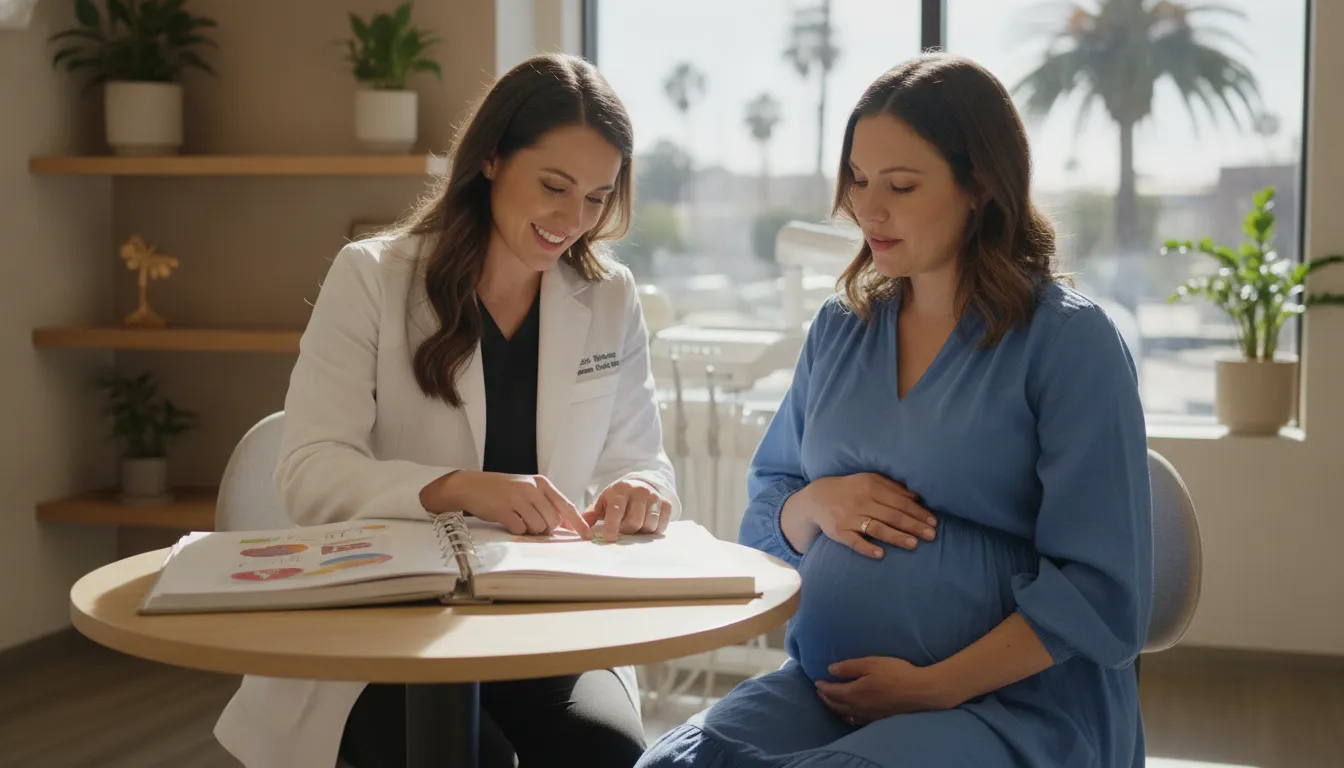
A thoughtful consultation should leave room for questions, not pressure. You can review professional teeth whitening options and learn more about cosmetic dentistry in San Diego. If you want to understand the practice’s approach before discussing timing, visit Dr. Ortega’s dental training and experience.
Frequently Asked Questions
Can pregnant women get teeth whitening?
There is no universal answer for every pregnancy. Because whitening is elective cosmetic care, many patients discuss postponing it with their dentist and prenatal provider. Your personal timing depends on pregnancy circumstances, oral health, sensitivity, product details, and provider guidance.
Are teeth whitening strips safe during pregnancy?
Do not assume that an over-the-counter strip is appropriate simply because it is used at home. Ingredients, contact with the gums, application directions, and the possibility of swallowing product matter. Show the exact product to your dentist and ask your prenatal provider before using it.
Is teeth whitening safe during the first trimester?
The first trimester is not a reason to make a blanket decision from an online article. Ask your dental and prenatal providers how your pregnancy, oral health, symptoms, and the proposed product affect the timing of elective whitening. Needed dental care is a separate issue and should not automatically be delayed.
Can I use hydrogen peroxide on my teeth while pregnant?
Do not use a peroxide product or homemade rinse as a whitening experiment without professional guidance. Product concentration, exposure, swallowing, gum condition, and pregnancy circumstances can change the discussion. Ask a qualified provider about the specific product instead.
What should I do if I used whitening products before knowing I was pregnant?
Stop and contact your dental or prenatal care provider for advice about the product and exposure. Keep the packaging or product name available, and mention how it was used. Seek prompt dental attention for significant gum irritation, pain, swelling, or another concerning symptom.
Have Questions About Whitening During Pregnancy?
A careful conversation can help you understand your options without pressure. Marcos Ortega DDS has served Downtown San Diego patients since 1986 and takes an individualized, comfort-first approach to cosmetic dentistry. The dental team can discuss your oral-health questions and explain professional whitening options, while your prenatal provider remains the right resource for pregnancy-specific guidance.