
Can dental implants be done in one day? Sometimes an implant can be placed during a single appointment, and in selected cases a temporary tooth or restoration may also be attached that day. But “same-day” does not mean every stage is finished or that every patient is a candidate. The right plan depends on your oral health, the implant site, and the stability your dentist can achieve.
Request an implant consultation
What does “dental implants in one day” mean?
Same-day implant care describes a timing approach, not a promise that the entire treatment and healing process will be complete in one visit.
The phrase can refer to different treatment steps, so it helps to clarify exactly what is being done that day. In one plan, a dentist places an implant in the jaw and leaves it to heal before attaching the final replacement tooth. In another, the implant may receive a temporary restoration soon after placement. Sometimes an implant is placed at the same appointment as a tooth extraction. These approaches are related, but they are not interchangeable.
- Implant placement: The implant is positioned in the jaw. A visible tooth may not be attached immediately.
- Immediate restoration or loading: A temporary tooth or restoration is attached soon after implant placement when the case allows. It is not necessarily the final restoration.
- Immediate placement: An implant is placed in a tooth socket at the time of extraction. Placement timing does not, by itself, mean a tooth is attached that day.
- Final restoration: The long-term crown, bridge, or denture component is planned around healing and the condition of the implant site.
Research on immediate placement and loading describes specific treatment protocols, not a universal shortcut for every patient. For example, this PubMed study of immediate post-extraction implant placement and loading concerns a particular approach and should not be read as a guarantee of eligibility or results for an individual case.
If you are comparing treatment descriptions, ask whether “same-day” refers to the implant, a temporary tooth, or both. A dentist can explain how the proposed steps apply to your missing tooth and whether other treatments are needed first. You can also review the practice’s overview of dental implant treatment before a visit.
Who may be a candidate for same-day implant treatment?
Candidacy is determined case by case. An exam and appropriate imaging help the dentist assess the implant site, overall oral health, and whether a temporary restoration is a reasonable option.
Having a missing or damaged tooth does not automatically make same-day treatment suitable. The dentist needs to evaluate the bone and tissue at the planned site, the condition of neighboring teeth, your bite, and your health history. The assessment also considers whether the implant can be placed with enough stability for the proposed next step.
Factors that may affect the plan include:
- Bone and site conditions: The available bone and the shape and condition of the site can influence implant placement and stability.
- Infection or tissue concerns: The dentist evaluates the area and decides whether any problem needs to be addressed before or during implant treatment.
- Gum and oral health: Active dental or gum concerns may need attention as part of a safe, workable plan.
- Bite forces: Pressure from chewing or clenching can matter when considering whether a temporary tooth should be attached promptly.
- Medical history and medicines: Health conditions and medications may affect treatment planning and should be discussed with the dental team.
- Restoration design: The position of the tooth, appearance needs, and how the restoration will function all shape the decision.
These are planning considerations, not a checklist that lets you diagnose your own eligibility. A patient may be a candidate for implant placement but not for a same-day temporary restoration. Another patient may need treatment to stabilize oral health or prepare the site before implant placement can be considered. Your dentist should explain the reason for the recommendation and the alternatives.
The evaluation is not limited to a quick look at the gap. The dentist may ask how long the tooth has been missing, whether it was recently extracted, and what you have noticed about the area. Imaging and a review of the bite help the team understand the site in context. Bring questions about previous dental work, medications, and health conditions so the plan reflects information that may affect care. If an immediate temporary tooth is not advised, ask whether the concern relates to site conditions, stability, the restoration design, or another part of your health history. Understanding the specific reason can make a staged plan easier to consider.
At a consultation, bring a current medication list and share relevant health conditions, previous dental treatment, and any concerns about the procedure. If dental anxiety is part of the picture, mention that as well; the office can discuss comfort options and whether they are appropriate for your needs. Dr. Marcos Ortega’s practice provides patient comfort and sedation information for people who want to understand available support.
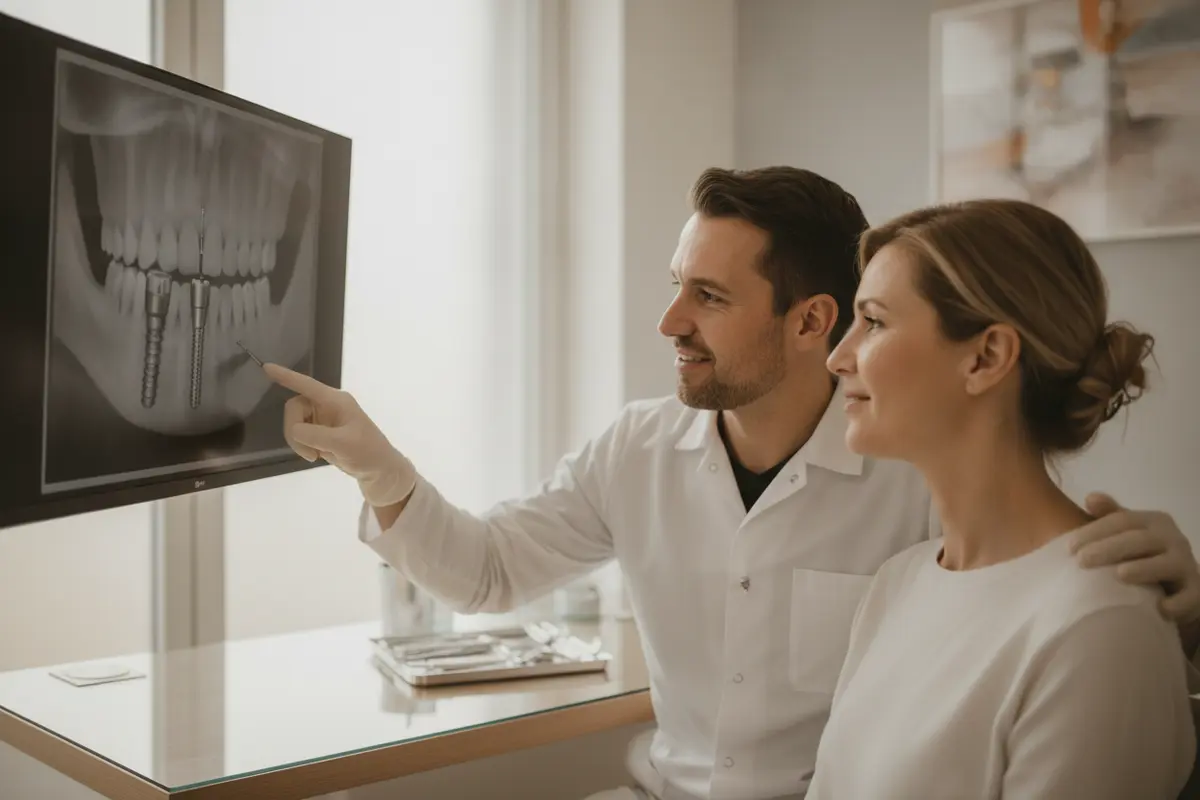
What can happen during a one-day implant visit?
The visit may include one or more planned steps, but the exact sequence depends on the exam, imaging, and treatment plan.
A same-day appointment may involve removing a tooth, preparing the site, placing an implant, and in selected cases attaching a temporary restoration. Not every patient needs or receives each of those steps in the same visit. The dentist should outline the sequence in advance and explain what could change if the site looks different than expected once treatment begins.
A visit may include:
- Review and confirmation: The team reviews your health history and planned treatment, answers remaining questions, and confirms the site and restoration approach.
- Tooth removal, if part of the plan: When a tooth is being removed, the dentist evaluates the site and decides whether immediate implant placement is appropriate.
- Implant placement, if appropriate: The implant is placed according to the treatment plan. Whether it can support an immediate temporary restoration depends on clinical findings.
- Temporary tooth or healing approach: The dentist may attach a temporary restoration, choose a different temporary option, or allow the implant site to heal without one attached.
- Follow-up and next steps: You receive instructions and a schedule for monitoring healing and planning the final restoration.
Before the appointment, confirm what is planned and what decisions will be made during the visit. For example, if extraction and placement are both being considered, ask whether the dentist will reassess the socket before proceeding with the implant. Clarify what the backup plan would be if the site does not support the original approach. This does not mean something is expected to go wrong; it means you know how the team will respond to clinical findings and will not be surprised by a change in sequence.
Even when a temporary tooth is attached, the treatment is not necessarily finished that day. A temporary restoration is not the same as a definitive, final crown or other final prosthesis. Your dentist will tell you how to care for the area, what to avoid, and when to return. Do not assume you can use the tooth normally without restrictions; follow the instructions for your individual plan.
The practice offers comprehensive care in Hillcrest and Downtown San Diego, including restorative dentistry. For an overview of the office and how a visit works, see the office tour.
How does same-day treatment compare with a staged plan?
Both approaches can involve implant placement and a later final restoration; the main difference is when selected steps happen and whether a temporary tooth is attached early.
This brief comparison is a discussion aid, not a recommendation. The dentist’s findings determine which timing is reasonable. “Same-day” can also mean different things from one treatment plan to another.
| Planning point | Same-day approach | Staged approach |
|---|---|---|
| Implant placement | May occur at the planned visit if suitable | Occurs after any needed preparation |
| Temporary tooth | May be attached promptly in selected cases | May be delayed or managed separately |
| Final restoration | Planned after the required healing and checks | Planned after the required healing and checks |
| Key decision | Site condition and implant stability | Readiness after preparation or healing |
A staged plan is not a failure or an inferior choice. It can allow the dentist to address site or health concerns before moving to the next step. A same-day approach may reduce the number of separate stages for an appropriate patient, but it does not remove the need for follow-up or individualized aftercare. Ask what each proposed stage is intended to accomplish and what would lead the dentist to change course.
It may help to compare plans by asking the same questions about each one, rather than focusing only on the number of appointments. Write down whether extraction is included, when the implant is expected to be placed, whether a temporary replacement is planned, and what milestones guide the final restoration. Also ask which parts of the plan are fixed and which depend on what the dentist finds. This side-by-side discussion can show whether a proposed timing offers a practical benefit for your circumstances or whether preparation and healing first make more sense.
Why does healing still matter after same-day placement?
The implant and surrounding tissues need time to heal. A same-day temporary restoration, when used, does not mean the implant has completed healing.
Implants are planned to function as part of a longer treatment process. After placement, the dentist monitors healing and determines when the implant is ready for the planned final restoration. That timeline varies with the site, the procedure, and individual healing. It is not possible to promise a universal date based on the phrase “same-day implant.”
Follow the instructions provided by your dentist. Depending on your plan, they may include guidance on cleaning, eating, activity, and when to call with a concern. Attend follow-up visits even if the temporary tooth feels comfortable. Do not adjust or remove a temporary restoration yourself. Contact the dental office if you have a concern or are unsure whether a symptom needs attention.
It is useful to know in advance which details your aftercare instructions will cover. Ask how to keep the area clean, what to do if a temporary restoration feels loose or different, which foods or habits your dentist wants you to avoid, and how to reach the office with a question. These are not instructions to apply on your own; your dentist should tailor them to your procedure. If your daily routine involves work, travel, or caregiving, discuss scheduling and follow-up before treatment so you can plan for the visits your specific case requires.
For a broader view of the final tooth-replacement options, ask how the implant restoration fits into your overall dental treatment plan. If a removable option is being considered instead or as an interim step, the practice’s denture information can help you prepare questions for your dentist.

What should you ask at an implant consultation?
A useful consultation gives you a clear sequence, explains why the timing is recommended, and leaves room for questions before you decide.
Before agreeing to a plan, make sure you understand what “one day” means in your specific case. A consultation should address the site, the restoration, the healing period, and what happens if the original plan needs to change.
- Does “same-day” mean implant placement, a temporary tooth, or both?
- What did the exam and imaging show about the implant site?
- What findings would make you recommend a staged plan instead?
- Will I leave with a temporary restoration, and how should I care for it?
- When will you check healing and decide whether the final restoration is ready?
- What are the alternatives if immediate placement or loading is not appropriate?
- How might my health history, medicines, bite, or oral health affect the plan?
- Who should I contact if I have a concern after the visit?
You can make the conversation more useful by bringing a short list of priorities. One person may be most concerned about having a visible tooth during treatment; another may need to understand the number and timing of visits. A third may want to know how a temporary restoration could affect meals or work. Share the priority, then ask what options are realistic given the exam findings. This keeps the discussion grounded in your actual needs while leaving clinical decisions with the dentist.
A written treatment sequence can make a complex decision easier to follow. Ask for a plain-language explanation of each step, including the purpose of any preparation, temporary restoration, and follow-up visit. The practice describes its approach and background on the Dr. Marcos Ortega profile. Marcos Ortega DDS has served the San Diego community for more than 34 years, and the practice emphasizes individualized care and comfort. An implant consultation is an opportunity to discuss whether the proposed timing fits your own clinical findings and goals, without assuming that a particular approach is right for everyone.
For patients in Hillcrest and Downtown San Diego, a consultation is a chance to review the plan in person, raise comfort concerns, and understand the next steps without rushing a decision.
Schedule a dental implant consultation
Frequently asked questions
Can I get a tooth and an implant on the same day?
In selected cases, a dentist may place an implant and attach a temporary tooth or restoration during the same visit. Whether that is appropriate depends on the condition of the site and the stability achieved, among other factors. The final restoration and healing are still part of the overall plan.
Does same-day implant treatment mean I am finished in one appointment?
No. The phrase usually refers to when the implant is placed or when a temporary restoration is attached. Follow-up and healing remain important, and a final restoration may be placed later according to your dentist’s assessment.
Can an implant be placed when a tooth is extracted?
Sometimes immediate placement at an extraction site is considered, but it is not suitable for every site or patient. The dentist evaluates the area and your overall treatment needs before recommending placement timing.
What if I am not a candidate for a same-day temporary tooth?
Your dentist can explain other ways to sequence treatment, including addressing any preparation needs and considering an interim tooth-replacement option where appropriate. Ask how each alternative affects the steps and follow-up in your plan.
What is the next step?
Same-day dental implant treatment may be possible for some patients, but a quick appointment is only one part of the decision. An exam, a clear explanation of the proposed stages, and a plan for healing and follow-up help set realistic expectations. If you are considering treatment in Hillcrest or Downtown San Diego, start with a consultation to discuss your oral health, questions, and goals.