
If you are searching for downtown San Diego emergency dental appointment questions, start by describing what changed and when. The information you share helps the dental team understand your concern and explain what to do next, although only an examination can determine the cause and appropriate care.
Call the office about an urgent dental concern
What should you ask when calling about a dental emergency?
Describe what you notice, then ask about timing, next steps, and what to bring.
Say where the problem is and when it began. Mention pain, sensitivity, swelling, bleeding, a broken or displaced tooth, or a restoration that came loose. Tell the team whether the situation is changing. Avoid guessing at a diagnosis; simple observations are more useful than a label.
- Ask whether the office can assess the concern promptly and what appointment times may be available.
- Ask what to do before arriving. Follow the dental team’s guidance rather than attempting to repair a tooth or appliance yourself.
- Confirm where to go and what to bring, including any records or loose dental piece you can safely keep.
- Ask what to do if symptoms change before the appointment.
For the practice’s local care route, visit its emergency dentistry service page. The practice is in Hillcrest near downtown San Diego. A call can clarify logistics, but it cannot replace an in-person assessment. If you are calling during a stressful moment, keep a note nearby and ask the team to repeat any instruction you did not understand.

What information helps the dentist understand your concern?
Specific observations create a useful starting point without assuming a cause.
Describe the symptom in ordinary terms. If a tooth hurts, note whether discomfort is constant or intermittent, and whether chewing, temperature, or pressure seems to affect it. If there is swelling or bleeding, say where you noticed it and when. If something broke, tell the team whether it was a tooth, filling, crown, denture, or another appliance, if you know.
Share the sequence of events. For example: “The pain began yesterday evening, is near a lower molar, and is more noticeable when I chew.” Or: “A crown came loose this morning while I was eating; I have it in a clean container.” These statements communicate observations, not diagnoses. If you are unsure whether a small piece is a tooth or a restoration, simply say that.
- When did the change begin, and has it become more intense or frequent?
- Was there an accident, bite, or other event before it started?
- Have you taken medicine or tried a home measure? If so, what and when?
- Do you have allergies, significant medical conditions, or medicines the dentist should know about?
Health history can matter when a clinician considers evaluation and treatment. Mention relevant medicines, allergies, and conditions, and bring a current list if possible. If you have earlier dental records or imaging that may be relevant, ask whether the office wants them. Do not delay a call just because you do not have every detail; the team can ask follow-up questions.
How do you prepare for an urgent dental appointment?
Gather useful details, protect the area from unnecessary strain, and follow the office’s instructions.
Before leaving, repeat the appointment location and instructions you received. If a tooth fragment, crown, or appliance came loose, bring it in a clean container if you can do so safely. Do not scrub it, glue it, or force it back into place. Avoid chewing on the affected side until a dental professional advises you.
- Write down when the concern began and what seems to change it.
- Bring a list of medicines, allergies, and relevant medical conditions.
- Bring a loose dental piece or appliance that you can safely keep.
- Take identification and insurance information if applicable, and ask about any additional paperwork.
- Arrange help with transportation if pain, stress, or another issue makes travel difficult.
If you are unsure whether to eat or take a medicine before the visit, ask the office rather than guessing. Instructions can depend on the concern and planned evaluation. For information about comfort considerations, see the practice’s patient comfort options; suitability is assessed individually.
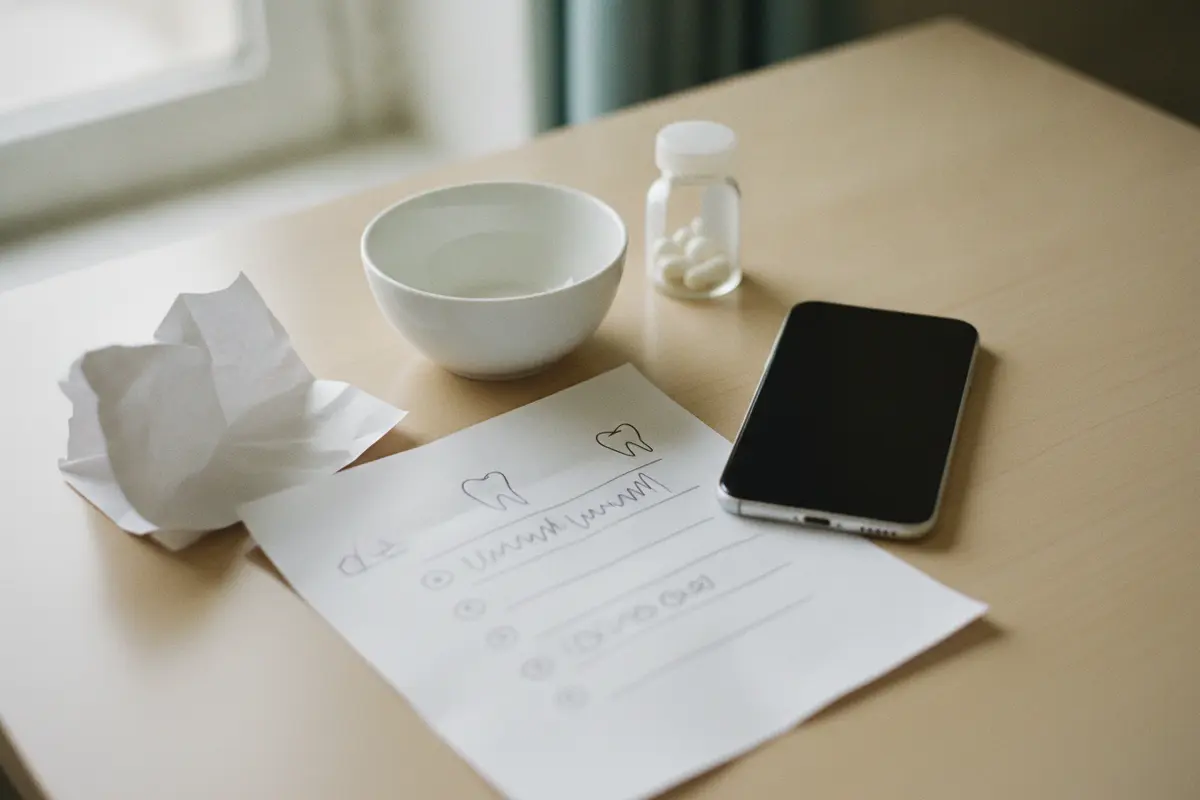
Make a short, useful symptom note
A compact note can prevent important details from slipping your mind. Use a few lines: the first time you noticed the issue, what has changed since then, and what you have already tried. Add the name and time of any medicine taken, rather than relying on memory. You can also write down questions in order of importance. If the team gives several instructions, ask whether you may repeat them back to confirm you understood correctly.
For instance, a caller might write: “Loose crown, noticed at breakfast; no severe pain; crown stored in a clean container; taking a prescription medicine.” That is more useful than trying to decide whether the tooth is damaged. If another person is calling for you, have the patient available to answer if possible, and distinguish what you personally observed from what you were told.
Which symptoms need emergency medical help?
Some symptoms call for emergency medical services rather than waiting for a dental appointment.
Severe facial injury, trouble breathing or swallowing, or swelling that affects breathing requires urgent medical attention. For potentially life-threatening symptoms, call 911 or go to an emergency department. A dental office can advise about dental care, but it does not replace emergency medical services.
For dental concerns such as persistent or worsening tooth pain, a cracked or displaced tooth, a lost filling or crown, swelling, or bleeding that does not settle, contact a dentist for guidance. These signs do not establish a diagnosis, and urgency depends on the circumstances. If a permanent tooth has been knocked out, seek immediate professional instructions. Handle it by the crown rather than the root, and do not delay while searching for home remedies.
When you call, be direct about any rapid change. If symptoms worsen while you are waiting, call again and explain what is different. If breathing or swallowing becomes difficult, do not wait for a callback; seek emergency medical help. If you have facial swelling but no breathing difficulty, explain its location, onset, and changes to a dental professional promptly and follow the advice you receive.
What may happen during the dental visit?
The clinician gathers information and examines the area before discussing appropriate options.
The dentist may ask follow-up questions about symptoms and health history, examine your mouth, and use imaging when appropriate. Findings help determine whether the issue needs immediate treatment, further evaluation, or planned follow-up. A phone description alone cannot reliably establish a diagnosis or treatment plan.
Ask the dentist to explain what was found in plain language. A useful conversation can include what the examination showed, what options may fit, and what each option involves. The practice offers comprehensive care in one office, but care recommended for you depends on examination findings, health, and goals.
- What did the examination show, and what remains uncertain?
- Is treatment needed today, or is another evaluation appropriate?
- What are the benefits, limits, and possible risks of the options?
- What should I do at home, and what changes mean I should call again?
- What costs or insurance details should I understand before proceeding?
If anxiety makes urgent care harder, say so when you call or arrive. Marcos Ortega DDS emphasizes patient comfort and has sedation dentistry expertise; any option requires screening and an individual suitability assessment. You can also read about general dental care and restorative dentistry services to understand the range of care offered, while remembering that a specific recommendation follows an examination.
Ask for a clear plan before you leave
Before leaving, make sure you know what happens next. Ask whether the care discussed is intended to address the immediate concern, whether another appointment or test is needed, and whom to contact if the symptoms change. If a procedure is proposed, ask what it is meant to do, what alternatives may be appropriate, and what recovery or follow-up may involve. It is reasonable to ask for time to understand the choices and to clarify costs before deciding, except when the clinician explains that a time-sensitive situation requires prompt action.
Write down any home-care instructions in the words used by the team. Confirm the timing and method for follow-up, including whether you should call the office or schedule another visit. If you are accompanied by a family member, that person can help listen and take notes with your permission. Clear instructions reduce the chance of relying on memory during a stressful visit.
How do different urgent-care situations change what you ask?
Use the type of concern to organize your call, not to decide the diagnosis yourself.
The guide below helps you prepare a concise description. It is not a severity score, and the dental team must consider the whole situation.
| Situation you notice | Details to share | Question to ask |
|---|---|---|
| Tooth pain or sensitivity | Start time, location, pattern, and what seems to affect it | How soon should I be assessed, and what should I avoid meanwhile? |
| Broken tooth or loose restoration | What came loose, when it happened, and whether you have the piece | Should I bring it, and how can I protect the area until the visit? |
| Swelling or bleeding | Where it is, when it began, whether it is changing, and any injury | Does this require urgent dental care or emergency medical attention? |
| Knocked-out permanent tooth | When and how it happened, and how the tooth has been handled | What immediate professional care should I seek? |
These are communication prompts, not a severity ranking. If you are uncertain which category fits, describe what you see and feel rather than choosing a label. The office can ask follow-up questions about timing, symptoms, and relevant history.
Example: a crown comes loose
Suppose you notice a crown in your mouth while eating and can remove it safely. Tell the office when it happened, whether you have pain or sensitivity, and whether the crown is intact. Ask if you should bring it and what to do before the visit. Keep it in a clean container and avoid trying to cement it yourself. The dentist must examine the tooth and restoration to determine what is appropriate; a loose crown alone does not reveal why it came off or whether it can be reused.
Example: pain changes during the day
If discomfort starts mildly and later becomes more frequent, call back with the change rather than relying on your earlier description. Note the time, location, and whether pressure or temperature seems to affect it. Ask whether the new information changes the recommended timing. Do not assume that a temporary improvement means the underlying concern has resolved, and do not change prescribed medicine without appropriate medical advice.
How can you make the appointment conversation easier?
A short note and a few focused questions can help you stay oriented when you are worried.
Pain and stress can make details hard to remember. Before calling, jot down the time the problem began, what changed, and any medicines you have taken. Keep the note nearby. If you are calling on behalf of a child or family member, explain your relationship and share only information you know accurately.
Use a simple order: state the main concern, give the timeline, then mention visible changes or relevant health information. Pause so the team can ask questions. If an instruction is unclear, ask for it to be repeated or written down. Confirm the appointment time and location before ending the call.
- Start with the main issue in one sentence.
- Give the onset and any change since it began.
- Share medicines, allergies, relevant conditions, or recent injury.
- Ask about timing, preparation, location, and what to bring.
San Diego patients coming from Hillcrest, Mission Hills, Banker’s Hill, Park West, Middletown, or downtown can also plan practical details: travel time, parking, and whether someone should accompany them. Practice information notes free parking; confirm directions or current access details when scheduling. If you need help finding the office, ask for directions when you arrange the visit rather than trying to solve logistics after you leave.
What should you remember when arranging urgent dental care?
Share clear facts, follow professional guidance, and seek medical help for severe symptoms.
When you contact a dental office, explain what changed, when it started, and whether it is getting worse. Ask what to do before arriving, what to bring, and what timing is appropriate. An examination is needed to identify the cause and discuss care. Marcos Ortega DDS has served the San Diego area for decades and offers comprehensive services with a comfort-focused approach. The about page provides more context about the office.
The National Institute of Dental and Craniofacial Research offers patient information about tooth decay and dental care. It is general background, not a substitute for personalized advice about a new problem. For clinical guidance specific to you, contact a qualified dental professional; for breathing difficulty or another life-threatening emergency, call 911.
Contact the office to discuss an urgent appointment
Frequently asked questions
Should I call before coming to the office?
Calling lets the team hear what is happening, explain logistics, and discuss appointment availability. If you have a serious medical emergency, call 911 or go to an emergency department.
What should I bring to an urgent dental visit?
Bring a list of medicines and allergies, relevant health information, and any loose dental fragment or appliance you can safely keep. Follow the specific directions given by the office.
Can a phone call tell me what treatment I need?
A call can help the team understand your concern and advise on logistics, but it cannot replace an examination. The dentist discusses options after considering symptoms and clinical findings.
What if I am anxious about emergency dental care?
Tell the office when you call. The team can discuss comfort considerations; sedation options require screening and may not suit every person or situation.
Clear communication helps the dental team understand your concern and guide you toward an appropriate next step. If symptoms are severe or affect breathing or swallowing, seek emergency medical help right away.