
Can you get a cavity under a dental crown? Yes. A crown covers the visible part of a tooth, but it does not replace every part of the natural tooth or make the tooth immune to decay. The edge, or margin, where crown and tooth meet can be vulnerable to plaque and bacteria. Knowing what to watch for and how an exam works can help you take a calm, timely next step.
Ask our team about a crowned tooth
How can decay form under a dental crown?
Decay usually affects the natural tooth at or near the crown’s edge, not the crown material itself.
A dental crown is a custom covering placed over a prepared tooth. It restores the tooth’s shape and helps protect remaining tooth structure. The tooth beneath the crown is still living or previously treated natural tissue, depending on its history. The crown covers much of it, but a narrow junction remains where the crown meets the tooth. Dentists call this the crown margin.
Plaque can gather around the margin, especially near the gumline or in areas that are difficult to clean. If plaque is not removed regularly, acids produced by bacteria can damage tooth structure. Decay may also develop on an exposed portion of the tooth beside a crown. A crown that has shifted, chipped, or lost a close fit may need assessment, but only an examination can determine what is happening.
A crown does not mean that a tooth will inevitably get another cavity. Good home care and routine dental visits help lower risk, while a dentist can check the crown and the surrounding tooth over time. The dental crown service page explains how crowns can be used to restore teeth; your own recommendation depends on the tooth, oral health, and treatment goals.
The crown’s fit and the condition of the underlying tooth are both relevant. The edges are shaped to meet the tooth, but the margin is not a sealed barrier that makes cleaning unnecessary. Gum position can change, and the margins may be harder to reach if the crown sits near the gumline or if teeth are crowded. A crown can also collect plaque like other tooth surfaces. This is why it helps to clean carefully around the whole tooth rather than brushing only the visible top of the crown.
Previous dental work matters, too. Some crowns cover teeth that had large fillings, fractures, or root canal treatment. A treated tooth may not respond to temperature in the same way as another tooth, so the absence of sensitivity does not answer whether the crown and tooth are healthy. Your dentist can compare current findings with the tooth’s history and prior records when available.
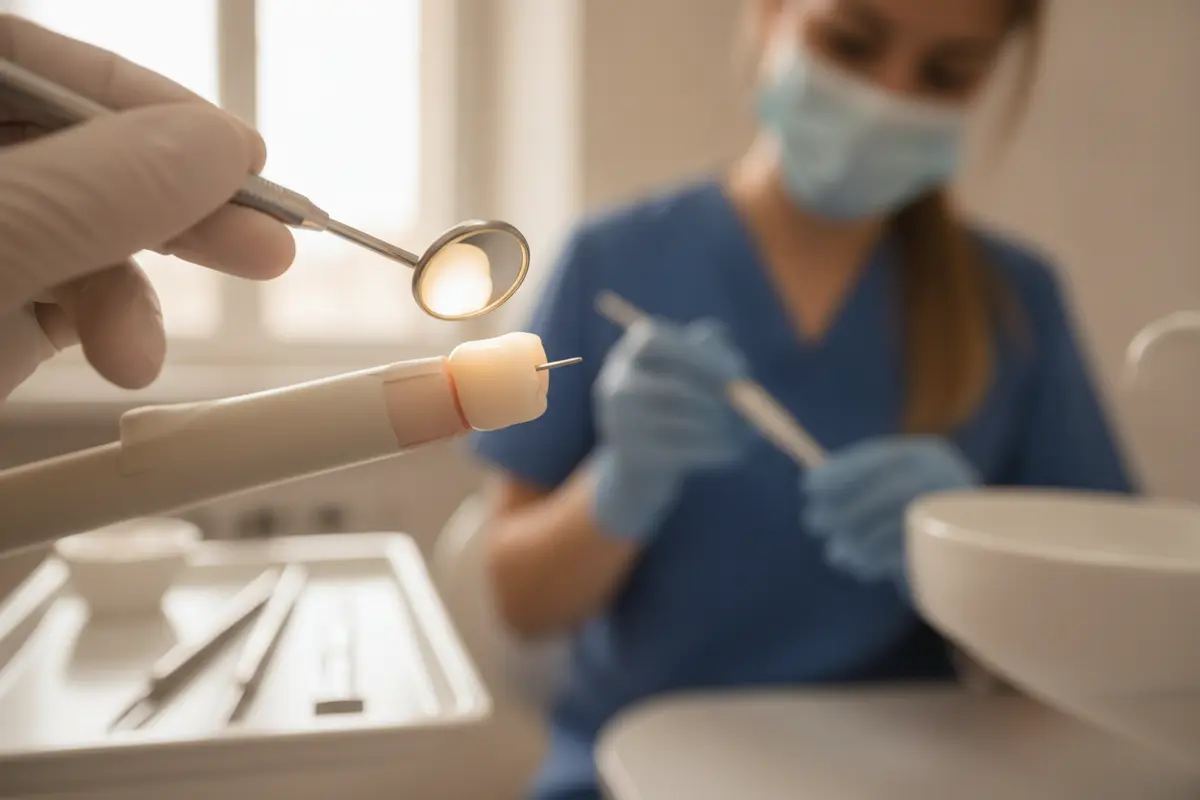
What signs might mean a crowned tooth needs attention?
Changes in comfort or the way a crown feels deserve attention, but symptoms alone cannot confirm decay.
A cavity beneath a crown may not be easy to see at home. Some people notice a change; others have no clear symptoms. A dentist can assess the tooth, crown margins, gums, and relevant images to determine whether decay or another issue may be present.
- New sensitivity to cold, heat, sweets, or pressure around the crowned tooth.
- A toothache or lingering discomfort, whether constant or intermittent.
- A rough or changed edge that your tongue can feel, or a crown that seems loose or different when you bite.
- Food catching repeatedly around the crown or an area that is becoming harder to clean.
- Gum irritation near the crown, including tenderness or bleeding during brushing.
These signs can have several causes. A loose crown, a crack, gum inflammation, bite changes, or sensitivity in a neighboring tooth may feel similar. Do not try to pry at the crown or apply household glue. Arrange an evaluation and describe when the change started, what makes it better or worse, and whether it is getting worse.
Seek prompt dental advice for significant or worsening pain, swelling, or a crown that has come off. If you have facial swelling, fever, or trouble swallowing or breathing, seek urgent medical care. This guide cannot diagnose the cause, and a symptom-free tooth still benefits from routine checks.
How does a dentist check for a cavity near a crown?
An evaluation combines your history with a careful examination; an X-ray may be useful when clinically appropriate.
Tell the dental team about your symptoms, when the crown was placed if you know, prior treatment on the tooth, and any recent changes in your bite. The dentist may inspect the crown’s surface and edges, check nearby gum tissue, and assess how the teeth meet. If needed, dental images can help evaluate areas that cannot be seen directly. Whether imaging is useful depends on the findings and your dental history.
The dentist will also consider possibilities beyond decay. For example, sensitivity can relate to exposed tooth structure, gum changes, a bite issue, or another tooth. A crown that feels loose needs assessment even if it does not hurt. The goal is to understand the cause before discussing options, not to assume that every symptom means the crown has failed.
It can help to bring a short, factual description of the change rather than trying to identify the problem yourself. Mention whether the sensation occurs with hot or cold food, pressure, or at rest; whether it lasts after the trigger is gone; and whether it has changed over time. If chewing feels different, explain which side or position brings on the feeling. These details do not establish a diagnosis, but they help guide the conversation and examination.
For some patients, the exam is also a chance to talk through concerns about dental treatment or sensitivity. Marcos Ortega DDS is an established Hillcrest practice with comfort-focused care and sedation expertise. Sedation is not appropriate for everyone and requires individual screening and planning; ask the dental team what options, if any, fit your health history and the care being considered.
Possible next steps depend on how much healthy tooth remains, the position and extent of any decay, the crown’s condition, and your overall oral health. The dentist may recommend monitoring, treatment of the affected tooth, or a new restoration if the existing crown cannot be maintained. In some cases, additional care may be considered. There is no single solution that fits every crowned tooth.
At a consultation, useful questions include:
- What did you find at the crown margin and on the surrounding tooth?
- Do I need an X-ray or another assessment, and what would it help show?
- What are the reasonable options, and what are the trade-offs of each?
- Can the existing crown remain, or does it need repair or replacement?
- What should I do at home while we decide on treatment?
For broader information about care options, see the practice’s pages on general dentistry and restorative dentistry. These pages are starting points, not a substitute for an exam tailored to your tooth.
What should you do if you notice a change?
Contact a dentist when a crown feels different or symptoms persist, and avoid attempting a repair at home.
If the crown is still in place but the tooth feels sensitive, keep the area clean and make an appointment for an evaluation. Note triggers such as biting, cold drinks, or sweets. Until you receive advice, avoid chewing very hard foods on that side if doing so causes discomfort. Do not place aspirin directly on the tooth or gum, and do not use glue or other household products on a crown.
If the crown comes off, keep it safe and contact a dental office for instructions. Do not force it back into place. The exposed tooth may be sensitive, and the crown or tooth may require examination. If you are in Hillcrest, Mission Hills, Banker’s Hill, Park West, Middletown, or Downtown San Diego, a local office can help assess the next step. Marcos Ortega DDS has served the San Diego area for more than 34 years and emphasizes individualized, comfort-focused care, including sedation expertise for appropriate patients.
When making contact, share whether you have pain, swelling, a lost crown, or trouble eating. The team can help determine how soon you should be seen. Do not wait for a routine cleaning if symptoms are worsening or you have swelling; seek timely professional guidance.
If you are anxious about making an appointment, say so when you contact the office. You can ask what the first visit may involve and whether you should bring a list of medicines or prior dental records. Comfort needs are individual, and it is reasonable to discuss questions before the visit. The practice provides comprehensive care in-house and focuses on individualized planning, but the appropriate evaluation and any treatment will depend on the clinical findings.
How can you help prevent decay around a crown?
Daily plaque removal at the gumline and regular professional checkups are practical ways to care for both the crown and the natural tooth.
A crown still needs the same consistent attention as other teeth. Focus on the margin where the restoration meets the tooth and gum. Brush twice daily with fluoride toothpaste and use a soft-bristled toothbrush. Clean between teeth every day using floss or another method your dental team recommends. If floss catches or shreds around a crown, mention it rather than ignoring the change.

- Brush gently along the gumline. Use small, careful strokes and reach the surfaces around each crown.
- Clean between teeth daily. Ask for guidance if a bridge, tight contact, or dexterity concern makes your usual method difficult.
- Keep routine dental visits. Checkups give your dentist a chance to review the crown and nearby tooth structure over time.
- Limit frequent sugary or acidic snacks and drinks. If you have questions about your risk, discuss your eating habits and home-care routine with a dental professional.
- Tell the office about changes promptly. A rough edge, new sensitivity, or recurring food trap is worth mentioning.
Home care cannot guarantee that decay will never occur, and a crown does not prevent every dental problem. A personal plan may depend on factors such as previous cavities, gum health, dry mouth, and how accessible the crown margins are. Your dentist can suggest tools or a recall schedule based on your individual needs.
If you are unsure whether your technique reaches the back of the crown or the gumline, ask the hygienist or dentist to demonstrate an approach during a visit. Some people prefer a manual toothbrush, while others use a powered brush; the important point is thorough, gentle cleaning that suits your needs. Avoid scrubbing so forcefully that your gums become sore. If you have limited hand movement, dental work that makes floss difficult, or a dry-mouth concern, mention it so the team can help you consider practical adjustments.
How do common crown changes compare?
Similar symptoms can have different causes, so use this guide to decide what to report—not to diagnose yourself.
| What you notice | What to do |
|---|---|
| New sensitivity | Arrange an exam if it persists, worsens, or concerns you; there are several possible causes. |
| Rough edge or food catching | Tell the dental office and avoid probing the area. |
| Crown feels loose or comes off | Contact a dentist for instructions; do not glue or force it back. |
| Pain with swelling or worsening symptoms | Seek timely dental advice; get urgent medical care for trouble breathing or swallowing. |
The American Dental Association provides general oral health information at ADA.org. For a concern about a specific crown, rely on an examination and advice from a dental professional who can review your health history.
What should you remember about cavities under crowns?
A crown protects a tooth, but the natural tooth and its margins still need ongoing care.
Decay can form near the place where a crown meets the natural tooth. Sensitivity, pain, a rough edge, food trapping, or looseness can be reasons to ask a dentist for an assessment, although none of these signs proves that decay is present. Regular brushing, daily cleaning between teeth, and checkups help you care for the tooth and restoration together.
If you have a change around a crown, explain what you have noticed and ask what evaluation is appropriate. The dental crown team can discuss treatment considerations, while the patient comfort page describes comfort-focused care. Marcos Ortega DDS offers a Hillcrest location with free parking and comprehensive dental services; recommendations are based on each patient’s exam and goals.
Contact the Hillcrest dental team about your crown
Frequently asked questions
Can a cavity form under a crown without pain?
Yes. A tooth problem may not cause noticeable symptoms at first, and symptoms cannot reliably show whether decay is present. Routine dental visits help your dentist assess a crowned tooth even when it feels normal.
Does a crown itself get a cavity?
No. A crown is a restoration, not natural tooth structure. Decay can affect the tooth at or near the crown’s edge, where the crown meets the remaining tooth.
Does a crown always need to be replaced if there is decay?
Not always. The appropriate approach depends on the extent and location of the affected area, the amount of healthy tooth remaining, and the crown’s condition. A dentist can explain whether the existing crown may be maintained or another restoration is appropriate.
Can I prevent a cavity around my crown?
You can reduce risk by brushing carefully, cleaning between teeth every day, and keeping up with dental visits. No home-care routine can guarantee that decay will never develop, so contact a dentist about changes or concerns.
A crowned tooth can remain part of a healthy smile, and a change does not automatically mean the crown has failed. A professional evaluation can clarify what is happening and help you choose an appropriate next step.