
If you are asking, can you whiten dental crowns, the short answer is generally no: whitening products can lighten natural tooth enamel, but they do not change the shade of crown material. A crown that looks darker than nearby teeth needs a different plan than ordinary whitening. Understanding the difference can help you avoid products unlikely to change the crown and prepare for a useful conversation about shade matching.
Schedule a shade-planning consultation
Why do whitening products not change a crown?
Whitening acts on natural tooth structure; a restoration’s color is set by its material and fabrication.
Whitening products are intended to affect discoloration in natural teeth. A crown is a restoration that covers a tooth, and its visible material does not respond to bleaching in the same way. At-home strips, gels, and dentist-directed whitening are not reliable ways to make an existing crown lighter. The same general limitation applies to other restorations, though the material and surface condition matter when a dentist evaluates them.
This distinction explains a common surprise: someone whitens natural teeth and then notices an older crown stands out more. The crown may not have changed at all. Instead, nearby teeth have become lighter, so the contrast is more visible. Whitening only the natural teeth cannot guarantee that every part of a smile will end up at one uniform shade.
- Natural enamel: may respond to dentist-recommended whitening, depending on the cause of discoloration and individual circumstances.
- Existing crown: generally retains its existing shade during bleaching.
- Visible mismatch: may become more noticeable when surrounding teeth change color.
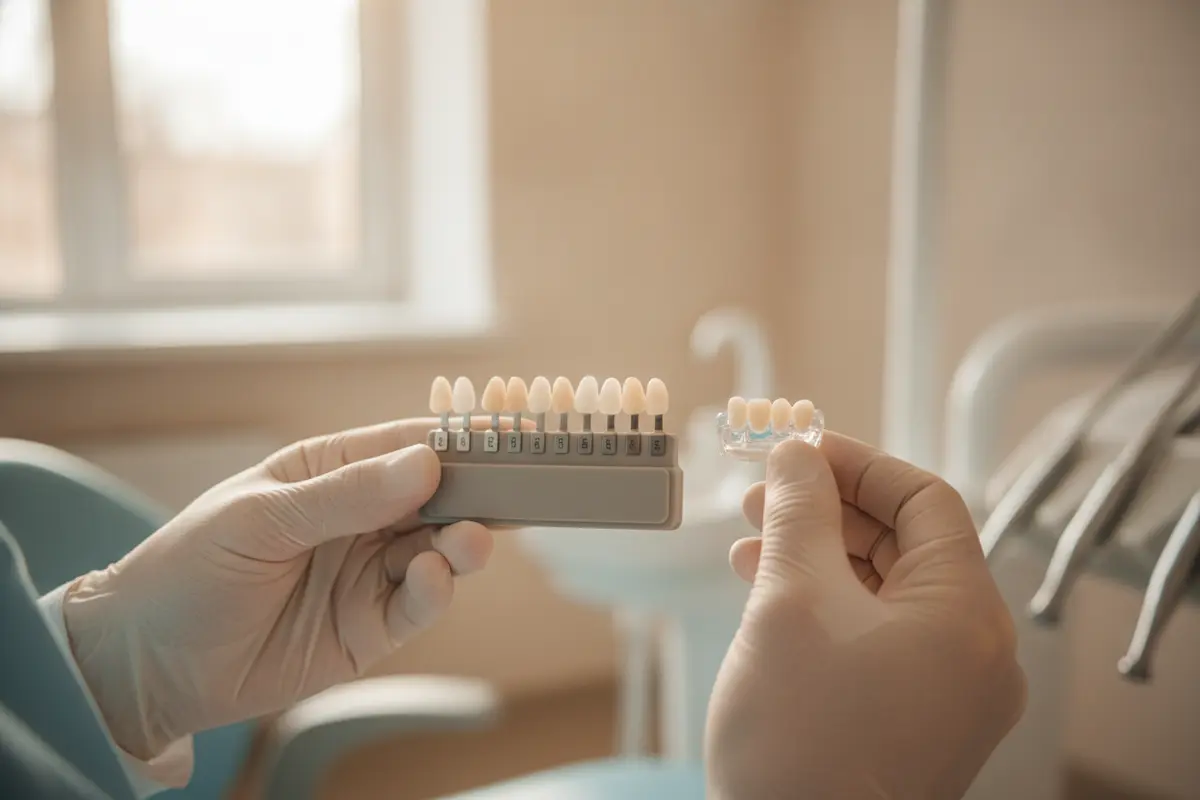
What can cause a crown to look different?
A shade difference can reflect contrast, lighting, the original selection, or changes in neighboring teeth.
Crowns are planned to fit the smile at the time they are made. Over time, natural teeth may look different because of age, staining, or other changes, while the crown retains its original appearance. The reverse situation can also occur: whitening surrounding teeth may make the crown look darker by comparison. Indoor and outdoor lighting, the tooth’s position, and how the restoration reflects light can affect what you notice from one setting to another.
Before deciding what to do, consider when you first noticed the difference and whether it changes in different lighting. Is it one crown or several restorations? Did you recently whiten your teeth, have dental work, or notice a new mark? These observations help describe the concern but do not identify its cause. A dentist needs to examine the crown and nearby teeth to assess them.
A color difference alone does not establish that a crown is damaged or needs replacement. If you also notice pain, a loose restoration, a chipped edge, sensitivity, or a change in how your teeth meet, mention that promptly. Those concerns deserve evaluation separately from a cosmetic shade question.
Is the crown stained on the surface?
A surface mark and a difference in the crown’s overall shade are not the same concern. A dentist can inspect the restoration and discuss whether cleaning or another approach is suitable; do not assume a whitening gel will remove a mark or change the underlying color. Avoid scraping or polishing it yourself, since you cannot determine at home what the surface needs.
Could the neighboring teeth be the reason for the contrast?
Yes. A crown can look darker if natural teeth around it have become lighter, or it can seem lighter if those teeth have darkened. When the difference is subtle, a dentist may assess the smile as a whole rather than judging the crown by itself. This broader view helps keep a single tooth’s appearance in context.
What are the options if a crown looks too dark?
The appropriate path depends on whether you want to change natural teeth, address the restoration, or accept the current shade.
There is no single fix for every mismatch. An evaluation helps establish the crown’s condition, the color of adjacent teeth, and your priorities. Options to discuss may include:
- Assess the restoration and shade difference. Explain what you see and when it became noticeable. Your dentist can examine the crown, surrounding teeth, and your overall goals.
- Consider whitening natural teeth, if appropriate. If natural-tooth whitening is suitable, discuss the anticipated shade change and how it may affect the contrast with the crown. Whitening will not lighten the crown itself.
- Monitor or leave the crown as it is. If the restoration is in acceptable condition and the difference does not trouble you, doing nothing may be a reasonable choice. Ask what signs would warrant another evaluation.
- Discuss a new restoration only when appropriate. If the crown has a separate clinical concern, replacement may be considered as part of treatment. Replacing a crown solely for appearance involves its own benefits and tradeoffs, which should be reviewed with the dentist.
- Plan the sequence before new restorative work. If you are considering whitening and a new crown, discuss the order before the restoration is made so shade planning can account for your goals.
Depending on your exam and aims, you can review professional teeth whitening for natural teeth and dental crown care and planning. Whitening is not a way to repair a crown or change its shade.
What does “replace the crown” actually involve?
Replacement is not simply painting a lighter color over an existing crown. It involves evaluating the tooth and restoration, discussing whether replacement is appropriate, and planning a new restoration’s shade and fit. The dentist can explain the steps that apply to your situation. A patient should not assume that a shade mismatch by itself makes replacement necessary.
It is also useful to distinguish the desired result from the proposed treatment. You may want a brighter overall smile, a closer match for one visible crown, or simply reassurance that the restoration is in good condition. Those goals can point to different conversations. Be clear about what bothers you most before comparing options.
How should you plan whitening around a crown?
Discuss timing before whitening or making a new crown, especially when the restoration shows in your smile.
If a crown is visible when you smile, the order of care can influence how closely the shades coordinate. For example, if whitening is suitable and you whiten natural teeth before a new crown is planned, the dentist can use the resulting tooth shade as part of the discussion for the restoration. If a crown is made first and natural teeth are whitened later, the natural teeth may become lighter while the crown keeps its selected shade.
This is a planning consideration, not a promise that every tooth can be made to look identical. Natural teeth and restorations have different materials and reflect light differently. Your dentist can discuss what is realistic for the specific teeth and crown involved. The final plan depends on the examination, oral health, material, and your preferences.
- Describe your goal. Say whether you want a brighter smile overall or are focused on one crown.
- Share relevant history. Mention prior whitening, when the crown was placed if known, and any changes you have noticed.
- Ask about suitability. Find out whether whitening makes sense for your natural teeth and what limitations apply.
- Agree on sequence. If new restorative work may be considered, ask whether it should follow the whitening discussion.
- Review the result together. Ask how the dentist will assess shade and what follow-up, if any, may be helpful.
The American Dental Association provides general oral-health information. For advice about your crown, whitening suitability, and treatment sequence, rely on an examination by a dental professional.
How do crowns and natural teeth compare?
The material and timing help explain why whitening does not affect each part of a smile alike.
| Smile area | What whitening may do | Planning point |
|---|---|---|
| Natural teeth | May lighten, depending on discoloration and individual factors | Ask whether whitening is suitable and what shade change is realistic |
| Existing crown | Generally does not lighten with bleaching products | Assess the crown and nearby teeth; do not assume whitening will match it |
| New crown | Shade is selected during restoration planning | Discuss whitening goals before fabrication |
| Other restorations | May not respond like natural teeth; material and condition vary | Have the dentist identify the restoration and advise on care |
Use this comparison as a starting point, not a diagnosis. A crown’s material, age, location, and condition are not always obvious from a photograph or a quick glance. If you are unsure what type of restoration you have, ask your dental team to identify it before choosing a product or treatment.
Why does shade matching take more than choosing “white”?
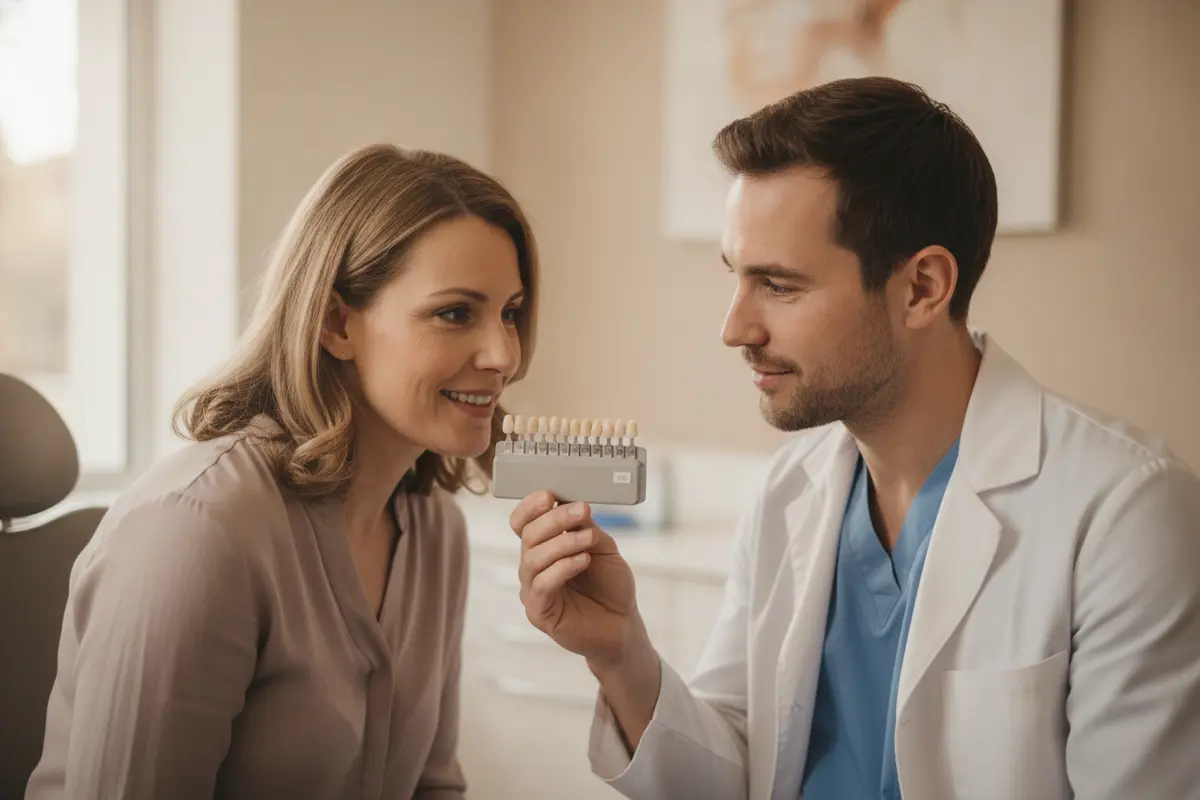
Teeth are not identical blocks of one color. Their appearance is affected by the surrounding teeth, lighting, tooth position, and how a material reflects light. A very bright shade on one restoration may not look balanced beside natural teeth. Shade selection is therefore a conversation about the whole smile and the result you prefer, not simply selecting the lightest option.
What should you avoid trying at home?
Using stronger or more frequent whitening products will not make crown material bleachable.
Whitening strips and gels may affect natural teeth, but they are not a crown-lightening treatment. Leaving them on longer or using more product does not remove the limitation and may irritate the mouth or contribute to tooth sensitivity. Follow product directions and ask a dentist whether a product is appropriate for you, especially if you have restorations or existing sensitivity.
- Do not use abrasive household methods or unverified products that promise to alter restorations.
- Do not scrape, file, or polish a crown yourself.
- Do not keep applying a product that causes discomfort; stop and seek professional guidance.
- Do not ignore a new chip, looseness, pain, or change in fit while focusing only on color.
These precautions are about avoiding self-treatment that could create another problem or delay an appropriate assessment. If you have already tried a product, tell the dentist which one you used and how often. That information can help the conversation stay practical and specific.
What if a whitening product makes my teeth sensitive?
Stop using it and ask a dental professional for advice, particularly if sensitivity persists or is severe. A dentist can help determine whether the product, the way it was used, or another issue may be involved. Do not increase the amount or frequency in an effort to push through discomfort.
What questions can you ask at a shade consultation?
Specific questions turn a general concern into a clear discussion of choices and tradeoffs.
You do not need to arrive with a treatment decision already made. A useful appointment can begin with the exact detail you notice and what you hope to change. Consider bringing a short list so the important points are not lost during the visit.
- Is the difference coming from the crown, neighboring teeth, or both?
- Does the crown appear to be in good condition, or is there another issue to evaluate?
- Would whitening my natural teeth be suitable, and what shade change should I expect?
- If I whiten, how might the crown look beside the lighter teeth?
- Should whitening happen before any new crown is planned?
- What are the advantages and drawbacks of monitoring the crown versus replacing it?
- How will shade selection account for lighting and the teeth around the restoration?
- What symptoms or changes should prompt me to call sooner?
It can help to describe the concern in neutral terms: “This crown looks darker in daylight,” or “I noticed the difference after whitening.” Clear observations are more useful than trying to name the cause yourself. If you have a photograph showing the change, you can mention when it was taken and what the lighting was like, while recognizing that a photo cannot replace an examination.
At Marcos Ortega DDS in Hillcrest, San Diego, care is based on an individual evaluation and patient goals. The practice offers comprehensive dental care and a comfort-focused approach, with more than 34 years serving the area. For related information, see cosmetic dentistry options, restorative dentistry, the practice and its approach, and general dental care.
For people in Hillcrest, Mission Hills, Banker’s Hill, Park West, Middletown, and Downtown San Diego, a consultation can clarify whether the concern is about appearance, restoration condition, or both. Bring your questions and discuss the options without assuming that a particular treatment is required.
Request a dental consultation in San Diego
Frequently asked questions
Can whitening toothpaste change a crown’s color?
Whitening toothpaste may help remove some surface stains from natural teeth, but it does not bleach a crown to a lighter shade. Ask your dentist whether a particular product is suitable for your teeth and restorations.
Will whitening my teeth make my crown look different?
It may. Natural teeth can lighten while the crown retains its existing shade, making a mismatch more noticeable. Discuss the sequence of whitening and crown treatment before starting.
Does every mismatched crown need to be replaced?
No. A color difference alone does not determine whether replacement is appropriate. A dentist can assess the crown’s condition, your oral health, and your goals before discussing options.
Can a new crown be planned to match whitened teeth?
Shade planning can take nearby teeth into account. If you are considering whitening, bring it up before a new crown is made so the dentist can discuss sequence and shade with you.
What if my crown looks newly darker or has a dark line?
A new color change or line should be assessed rather than assumed to be a simple stain. Contact a dental professional, especially if you also notice pain, looseness, a chip, or a change in fit.
What should you remember?
Dental crowns generally do not whiten like natural teeth, so shade planning matters when a crown and nearby teeth look different. A dental evaluation can help clarify whether whitening, monitoring, or another restorative option fits your situation and goals.