
If your denture shifts while you talk or eat, you may be wondering how to use denture adhesive safely. Adhesive can help improve retention for some people when used as directed, but it cannot correct a denture that no longer fits well. The right amount and method depend on the product, so follow its label and ask your dental team about ongoing looseness, discomfort, or sores.
Ask our team about a denture fit evaluation
What can denture adhesive do?
Adhesive is an aid to retention, not a replacement for a well-fitting denture or regular dental care.
Denture adhesive is a product placed on a removable denture to help it stay in place. Products may come as creams, powders, strips, or pads. Ingredients and directions differ, so there is no single application amount or routine that applies to every brand. Read the package instructions before using a new product, and do not use it in a way the label does not describe.
A denture may feel less secure as the mouth changes over time. Adhesive might be part of a short-term plan for a person whose denture has been assessed and whose dentist says an adhesive is appropriate. If you routinely need more product to keep a denture in place, or it moves during ordinary activities, arrange an evaluation instead of simply adding more.
- Adhesive may help with retention for some denture wearers when used as directed.
- It does not reshape the denture, repair a crack, or address changes in the gums and supporting tissues.
- It does not replace removing and cleaning a removable denture or keeping appointments for oral health checks.
People considering a new appliance or a different way to replace missing teeth can review the practice’s denture care and treatment information. The best option depends on an examination, the condition of the mouth, and personal needs.
How do you prepare before applying adhesive?
Start with a clean denture, clean hands, and the product directions in front of you.
Before applying adhesive, check that the denture is intact and that you are using a product labeled for dentures. If you have an allergy, sensitivity, or a health concern that may affect product use, ask a dentist or pharmacist whether the ingredients are suitable. Do not apply adhesive over irritated tissue or use it to cover a sore.
- Wash and dry your hands. This makes the denture easier to handle and helps keep the application area clean.
- Clean the denture. Remove old adhesive and debris using a denture-safe method. Follow the denture and cleanser directions. Rinse it as instructed.
- Check the fit and condition. Look for visible damage, sharp edges, or residue. Do not try to repair a broken denture at home with household glue.
- Read the adhesive label. Check the recommended amount, where to place it, whether the denture should be wet or dry, and how to remove the product.
- Use a mirror and a stable surface. Take your time. If your hand control or vision makes application difficult, ask your dental team about practical ways to manage it.
Do not confuse adhesive with a denture reliner or repair material. These products are not interchangeable. If a denture rocks, pinches, or has a damaged base, contact a dentist to discuss the right next step rather than trying to build up the fit with adhesive.
How do you apply denture adhesive?
Apply only the amount and in the locations listed on your specific product label; more is not automatically better.
Different adhesives require different techniques. A cream may be dispensed in small lines or dots, while a powder or pre-shaped strip may have separate instructions. Follow the package rather than copying someone else’s routine. The general sequence below can help you organize the process, but the product label takes priority.
- Prepare the denture as directed. Some products call for a dry surface; others may specify a damp surface.
- Place the product only in the recommended areas. Keep it away from the edges if the label says to do so, and avoid overfilling the denture.
- Position the denture carefully in your mouth. Press it into place as directed, using even, comfortable pressure rather than biting hard to force it to seat.
- Follow any instructions about holding the denture in place or waiting before eating or drinking.
- Check how the denture feels. If it causes pain, does not seat properly, or adhesive squeezes out in excess, remove it as the product directions allow and reassess rather than adding more.
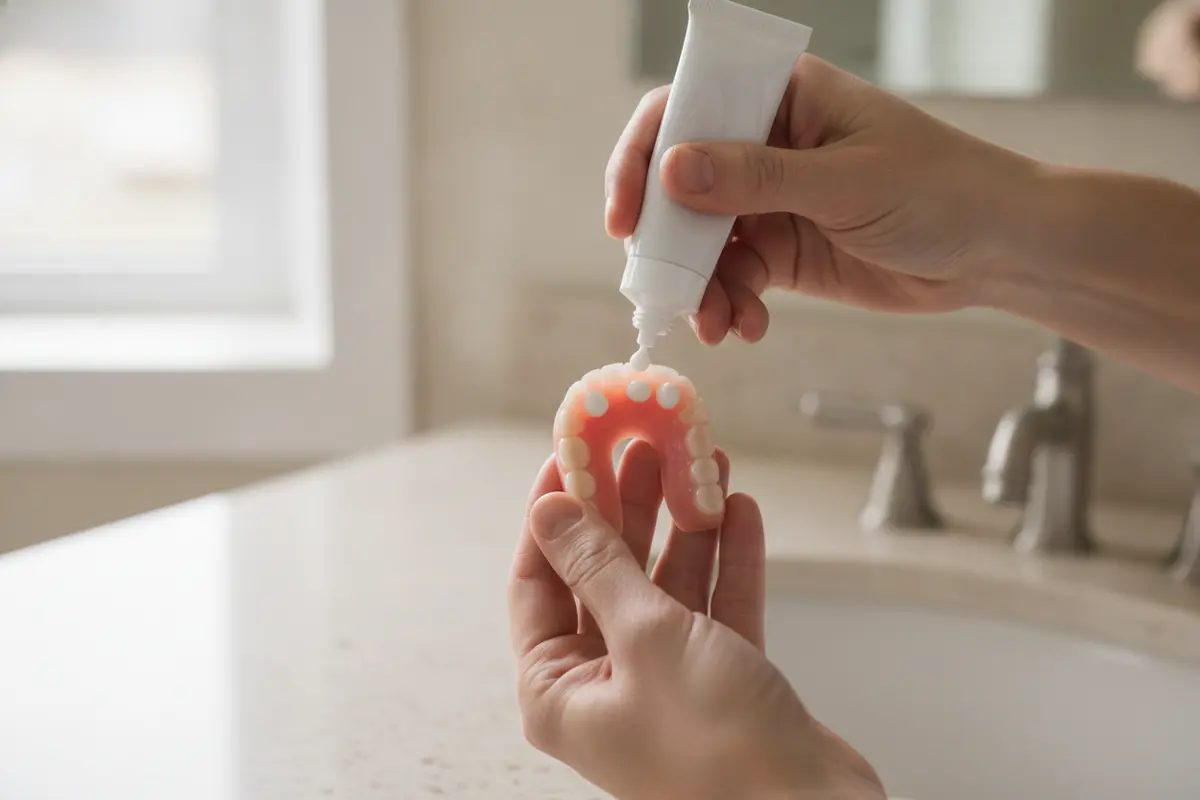
A brief, even amount of product may be enough for a particular wearer, while another person’s product directions may differ. Avoid placing adhesive on the gums unless the product is specifically intended for that use. Never use industrial glue, craft adhesive, or household products in the mouth.
What is a useful application checklist?
- Before: Clean the denture and read the label. What to avoid: Applying over old residue or a sore.
- Apply: Use the labeled amount and placement. What to avoid: Adding extra to compensate for a poor fit.
- After: Seat gently and follow wait-time directions. What to avoid: Forcing a denture that will not seat comfortably.
- End of day: Remove adhesive and clean the denture. What to avoid: Leaving product buildup without cleaning.
Which type of denture adhesive should you use?
Choose a product made for dentures and use its own instructions; the form alone does not tell you whether it is right for your situation.
Adhesives are sold in several forms, including creams, powders, strips, and pads. The best fit depends on the product label, your denture, your ability to handle the product, and advice from your dental professional. A package may describe how much to apply, how to place it, and how to remove it. Read those directions each time you switch products because instructions that apply to one form or brand may not apply to another.
- Creams are dispensed from a tube. Follow the package’s directions for amount and placement, and avoid squeezing out more than directed.
- Powders may have instructions about preparing the denture and distributing the product. Do not guess at an amount or use it in a way the label does not describe.
- Strips or pads may be shaped for placement on a particular part of a denture. Do not cut or reposition them unless the manufacturer says you can.
Ask a dentist or pharmacist if you are uncertain about ingredients, how a product is used, or whether it is suitable alongside your health needs. If your main concern is that the denture moves, the key question may be fit rather than which adhesive to try next. A new product cannot reliably substitute for an examination when a denture is loose or uncomfortable.
What adhesive-use mistakes should you avoid?
Use the adhesive only for its intended purpose and do not let it mask a problem that needs dental attention.
Some everyday habits can make adhesive harder to use safely or make it more difficult to notice a change in denture fit. A simple routine helps separate normal product use from a recurring issue that deserves a professional opinion.
- Do not keep increasing the amount. If the recommended application no longer seems to hold the denture, seek advice about fit rather than repeatedly adding product.
- Do not ignore pain. Adhesive should not be used to cover a sore or make a painful denture seem acceptable. Remove and clean the appliance as directed, then contact a dental professional about persistent discomfort.
- Do not skip cleaning. Leaving old adhesive in place can make it harder to prepare the surface consistently and keep the denture clean.
- Do not use the wrong material. Household glues, repair putties, and products not labeled for oral use do not belong on a denture.
- Do not assume every adhesive works the same way. Directions, ingredients, and recommended placement can differ. Recheck the label when changing products.
If you have a reaction or a new symptom after using an adhesive, stop and seek professional guidance on what to do next. For urgent or severe symptoms, use the appropriate urgent-care route. A dentist can consider the timing, product, denture condition, and oral tissues together rather than guessing from the adhesive alone.
How can you remove adhesive and clean your denture?
Follow the adhesive and denture-care instructions, and remove product buildup regularly rather than letting it accumulate.
Removal methods vary. Some adhesives loosen with water or a recommended cleanser; others may require a specific technique. Use the product’s instructions and avoid scraping the denture with sharp objects. If residue is stubborn, do not use boiling water, abrasive cleaners, or a solvent unless the denture manufacturer or your dental professional specifically recommends it. Heat and harsh materials may damage some dentures.
- Remove the denture gently according to the instructions you were given. If it feels stuck or removal is painful, do not yank it; ask a dental professional for advice.
- Use a soft denture brush and an appropriate cleanser to remove adhesive from the denture. Clean all surfaces without bending or forcing delicate parts.
- Rinse as directed, then clean your mouth and any remaining adhesive from the gums or palate gently. Follow your dentist’s guidance for oral tissues.
- Store the denture as instructed by the manufacturer or your dental team. Some dentures need to remain moist when they are out of the mouth; the appropriate method depends on the appliance.
- Inspect the denture and your mouth for residue, damage, or persistent irritation.
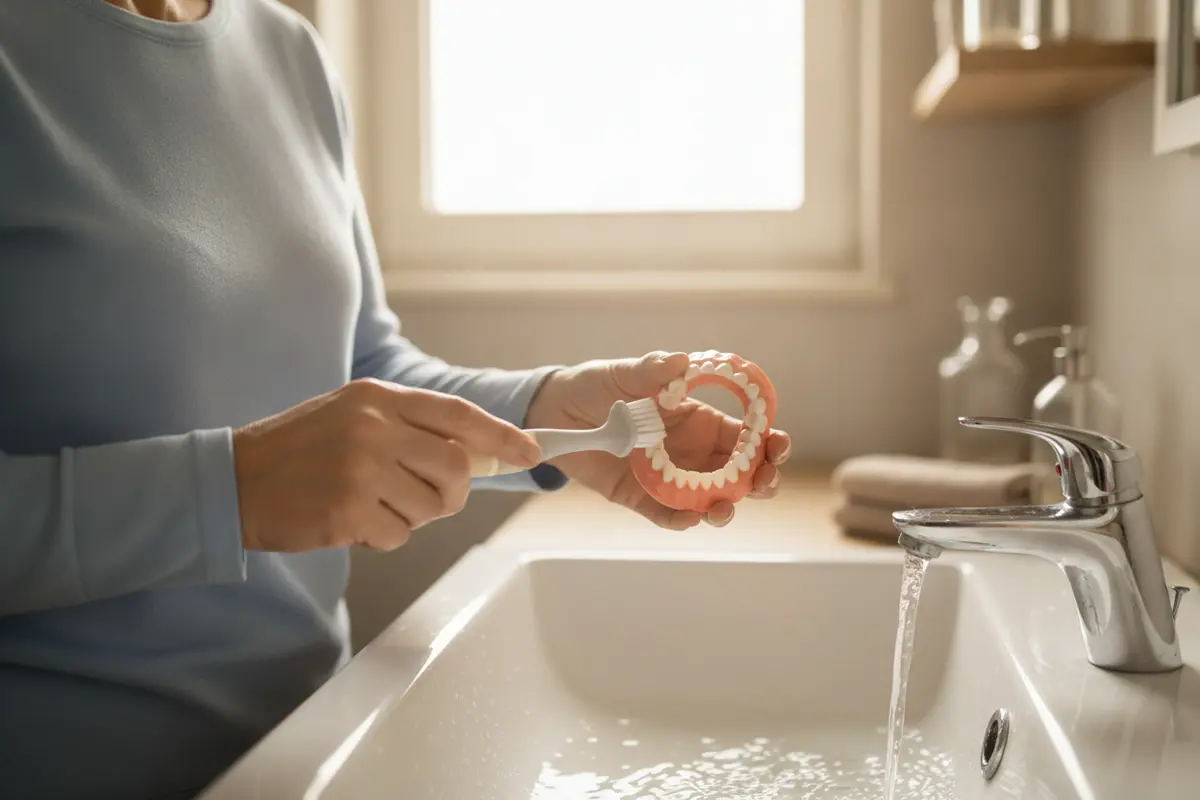
Keeping the appliance clean helps you notice changes that may otherwise be hidden by product buildup. For questions about denture maintenance, cleaning products, or changes in comfort, contact the dentist who knows your appliance. The practice’s restorative dentistry information offers context on care for damaged or missing teeth, but an individual recommendation requires an assessment.
When should a denture fit be evaluated?
Repeated slipping, soreness, or a growing need for adhesive deserves attention; it is not a reason to keep increasing the amount.
A denture that fits well should not routinely cause significant pain or leave persistent sores. The shape of the mouth can change, and dentures can wear or become damaged. A dental evaluation can help identify whether the appliance needs adjustment, repair, replacement, or another plan. Do not attempt to adjust or bend it yourself.
Contact a dental professional if you notice any of the following:
- The denture moves, rocks, or falls out during speaking or eating, even when you follow the adhesive directions.
- You need progressively more adhesive or feel that the product is no longer helping.
- You have ongoing rubbing, tenderness, sores, bleeding, or redness under the denture.
- The denture is cracked, chipped, warped, has a sharp edge, or no longer seats as it used to.
- You have trouble chewing or speaking comfortably, or the appliance causes a change that concerns you.
Seek prompt professional guidance for severe pain, significant bleeding, swelling, or a suspected infection. This article cannot determine the cause of a symptom. A clinician can examine the denture and oral tissues and discuss options based on what they find.
Adhesive safety is also worth discussing if you use it often. The U.S. Food and Drug Administration notes that it has received reports of adverse events linked to denture adhesive use. That is a reason to use products exactly as labeled and to ask a healthcare professional about concerns, not to assume that a particular symptom has a specific cause. See the FDA’s denture adhesive information for its safety discussion.
How can you make adhesive use more comfortable?
A predictable routine can help you follow instructions and notice when your denture or mouth changes.
Try keeping the adhesive, cleanser, denture brush, and written product instructions together in a clean, easy-to-reach place. Use a mirror and a consistent routine. If you have difficulty handling a small tube or measuring powder, ask your dental team whether another product form may be easier for you. A change in product should still be made according to its own label.
- Keep the packaging available so you can check the ingredient list and directions.
- Use a clean tool or the product nozzle as directed; do not share personal oral-care products.
- Do not skip denture cleaning because the adhesive seems to hold well.
- Make a note of when looseness, rubbing, or adhesive use changes, and share that information at an appointment.
- Bring the denture and adhesive package to your evaluation if you are unsure how you are using them.
If dental visits make you uneasy, let the team know when you arrange a visit. The practice describes its patient comfort approach and can discuss what to expect. Patients in Hillcrest, Mission Hills, Banker’s Hill, Park West, Middletown, and Downtown San Diego can request a conversation without assuming in advance what treatment they will need.
What should you ask at a denture appointment?
Bring specific questions so the evaluation can focus on fit, safe use, and the next practical step.
A denture appointment is a chance to have the appliance and your mouth assessed together. The dentist may ask when the denture was made, when it began to feel loose, what adhesive you use, and whether you have pain or sores. A recommendation depends on the examination and your goals; adhesive alone may or may not be appropriate.
- Does my denture appear to fit correctly, or could it need an adjustment or other care?
- Is this adhesive appropriate for my denture and how often I use it?
- How much should I use, and what is the correct way to remove it?
- What should I do if I develop soreness or residue is difficult to clean?
- How often should I have the denture and my oral health checked?
Marcos Ortega DDS is an established Hillcrest and Downtown San Diego dental practice with more than 34 years of service and comprehensive care. If you want to discuss a denture concern, you can contact the practice to plan a visit. You can also review its information about general dental care before asking your questions.
Request a denture evaluation in San Diego
Frequently asked questions
Can I use denture adhesive every day?
Use an adhesive only as its label directs and discuss routine or ongoing use with a dentist, especially if the denture feels loose or you need increasing amounts. A professional can assess whether the denture fits and whether continued adhesive use is suitable for you.
Should I apply adhesive to a wet or dry denture?
It depends on the product. Some directions specify a dry surface, while other products may call for a damp denture. Check the exact package instructions rather than relying on a general rule.
What if adhesive squeezes out when I put the denture in?
Follow the product directions for removal and cleaning. Avoid adding more product. If excess continues or the denture does not seat comfortably, ask a dentist to evaluate its fit and show you the appropriate application method.
Can denture adhesive fix a loose or broken denture?
No. Adhesive does not repair a broken appliance or correct a fit problem. Do not use household glue or try to reshape the denture at home; arrange a professional evaluation.
What should you remember?
To use denture adhesive safely, start with a clean denture, follow the product’s exact instructions, and use only the recommended amount. Remove residue and clean the appliance as directed. If slipping, pain, irritation, damage, or increased adhesive use continues, seek a denture fit evaluation instead of relying on more product.