
Knowing how to clean implant supported dentures starts with identifying whether your prosthesis is removable or fixed. The right routine helps you clean the denture, implant areas, and surrounding tissues without forcing parts or using products that may not suit the materials.
Ask our dental team about denture care
Why does implant-supported denture care differ?
In brief: Clean both the appliance and the tissues around it, using a method matched to how your denture attaches.
An implant-supported denture may be designed to come out for cleaning or remain fixed in place. A removable design can provide access to its underside and the mouth when taken out as instructed. A fixed design stays in place during home care, so cleaning beneath and around it requires attention to access and technique. Do not assume you can remove an appliance yourself; ask your dentist how yours is intended to be handled.
Daily cleaning helps remove food debris and plaque from accessible surfaces. Areas near the gumline and implant components can be less direct to reach. Your dental team can show you the paths to clean and recommend tools suited to the prosthesis and your dexterity. A technique that works for one person may not work for another because appliance shape, spacing, and access differ.
- Removable: take it out only as instructed, then clean the appliance and mouth separately.
- Fixed: leave it in place and clean the surfaces and spaces your clinician has demonstrated.
- Either type: continue routine dental visits for assessment and professional maintenance.
How do you identify whether your denture is removable?
In brief: Ask the dental team who fitted it; do not test the attachment by pulling or twisting.
The word “implant-supported” describes support from implants, not necessarily whether a patient can remove the denture. Some appliances are intended to be removed by the patient, while others are fixed and are handled by the dental office. Even a removable design may require a specific path or release technique. Trying to lift it from the wrong point can strain the appliance or attachments.
If you are uncertain, ask direct questions at your next visit: Is this denture patient-removable? Which part should I hold? Is there a release motion or tool? How often should it be removed? What should I do if it feels stuck? Until you receive an answer, clean only the surfaces you can safely reach without detaching it.
- Check any written care instructions you received.
- Ask the office to identify the attachment design and demonstrate removal and replacement if appropriate.
- Request a written reminder of the products and tools recommended for your appliance.
For a broader overview of denture options, discuss how design affects cleaning and follow-up rather than relying on a general instruction meant for every denture.
How do you clean a removable implant-supported denture?
In brief: Remove it only as directed, brush gently over a protected surface, rinse, and clean your mouth before replacing it.
Follow the instructions for your particular denture and attachment system. Some removable appliances are intended for patient removal; in other cases, only the dental office should remove the prosthesis. If you are unsure, confirm before trying to detach it. A calm, repeatable routine is safer than improvising when an attachment feels unfamiliar.
- Prepare a safe area. Work over a basin partly filled with water or a folded towel. This can reduce the chance of damage if the denture slips. Keep small parts away from the drain and pets or children.
- Remove it as demonstrated. Use the hand position and movement your clinician showed you. Do not pull on a thin edge, twist forcefully, or use household tools.
- Rinse the appliance. Use cool or lukewarm water to wash away loose debris. Avoid hot water unless your dental team has specifically approved it for your material.
- Brush gently. Use a soft brush intended for dentures and a cleanser recommended for the material. Clean visible surfaces and the accessible underside without bending or scraping attachment parts.
- Clean your mouth. Brush natural teeth, gums, tongue, and accessible implant areas as instructed. Use floss or an interdental aid only in the way your team has demonstrated.
- Rinse and replace. Rinse away cleanser and refit the denture as instructed. If it does not seat normally, do not force it; contact the office for advice.
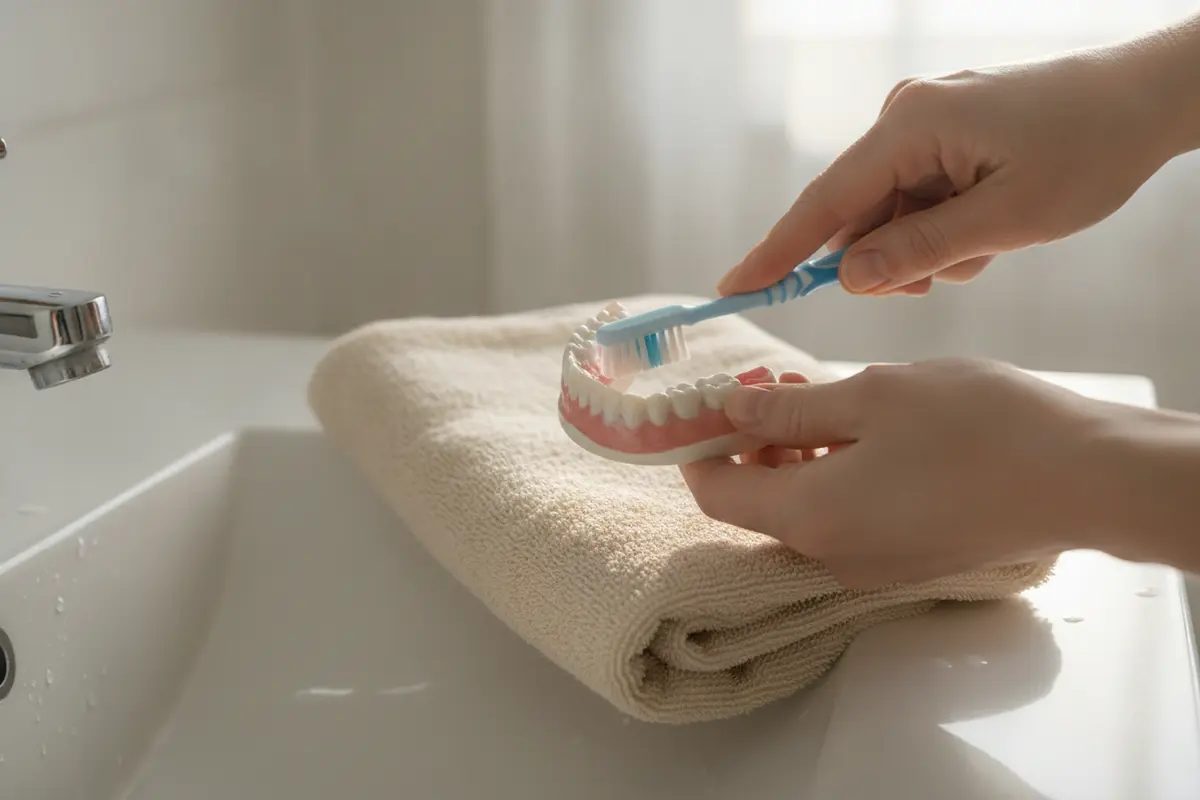
The Cleveland Clinic’s denture-care guidance recommends a soft-bristled brush made for dentures with mild soap, dishwashing liquid, or denture cleanser. Materials and implant designs differ, so confirm which cleanser is suitable for your appliance and follow the manufacturer’s or clinician’s directions. See Cleveland Clinic denture-care guidance.
How do you clean a fixed implant-supported denture?
In brief: Brush reachable surfaces and use an approved aid to reach beneath the denture without forcing it.
A fixed denture remains in place during daily home care. The goal is to carefully reach its outer surfaces, the gumline, and spaces beneath the prosthesis. Your dentist or hygienist can show you the access points and the right size of brush or flossing aid. A tool that is too large, or pressure applied at the wrong angle, may irritate tissue or damage a component.
- Brush outer surfaces with a soft toothbrush and the toothpaste recommended for your appliance.
- Angle a small interdental brush or another approved aid beneath the prosthesis only where your team has shown you.
- Use floss designed for the task if recommended, moving it gently around accessible implant and gum areas.
- Rinse after cleaning and check visible areas for remaining food debris.
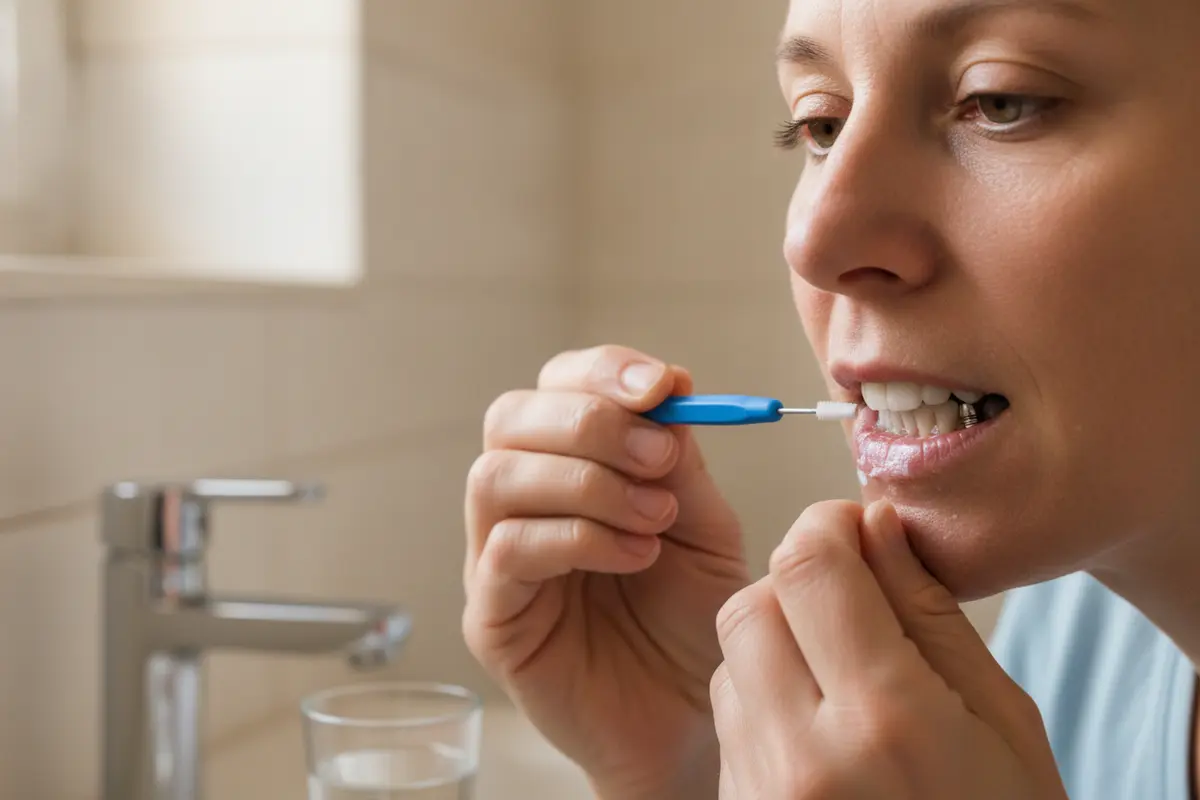
Do not use sharp objects to dislodge food, and do not try to unscrew or remove a fixed restoration. If an area is difficult to reach, ask for a demonstration instead of increasing pressure. Your team can assess whether the tool is the right size and whether the prosthesis needs professional cleaning.
Which tools and products may be useful?
In brief: Use gentle, denture-compatible tools, and have your dental team confirm product choices for your appliance.
Some products that are suitable for natural teeth may not be appropriate for every denture material or attachment. Avoid abrasive cleaners and unapproved soaking solutions. A basic routine may involve a soft brush, an appropriate cleanser if recommended, and a small interdental aid for specific spaces. The best set depends on your prosthesis and the areas you can access comfortably.
| Tool or option | Possible role | What to confirm |
|---|---|---|
| Soft denture brush | Gently cleans broad appliance surfaces | Brush type and suitable cleanser for the material |
| Interdental brush | May reach selected spaces beneath a fixed design | Correct size, angle, and areas to clean |
| Floss or floss threader | May clean around accessible implant and gum areas | Whether the design permits use and the demonstrated technique |
| Water flosser | May help flush selected areas for some patients | Whether it is appropriate and what pressure setting to use |
| Denture cleanser or soak | Can clean or store some removable appliances | Material compatibility, directions, and whether soaking is advised |
A water flosser is not automatically right for every patient or prosthesis. Ask whether it fits your care plan and how to direct the stream. Likewise, do not assume that a soaking product can be used with every attachment or material. When shopping, bring the product name or a photo to your next appointment for confirmation.
Patients considering related dental implant care can ask how home cleaning and office maintenance fit together. The practice also provides restorative dentistry; a discussion can clarify what applies to your specific appliance.
What cleaning mistakes should you avoid?
In brief: Be gentle, avoid unapproved products, and do not alter the way your denture attaches.
- Scrubbing hard: Forceful brushing can damage surfaces or irritate tissues. Use a controlled, light touch.
- Using hot water: Heat may affect some denture materials. Follow the temperature guidance for your appliance.
- Choosing an abrasive or household cleaner: Bleach, scouring products, and unapproved solutions may harm materials or components. Use them only if your clinician specifically directs it.
- Forcing removal or replacement: If a removable denture catches or will not seat as usual, stop and call the office rather than pushing harder.
- Skipping the underside: Debris can collect beneath a denture. Clean that area using the method suited to your design.
- Using a sharp object: Picks, pins, and blades can injure tissue or damage the prosthesis. Choose a recommended cleaning aid.
- Assuming home care replaces follow-up: Daily cleaning does not replace professional checks and maintenance.
A useful rule is to pause when a step requires force, causes pain, or risks bending a component. Make a note of where cleaning is difficult and ask the clinician to demonstrate a safer approach. Do not attempt repairs or adjustments with household adhesive or tools.
How often should you clean and maintain the denture?
In brief: Clean daily and follow the professional maintenance schedule recommended for your individual case.
Many patients clean their denture and mouth as part of morning and evening routines, and rinse after meals when practical. Your clinician may recommend a different schedule or additional steps based on the design, oral health, and access around the implants. Consistency matters: a short routine that reaches the areas you have been shown is more useful than occasional aggressive scrubbing.
Consider making the routine easier to repeat. Keep the approved brush and cleanser together, use a well-lit mirror, and clean over a towel or water-filled basin if the appliance is removable. If hand movement or vision makes a step difficult, tell your dental team. They may suggest a tool or sequence that is easier to manage.
Professional visits allow the dental team to assess fit, condition, and cleanability of the prosthesis and surrounding tissues. Visit timing is individualized. At an appointment, ask whether to bring a removable denture, which tools to bring, and whether any areas need a revised home-care technique. You can also learn about the practice’s office and care approach and denture services.
How can you make a routine that fits your day?
In brief: Link denture care to an existing habit, then check that each important area is included.
A simple sequence can make cleaning less confusing, especially when you are learning a new appliance. For a removable design, you might set out a towel, remove the denture as demonstrated, clean it, clean your mouth, and replace it. For a fixed design, you might brush the visible surfaces first, then use the approved aid in the specific spaces shown by your clinician. These are planning examples, not a substitute for your personalized instructions.
- Choose a consistent time. Pair care with brushing your teeth or another daily routine.
- Gather only approved tools. Keep a soft brush and any recommended interdental aid in one place.
- Follow the same order. Work through the areas your clinician identified so that a hard-to-see space is less likely to be forgotten.
- Check comfort and fit. Note new soreness, looseness, or a change in how the denture seats.
- Ask for help early. If a step is awkward, bring the tool to the office and request a demonstration.
Do not judge success by how long you brush or how much pressure you use. A gentle, methodical approach and a tool that fits the space are better guides. If your routine takes much longer because you cannot reach an area, that is useful information for your next dental visit.
When should you contact your dental team?
In brief: Ask for professional guidance about a change in fit, persistent irritation, damage, or difficulty cleaning.
A blog cannot determine the cause of a symptom. Contact your dental office if the denture becomes loose, cracks, no longer seats as usual, or causes ongoing soreness. Also ask for help if you cannot reach an area or are unsure how to clean an attachment. Do not force an appliance, attempt an unapproved repair, or change your routine to compensate for a new problem.
When you call, describe whether the denture is fixed or removable, what changed, and when you first noticed it. If a part has come loose or the appliance is damaged, keep any piece and follow the office’s instructions about what to do next. If you have severe or rapidly worsening symptoms, seek prompt professional advice.
Marcos Ortega DDS serves Hillcrest and nearby San Diego communities with comprehensive dental care and a comfort-focused approach. The practice has served San Diego for more than 34 years, and the office offers free parking. A conversation can help clarify which cleaning steps apply to your appliance and oral health.
For individualized information about denture care and options or implant care, bring your questions and current cleaning tools to a visit.
Request guidance on implant-supported denture care
Frequently asked questions
Can I remove my implant-supported denture at home?
Only if it is designed to be patient-removable and your dental team has shown you how. Some designs are fixed and should not be detached at home.
Can I use regular toothpaste?
Ask which toothpaste is suitable for your denture material and implant components. Some products may be too abrasive for certain surfaces.
Should I soak my denture overnight?
That depends on the appliance and its materials. Follow the storage and soaking instructions provided by your dental team.
What if I cannot clean beneath a fixed denture?
Ask your dental team to demonstrate the recommended tool and technique. Do not push a large brush or sharp object into the space.
Should I continue dental checkups if I clean carefully at home?
Yes. Home care and professional maintenance have different roles. Keep the schedule your dental team recommends so the fit, condition, and cleanability of the appliance can be reviewed.
What should you remember?
Clean your implant-supported denture every day using a method suited to its removable or fixed design, and keep up with professional maintenance. If the appliance changes, feels uncomfortable, or is difficult to clean, contact your dental team for personalized guidance.