
Knowing how to clean Invisalign aligners helps keep your trays fresh and clear during daily wear. A simple routine is usually enough: rinse them when you remove them, gently clean them every day, and store them in their case whenever they are out of your mouth. Avoid hot water and harsh household cleaners, which can damage or distort the plastic.
Ask about Invisalign care and schedule a consultation
What is the simplest way to clean Invisalign aligners?
Rinse, gently brush, and rinse again. Clean your aligners daily, and use only products your dental professional says are appropriate for your trays.
After taking aligners out, rinse them under cool or lukewarm water. This helps wash away saliva before it dries. Once a day, use a soft toothbrush reserved for your aligners and gently brush all surfaces. Rinse thoroughly before putting them back in. Use a separate toothbrush from the one you use for your teeth, and do not scrub hard.
- Wash your hands before handling the trays.
- Rinse the aligners with cool or lukewarm water.
- Brush gently with a soft brush, without abrasive toothpaste.
- Rinse again so no cleaning residue remains.
- Brush and floss your teeth before reinserting whenever possible.
Food debris or plaque trapped between teeth and aligners can affect freshness and oral hygiene. If you cannot brush right away after a meal, rinse your mouth and aligners with water, then brush and floss when you can. Follow your clinician’s specific instructions if they differ from general care advice.
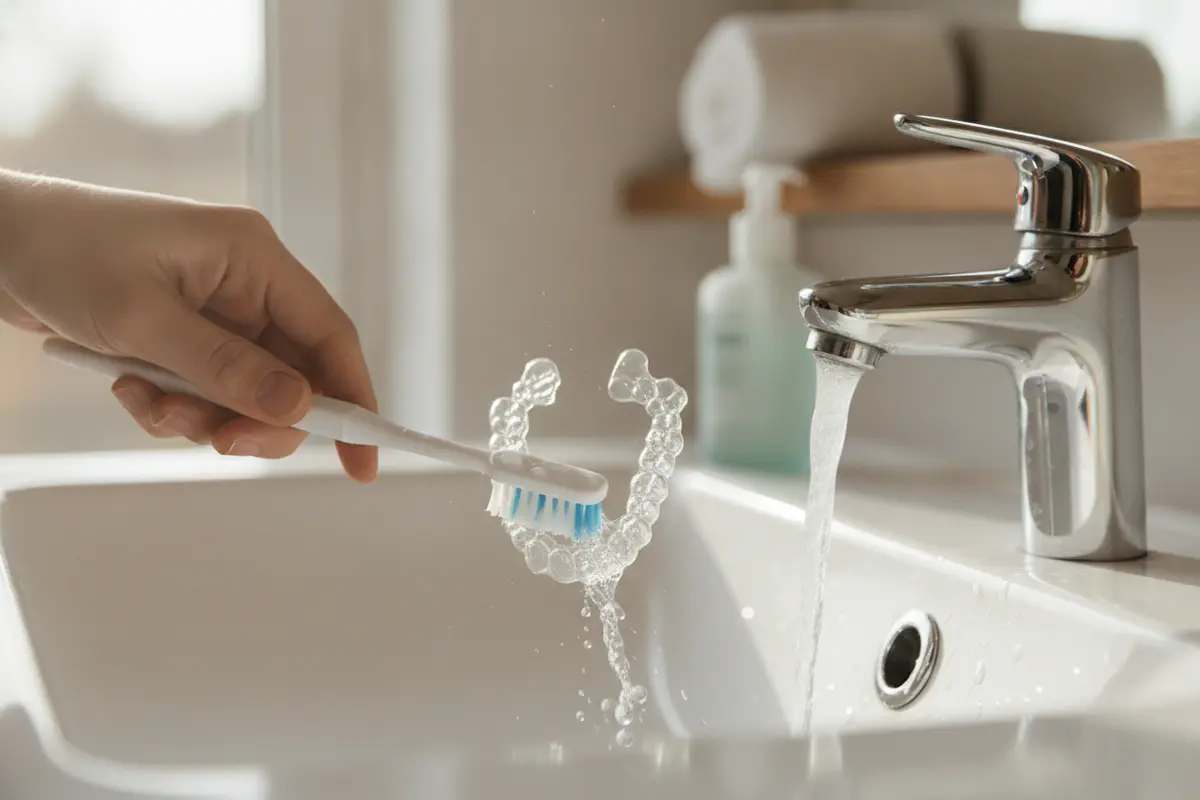
How often should you clean and rinse your trays?
Rinse each time you remove the trays and clean them at least once daily as part of your routine.
Aligners are worn for much of the day, so a predictable routine makes care easier. Rinse them every time they come out, including before putting them into their case. A daily gentle cleaning removes residue that water alone may not lift. The FDA advises people using clear aligners to remove them for eating and to brush and floss afterward; keep that sequence in mind during meals and snacks.
For a practical daily rhythm:
- Morning: Remove and rinse the trays, clean them gently, and brush your teeth before reinserting.
- Meals: Store the trays in their case. After eating, brush and floss before wearing them again when possible.
- Evening: Clean your teeth and rinse the aligners before bed, then wear them as directed.
See the FDA’s consumer guidance on clear aligners for general reminders about eating and oral hygiene. For treatment-specific directions, follow your provider’s advice. Learn more about Invisalign treatment in San Diego and the questions to consider when choosing an Invisalign dentist.
Which cleaners are safe, and what should you avoid?
Use gentle cleaning methods and avoid heat, abrasive products, and chemicals not approved for your aligners.
Clear trays can become scratched or misshapen if cleaned aggressively. Avoid hot or boiling water, which may alter their fit. Do not use bleach, alcohol, colored mouthwash, or household surface cleaners unless your dental provider specifically directs you to use a product. Toothpaste can be abrasive and may leave visible scratches or a cloudy appearance, so use a soft brush with water or a tray-cleaning product recommended for your aligner system.
| Method or product | How to think about it | Practical choice |
|---|---|---|
| Cool or lukewarm water | Useful for rinsing; avoids heat exposure | Rinse after removal and before storage |
| Soft toothbrush | Allows gentle daily brushing | Use a dedicated brush and light pressure |
| Abrasive toothpaste | May scratch or dull clear plastic | Avoid unless your provider approves it |
| Hot or boiling water | Could distort the tray | Do not use |
| Bleach or household cleaner | Not intended for oral appliances | Avoid unless specifically prescribed |
Some aligner systems have cleaning crystals or tablets intended for their trays. Follow the product instructions and ask your dental team before trying a new soak. Do not assume that a cleaner safe for dentures or retainers is also appropriate for your aligners.
How should you clean aligners after meals and while traveling?
A small travel kit and a repeatable sequence make it easier to clean your mouth and trays when you are away from home.
Meals and snacks can interrupt a routine, especially during a workday in Downtown San Diego or while running errands in Hillcrest. Plan for where the trays will go before you remove them. Put them straight into their case, not on a restaurant table or wrapped in a napkin. When you are ready to wear them again, wash your hands, rinse the trays, and clean your teeth as soon as practical.
If a toothbrush is not immediately available, rinse your mouth with water and rinse the aligners before reinserting them, then brush and floss when you can. This is a practical fallback, not a replacement for regular brushing and flossing. Avoid sipping sugary or colored drinks while wearing trays; remove them for meals and follow your clinician’s directions about beverages and wear time.
- Pack a compact toothbrush, toothpaste, floss, and the aligner case.
- Choose a clean place to remove and reinsert your trays.
- Keep the case closed and away from heat while you eat.
- Rinse the trays before they go back in, even when you cannot do a full cleaning.
It can help to keep a second approved case in a bag you use often, so you are less likely to leave home without one. Check that the case is clean before placing trays inside. If you have questions about how your daily schedule should fit your prescribed wear routine, ask the clinician managing your care rather than making a lasting change on your own.
How should you store aligners when they are not in your mouth?
Use the case whenever the aligners are out. A case is safer and more hygienic than a napkin, pocket, or open counter.
After rinsing, place the trays in their clean case. Let the case dry between uses when practical, and clean it regularly. Leaving aligners loose can make them easier to lose or expose them to dirt and damage. Avoid wrapping them in a napkin at meals; they can be thrown away by mistake.
- Keep the case with you when leaving home.
- Keep trays away from pets, who may chew them.
- Do not leave them in a hot car or near a heat source.
- Do not put trays in a pocket or bag without the case.
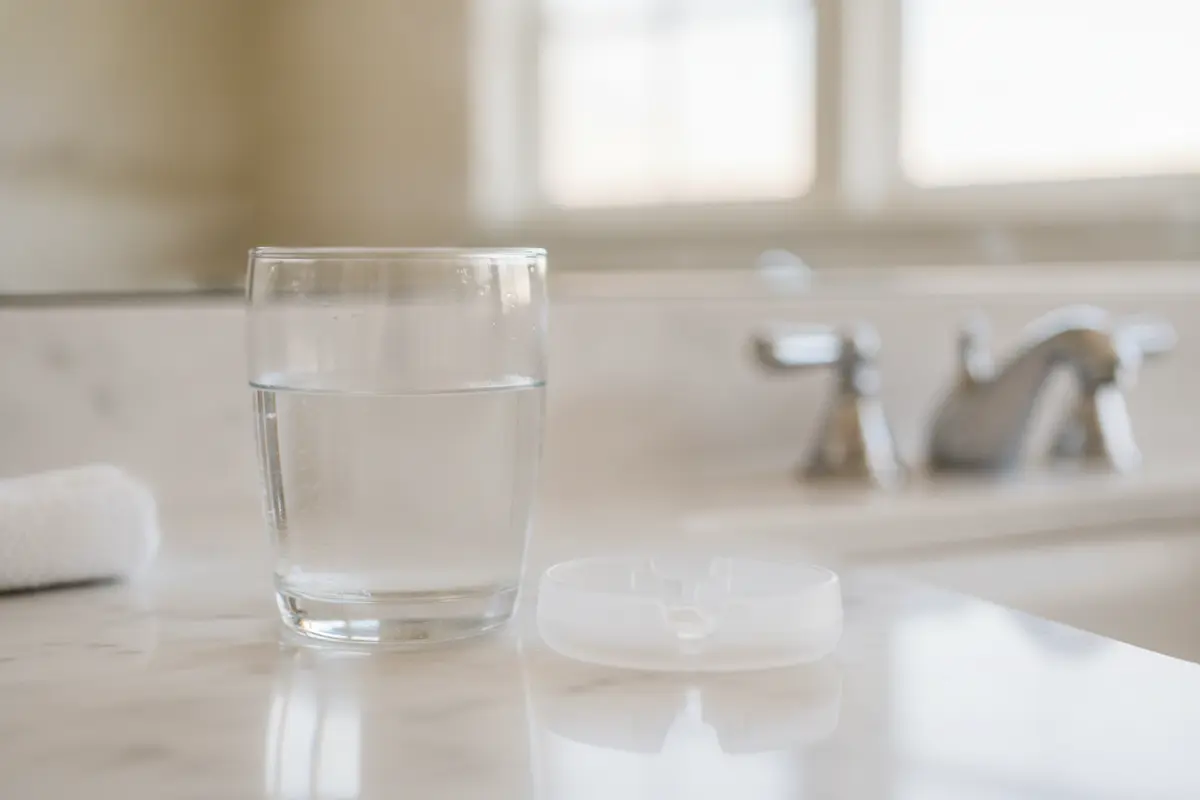
Good storage is part of the treatment routine, not just a convenience. If an aligner is lost, cracked, or no longer fits as expected, contact your dental provider for instructions rather than improvising with an old tray or moving ahead without guidance. For general information about comfortable dental care, you can review the practice’s patient resources.
What if aligners look cloudy, stained, or smell unusual?
Try a gentle daily clean and review your routine. Persistent changes, damage, or fit concerns are reasons to ask your provider.
Cloudiness can result from residue or surface wear. Odor may develop when trays are not rinsed or cleaned regularly, or when they are stored while dirty. Rinse after removal, brush gently, and clean your teeth before reinserting. Avoid trying to polish the trays or using a strong chemical to remove stains.
If discoloration or odor persists, or the plastic is cracked, warped, or uncomfortable, contact your dental team. Do not use a damaged tray without advice. A clinician can help determine whether it needs attention and whether your treatment plan should change. These signs alone do not establish a dental problem, and this guide cannot diagnose the cause.
How can you tell whether your cleaning routine needs adjustment?
Notice changes in appearance, smell, and fit, but treat them as prompts to review your routine or contact your provider—not as a way to diagnose a problem.
Clear aligners may not look perfectly pristine throughout daily wear. Still, recurring film, persistent odor, visible residue, or a change in how a tray sits can be useful signals to pause and look at the steps you take. Are you rinsing the trays each time they come out? Are they going into a clean case? Are you using a product intended for your aligner system? A quick review may reveal a missed rinse or a storage habit that is easy to change.
At the same time, appearance alone cannot tell you why a tray looks different. Scratches, staining, residue, and fit changes can have different explanations. Do not scrape, sand, polish, or use a strong chemical to try to restore clarity. Those approaches may damage the plastic or make the fit less predictable. Instead, return to gentle cleaning and ask your dental professional if the change continues.
- Film or residue: Revisit your gentle brushing and rinsing steps.
- Recurring odor: Check whether trays and case are being cleaned and dried as directed.
- Visible crack or distortion: Avoid forcing the tray into place and ask for instructions.
- New discomfort or fit concern: Contact the provider managing your treatment.
Keep the relevant aligner with you if your provider asks to see it, and explain when you first noticed the change and what cleaning products you have used. That information can help the dental team give advice suited to your treatment plan. If you are unsure whether a product or soaking method is appropriate, ask before trying it.
What daily habits help keep aligners clean?
Clean hands, clean teeth, prompt rinsing, and consistent case use make the routine easier to maintain.
- Carry a travel toothbrush, toothpaste, floss, and aligner case.
- Keep aligners away from drinks other than water while wearing them, unless your provider gives different instructions.
- Never leave trays soaking in an unapproved liquid.
- Set a reminder to rinse and clean them at the same times each day.
- Bring your aligners to checkups if your provider asks you to do so.
Small habits can prevent common mishaps. If you have questions about your specific trays or cleaning products, ask before changing your routine. Marcos Ortega DDS provides Invisalign care in Hillcrest and Downtown San Diego, with individualized treatment planning. The practice also offers a doctor introduction and information about available dental services.
Contact the office with questions about your aligner routine
Frequently asked questions
Can I clean Invisalign aligners with toothpaste?
Many toothpastes are abrasive and may scratch clear plastic. A soft brush with water or an aligner product recommended by your provider is a gentler choice.
Can I use mouthwash to soak aligners?
Do not use mouthwash as a soak unless your dental professional specifically approves it. Some mouthwashes may stain or affect the material.
Should aligners be cleaned every time I remove them?
Rinse them each time you remove them and clean them gently at least once daily. This helps limit dried residue and keeps your routine consistent.
Can I wear aligners after eating without brushing?
When possible, brush and floss before reinserting. If you are away from home, rinse your mouth and trays with water, then clean your teeth when you can.
What should I do if an aligner is lost or damaged?
Contact your provider for instructions. They can advise whether to use a previous or next tray, or take another step based on your treatment plan.
How can you make the routine easier to maintain?
Attach aligner care to habits you already have, and make the right supplies easy to reach.
A routine is more manageable when it has a predictable place in your day. For example, rinse and clean the trays during your morning toothbrushing, then repeat a shorter rinse-and-store sequence whenever you remove them for food. At night, clean your teeth and trays before putting them back in as directed. Linking care to existing habits can reduce the chance that cleaning gets forgotten when the day is busy.
Set up a simple station at home with a dedicated soft brush, approved cleaning supplies, and the case. Keep the case somewhere visible but away from hot surfaces, pets, and places where it can be knocked onto the floor. When you travel, pack the same essentials in a small pouch. Avoid switching products based on a quick online tip; instructions can vary by aligner material and treatment system.
Some people find it helpful to use a short checklist until the routine feels automatic:
- Hands washed before touching trays.
- Aligners rinsed after removal.
- Teeth brushed and flossed before reinsertion when possible.
- Trays gently cleaned daily and rinsed free of residue.
- Aligners stored in their case when not being worn.
Follow the schedule and care instructions provided for your own treatment. If your provider has given you a different cleaning method, that advice takes priority over general guidance. The practice’s Invisalign care information can help you learn about treatment, and you can ask the team directly when a particular product, fit change, or cleaning concern is unclear.
What should you remember?
Rinse aligners when you remove them, gently clean them every day, and keep them in their case whenever they are not being worn. Avoid heat and unapproved cleaners, and ask your dental provider about persistent odor, visible damage, or fit changes.
How can you troubleshoot common routine problems?
When a busy day disrupts your routine, return to the basics rather than compensating with a harsher cleaning method.
Small disruptions are common. You may leave home without your travel kit, notice residue after lunch, or realize that the case has been sitting open on a desk. A calm, consistent response is more useful than trying several products at once. Rinse the aligners with cool water, brush your teeth as soon as practical, and resume your normal cleaning schedule. If the trays have been exposed to heat or a cleaning chemical, ask your provider what to do before wearing them again.
If you forgot your case
Look for a clean, protected place to keep the trays temporarily while you obtain the case. Avoid wrapping them in a napkin, placing them directly on a public counter, or putting them loose in a pocket or bag. These choices raise the chance of losing or damaging them. If you cannot find a safe temporary option, contact your dental provider for advice based on your situation. Make a note to return the case to your work bag or travel pouch after you get home.
If you have no toothbrush nearby
Rinse your mouth and aligners with water after eating, then brush and floss when supplies are available. Carrying a compact kit can make the next meal easier to manage. A small pouch might include a soft toothbrush, toothpaste for your teeth, floss, and the aligner case. Keep those supplies separate from household cleaners and other liquids so there is less chance of confusing what is intended for oral use.
If the case itself needs attention
Do not place clean trays into a visibly dirty case. Clean the case according to the care directions for that item, rinse it well if the instructions call for rinsing, and let it dry when practical. If you do not know what cleaner is appropriate for the case, use a gentle method and ask your provider. Keeping a backup case can help, but make sure it is intended for aligners and stays clean in the bag.
When you review a disrupted day, identify one practical change rather than trying to make every part of the routine perfect. You might keep floss beside your desk, set a reminder before lunch, or put the aligner case beside your keys. If the concern involves damage, fit, or a product that may have affected the plastic, the next useful step is to contact the provider who knows your treatment plan.
How can you build a cleaning kit that works at home and away?
A compact kit makes the recommended routine easier to follow without adding complicated steps.
Choose supplies that solve the situations you actually encounter. At home, keep a dedicated soft brush and any clinician-approved cleaning product in a clean, dry spot. At work or in a bag, carry a small toothbrush, floss, and the aligner case. You do not need an elaborate collection of products. A few familiar items are easier to use consistently and make it less tempting to try an improvised soak.
- For the bathroom: A soft brush reserved for trays, a clean case, and the approved product instructions.
- For meals away from home: The case, compact toothbrush, floss, and a small tube of toothpaste for your teeth.
- For longer trips: A spare approved case and enough of your usual oral-care supplies for the trip.
- For reminders: A note or phone alert tied to your usual meal or toothbrushing times.
Keep toothpaste for your teeth separate from any product intended for aligners. If the label does not clearly say that a cleaner is suitable for your aligner system, do not assume it is safe because it is sold for another dental appliance. Save the package directions or take a photo of the label so you can ask your dental team about it during a visit or by phone.
Before leaving home, use a quick check: are the trays in your mouth or in their case; do you have the case with you; and do you have a way to brush your teeth after eating? This short pause helps prevent common losses and makes it easier to keep your routine steady in a busy downtown workday, during errands in Hillcrest, or on a weekend trip.
Care does not have to be complicated to be consistent. Clean hands, a rinse after removal, gentle daily brushing, and safe storage cover the basic steps. Use products recommended for your aligners, follow your own treatment directions, and contact your dental team when a concern involves a change in fit or damage.