
If your denture feels loose, has cracked, or suddenly hurts, the next step is not always a new denture. Denture repair may be appropriate for a limited problem. An adjustment, reline, rebase, or replacement may better address changes in the appliance or supporting tissues. A dental examination helps separate those possibilities safely.
Schedule a denture evaluation in San Diego
This guide explains what a dentist looks for, which problems may be repairable, when replacement deserves discussion, and how to protect your mouth while you wait for care. It is general education, not a diagnosis. The right recommendation depends on the denture’s condition, your oral tissues, overall oral health, and your goals.
For patients in Hillcrest, Downtown San Diego, Mission Hills, and nearby communities, a comfort-first consultation can make an uncertain situation easier to understand. The goal is a clear plan, not pressure to choose the most extensive treatment.
What does denture repair include?
Denture repair addresses a specific problem with an existing appliance. It is different from making a new denture, and the appropriate service cannot be confirmed from a symptom alone.
Patients often use “repair” to describe several different types of care. A dentist may discuss:
- Repair: correcting a crack, fracture, broken base, or detached denture tooth when the appliance is otherwise a reasonable foundation for continued use.
- Adjustment: smoothing or modifying an area that rubs, presses, or interferes with speaking or chewing.
- Reline: adding material to the tissue side of a denture to improve contact when the supporting tissues or jaw shape have changed.
- Rebase: replacing much of the denture base while retaining suitable artificial teeth, when that approach fits the appliance and the patient’s needs.
These categories overlap in everyday conversation, but they are not interchangeable. A small crack may be only one part of a larger fit problem. A loose denture may need more than a quick repair if the supporting tissues have changed. The bite may no longer be balanced. Conversely, a patient may not need a completely new appliance when a focused correction can reasonably address the problem.
The condition of the material matters, too. Dentures can be damaged by falls, pressure, wear, or attempts to modify them at home. A repair that looks simple may not restore a stable fit. Home glue, household adhesives, and repair kits can complicate later professional work. They may also irritate oral tissues. Do not trim, bend, file, or permanently glue a damaged denture as a substitute for an exam.
Marcos Ortega DDS provides restorative care in a comprehensive dental setting. The dentures and partial dentures service page offers broader context about replacement options. Whether a particular repair is suitable, available through the office, or best handled by another dental professional must be determined after the appliance and mouth are evaluated.
Can a damaged denture be repaired, or is replacement better?
The repair-versus-replace decision depends on the extent of damage, the denture’s fit. The condition of the oral tissues, and whether the appliance still supports the patient’s functional and personal goals.
A dentist may consider repair when the damage is limited, the denture remains reasonably stable. The base and teeth are in usable condition, and the correction can be made without creating a new fit or bite problem. Examples may include a localized crack, a detached tooth, or an edge that needs adjustment. Even then, the appliance should be inspected rather than judged by appearance alone.
| Problem pattern | Possible discussion |
|---|---|
| Limited crack or detached tooth | Repair or focused adjustment |
| Loose fit or sore spots | Adjustment, reline, or rebase |
| Repeated breakage or major wear | Replacement options |
Replacement may deserve discussion when the denture is repeatedly breaking, significantly worn, difficult to keep in place, or no longer matches the shape of the supporting tissues. A poor fit can affect comfort, speaking, chewing, and confidence. It can also signal that the mouth or the appliance has changed over time. Replacement does not automatically mean implants. Traditional dentures, a reline or rebase, and implant-supported options are separate possibilities that depend on examination findings and patient goals.
Use these questions to organize the conversation:
- Is the damage limited to one area, or is the base weakened in multiple places?
- Does the denture fit comfortably when you are not chewing, and does it move during ordinary speech or meals?
- Have sore spots, redness, pressure, or changes in the mouth developed?
- Has the appliance required repeated repairs or adjustments?
- Does the current design still support the way you want to eat, speak, and live?
Existing content about loose denture concerns addresses stability and related treatment options. This guide adds a different decision boundary: whether the immediate problem should lead to a limited repair, a fit-focused service, or a broader replacement discussion. That distinction helps avoid treating every loose denture as an implant case or every crack as a reason to discard an otherwise suitable appliance.
There is no reliable universal answer based only on denture age, a photograph, or an online symptom description. An exam is the safer way to determine what can be preserved and what needs to change.
When should you seek denture repair in San Diego?
Arrange an evaluation when a denture changes your comfort, function, or ability to use it normally. Seek prompt guidance for significant pain, mouth injury, bleeding, swelling, or a broken appliance that could be swallowed or inhaled.
Some problems are easy to postpone because the denture still looks usable. That can allow a small fit or material issue to become more disruptive. Contact a dental office when you notice:
- A crack, split, sharp edge, detached tooth, or broken clasp on a partial denture.
- New looseness, rocking, clicking, or movement while talking or eating.
- Persistent rubbing, sore areas, redness, bleeding, or pain beneath the appliance.
- Difficulty chewing, speaking clearly, or keeping the denture in place.
- Repeated breakage, even after a prior repair or adjustment.
- A denture that was dropped, stepped on, exposed to heat, or altered with an adhesive or tool.
Remove the appliance if wearing it causes significant pain or if a sharp broken area is cutting the mouth. Keep the pieces together and bring the denture to the appointment. Do not use household glue, super glue, or improvised materials in the mouth. Seek urgent medical or dental care for facial swelling, uncontrolled bleeding, trouble breathing, or a serious injury. Do not wait for a routine repair visit in those situations.
San Diego patients can use a restorative dentistry evaluation to discuss the condition of the denture and the mouth supporting it. The practice serves Downtown San Diego and nearby Hillcrest communities in a setting designed around individualized, comfort-focused care. If dental anxiety has delayed an evaluation, mention that when you contact the office. It allows the team to discuss the visit and comfort options before treatment is planned.
These signs do not determine whether you need repair or replacement. They indicate that an examination is worthwhile. Denture discomfort can have more than one cause, including the appliance, oral tissues, bite, or another oral-health concern. A dentist can sort through those possibilities and explain the next reasonable step.
How a dentist evaluates a loose, cracked, or painful denture
A denture evaluation looks at both the appliance and the mouth. A useful plan should explain what is happening, what can reasonably be preserved, and which options fit the patient’s health and goals.
- Hear the patient’s experience. The dentist will ask when the problem began, whether the denture was dropped or altered, where it hurts, and how the issue affects eating, speaking, sleep, and confidence. Bring any broken pieces and describe previous repairs.
- Inspect the denture. The base, teeth, clasps, borders, tissue side, wear patterns, and visible cracks can help show whether the problem is localized or part of broader deterioration. The dentist may also assess whether the material can be handled safely.
- Examine the oral tissues. Sore or red areas, swelling, pressure points, tissue changes, and the health of remaining teeth can affect the recommendation. A denture that seems to be the problem may be interacting with a change in the mouth.
- Assess fit and bite. The team may observe how the appliance seats, moves, and contacts the opposing teeth. Stability during speech and function matters, not only how the denture looks on a countertop.
- Use diagnostic tools when indicated. Imaging or other evaluation may be appropriate when the dentist needs to assess supporting teeth, bone, tissues, or a separate oral-health concern. The need for imaging depends on the exam, not on a fixed checklist for every denture visit.
- Explain the options. The plan may include an adjustment, repair, reline, rebase, replacement, or referral for a service that is not appropriate to complete in the dental office. The dentist should explain tradeoffs and what the patient can expect next.
Digital radiography, intraoral cameras, and treatment-planning tools can support communication when they are clinically useful. Technology does not replace a hands-on evaluation, and it does not make every denture repair appropriate. Its value is helping the patient see and understand the findings behind a recommendation.
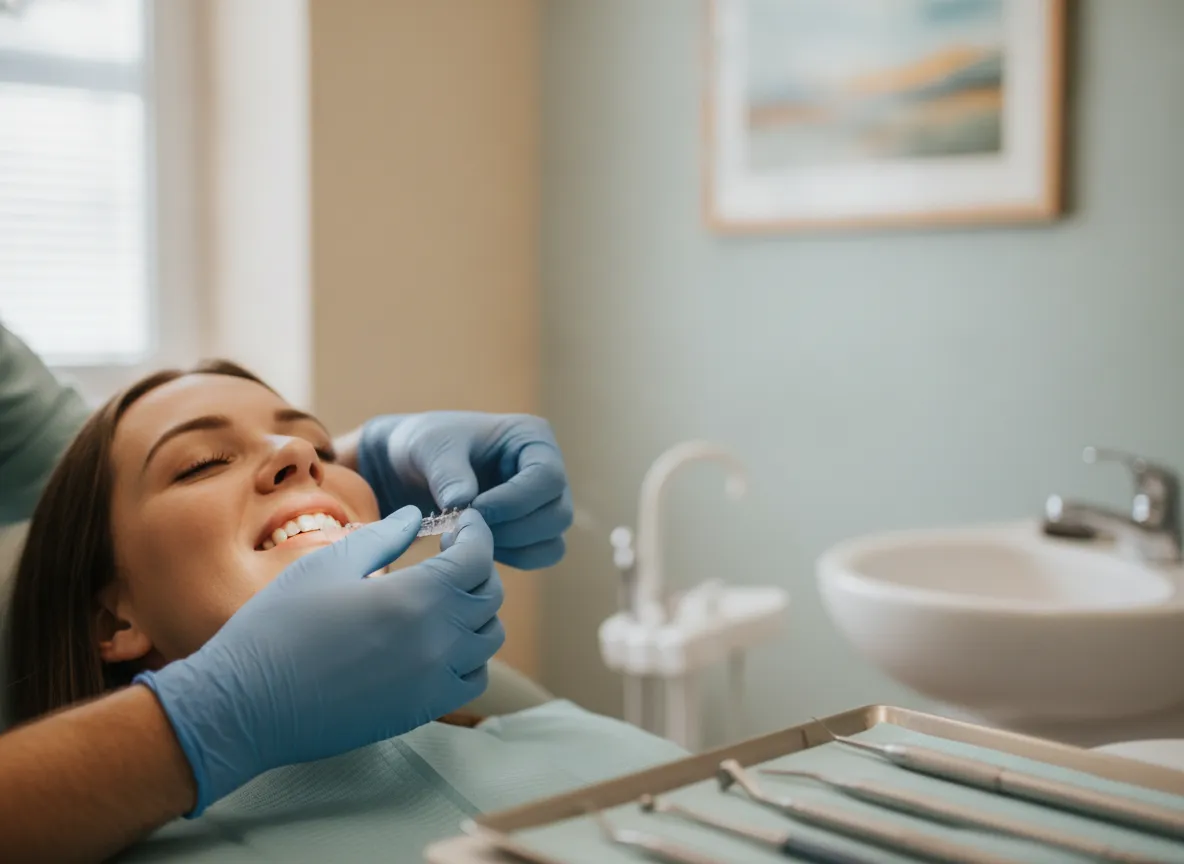
For a comfort-focused visit, tell the office about dental anxiety, prior difficult experiences, or sensory concerns when scheduling. A calm explanation and an individualized pace can make it easier to move from uncertainty to a practical decision.
What are the alternatives when repair is not enough?
When an existing denture cannot provide a dependable fit or function after a limited correction. The next conversation may involve a new traditional denture, a reline or rebase, or an implant-supported option.
A new traditional denture may be appropriate when the appliance is worn, damaged beyond a predictable repair, or no longer shaped for the current mouth. A reline or rebase may preserve some of the existing design when the teeth and other components remain suitable. These are not automatic choices. The dentist considers oral tissues, remaining teeth, bite, hygiene, medical history, and what the patient wants the appliance to do.
Implant-supported dentures are another category. They use dental implants to help support a denture. But candidacy depends on an in-person evaluation and factors such as oral health, available bone, medical history, and treatment goals. They are not the default answer to every loose or broken denture. Patients who want to understand that pathway can read about implant-supported denture options while keeping the immediate repair question separate.
A replacement discussion can be useful even when repair is possible. If a denture has required repeated corrections, is difficult to clean. Or no longer supports comfortable daily activities, a broader plan may be more efficient for the patient’s goals. On the other hand, replacement may be unnecessary if a focused adjustment or repair can reasonably restore function. The decision should balance:
- How much of the existing appliance remains strong and serviceable.
- Whether the fit and bite can be improved predictably.
- The health and shape of the supporting oral tissues.
- The patient’s comfort, budget, schedule, and priorities.
- Whether the patient wants a removable solution or is exploring implant support.
Marcos Ortega DDS offers comprehensive restorative care and can discuss documented options in a calm, individualized setting. The dental implant service page provides additional context for patients exploring that route. Reading online can prepare questions, but it cannot determine which option is safest or most appropriate for a particular mouth.
How can San Diego patients protect a repaired denture?
Gentle handling and following the dental team’s instructions can help protect a repaired or adjusted denture while you learn whether it remains a good long-term fit.
Until a dentist gives you a specific care plan, avoid experimenting with the appliance. Do not use super glue, household adhesive, boiling water, or sharp tools. Heat and chemicals can alter denture materials or leave residue that makes professional evaluation more difficult. If the denture is cracked or has a sharp edge, keep it out of the mouth when it is causing pain and bring it to the appointment.
- Handle the appliance over a folded towel or a basin of water so a drop is less likely to cause additional damage.
- Clean it only as directed by the dental team, using products intended for the material.
- Store it safely when it is not being worn, and keep it away from children and pets.
- Notice whether looseness, sore spots, speech changes, or chewing problems return after an adjustment.
- Keep follow-up appointments if the dentist wants to reassess fit, tissues, or bite.
After a repair, pay attention to function rather than assuming that a repaired appearance means the problem is resolved. Ongoing rubbing, pain, movement, or repeated breakage deserves a follow-up conversation. Do not force an appliance into place or continue wearing it through significant discomfort.
For patients near Downtown San Diego and Hillcrest, a consultation can be a practical starting point when the right next step is unclear. A team that understands comfort concerns can explain the evaluation before it begins, review the appliance and oral tissues. And outline whether the situation calls for denture repair, an adjustment, relining, replacement, or another option.
Frequently asked questions about denture repair
Can a hairline crack in a denture be repaired?
Sometimes, but a dentist must inspect the crack, the denture base, the fit, and the supporting tissues first. A visible crack may be a limited problem or a sign that the appliance is weakened. Avoid gluing it at home and bring all pieces to an evaluation.
What glue can I use to repair a denture?
Do not use household glue or super glue in your mouth. These products can irritate tissues, leave residue, and complicate professional repair. Keep the appliance and any loose pieces together, then ask a dental professional what to do next.
How much does denture repair cost?
The cost depends on the damage, the material, the fit, the condition of the mouth, and whether repair, adjustment, relining, or replacement is appropriate. A fixed number cannot be responsibly quoted without examining the appliance and the patient.
Can a dentist repair a denture that feels loose?
A loose denture may need an adjustment, reline, rebase, repair, replacement, or another plan. The cause could involve the appliance, oral tissues, bite, or remaining teeth. An exam helps identify the cause instead of treating looseness by guesswork.
What should I do if my denture breaks?
Remove it if it causes pain or has a sharp edge, save every piece, and contact a dental office for guidance. Do not trim, bend, file, or glue it at home. Seek urgent care for serious injury, uncontrolled bleeding, swelling, or trouble breathing.
Get a clear denture plan in San Diego
If you are unsure whether your denture needs a repair, adjustment, reline, or replacement, an evaluation can turn that uncertainty into a practical next step. Marcos Ortega DDS has served Downtown San Diego and Hillcrest-area patients since 1986, with a comfort-first approach to individualized restorative care.
The office offers comprehensive dental care, a relaxed environment, and free parking. Bring the denture if it is safe to handle, describe what changed, and mention any dental anxiety when you schedule. Recommendations will be based on your exam, the appliance, your oral tissues, and your goals.