
Learning how to care for dentures starts with a few consistent, gentle habits. Rinsing away food and cleaning the appliance safely can help protect your comfort. Caring for your gums and watching for fit changes also matter.
Clean dentures with a soft brush and an appropriate denture cleanser. Remove them at the recommended time and store them safely. Follow the instructions for your specific denture or implant-supported system. Persistent soreness, bleeding, swelling, sudden looseness, or a broken appliance should be evaluated by a dentist.
Schedule a denture evaluation if you are unsure whether a change is routine or needs attention. The safest daily routine starts with cleaning your dentures without scratching their surface or damaging their fit.
How to Clean Dentures Safely Every Day
A daily cleaning routine helps remove food debris and buildup without unnecessarily scratching or distorting the appliance. Clean a removable denture over a folded towel or a basin partly filled with water. That simple precaution can reduce the chance of damage if the denture slips from your hands.
A practical cleaning sequence
- Wash your hands and remove the denture or partial denture gently.
- Rinse it under cool or room-temperature running water to loosen food particles.
- Brush all surfaces with a soft denture brush or another tool recommended by your dental team.
- Use a nonabrasive denture cleanser according to its label. Clean around clasps and other components without bending them.
- Rinse thoroughly before putting the appliance back in your mouth or placing it in its storage container.
Use a separate, clearly labeled brush for the appliance if that is what your dental provider recommends. Ordinary toothpaste can be too abrasive for some denture materials. Do not use bleach, scouring products, abrasive cleaners, or hot water. These shortcuts can damage the surface or affect how the appliance fits.
Rinsing after meals can be useful when a full cleaning is not practical. Hold the appliance securely and avoid scrubbing aggressively. If adhesive is part of your routine, ask your dentist or hygienist how to remove residue safely and whether your product is appropriate for your denture.
Cleaning the appliance is only one part of learning how to care for dentures. Brush your gums, tongue, and palate gently, and clean remaining natural teeth as directed. If you have an implant-supported denture, ask for instructions that match its attachment design rather than assuming a traditional denture routine applies.
For general guidance, see the American Dental Association information on dentures. Your own dental team should remain the source for product-specific instructions, especially if your denture is cracked, suddenly loose, painful, or difficult to remove.
How Should You Store Dentures Overnight?
For many people, removing removable dentures overnight gives the gum tissues time without the appliance and creates a natural opportunity to clean both the denture and the mouth. Your dentist may recommend a different schedule for a specific restoration or implant-supported system. Follow the instructions provided for your appliance.
A safer storage routine
- Wash your hands and remove the denture carefully.
- Rinse and clean it before placing it in the container.
- Use room-temperature water or an approved denture-soaking solution, as directed.
- Close the container and place it somewhere stable, away from children and pets.
Do not use hot or boiling water. Heat can affect the shape and fit of some denture materials. Avoid bleach, household cleaners, and harsh chemicals unless a dental professional has specifically told you to use a product designed for your appliance. Ordinary toothpaste may also be too abrasive for some denture surfaces.
Keep the container clean and replace the soaking solution as directed by the product instructions. Do not leave the appliance loose on a counter, wrapped in a tissue, or in an unmarked cup. Those habits increase the chance that it will be dropped, discarded, or handled by someone who does not know what it is.
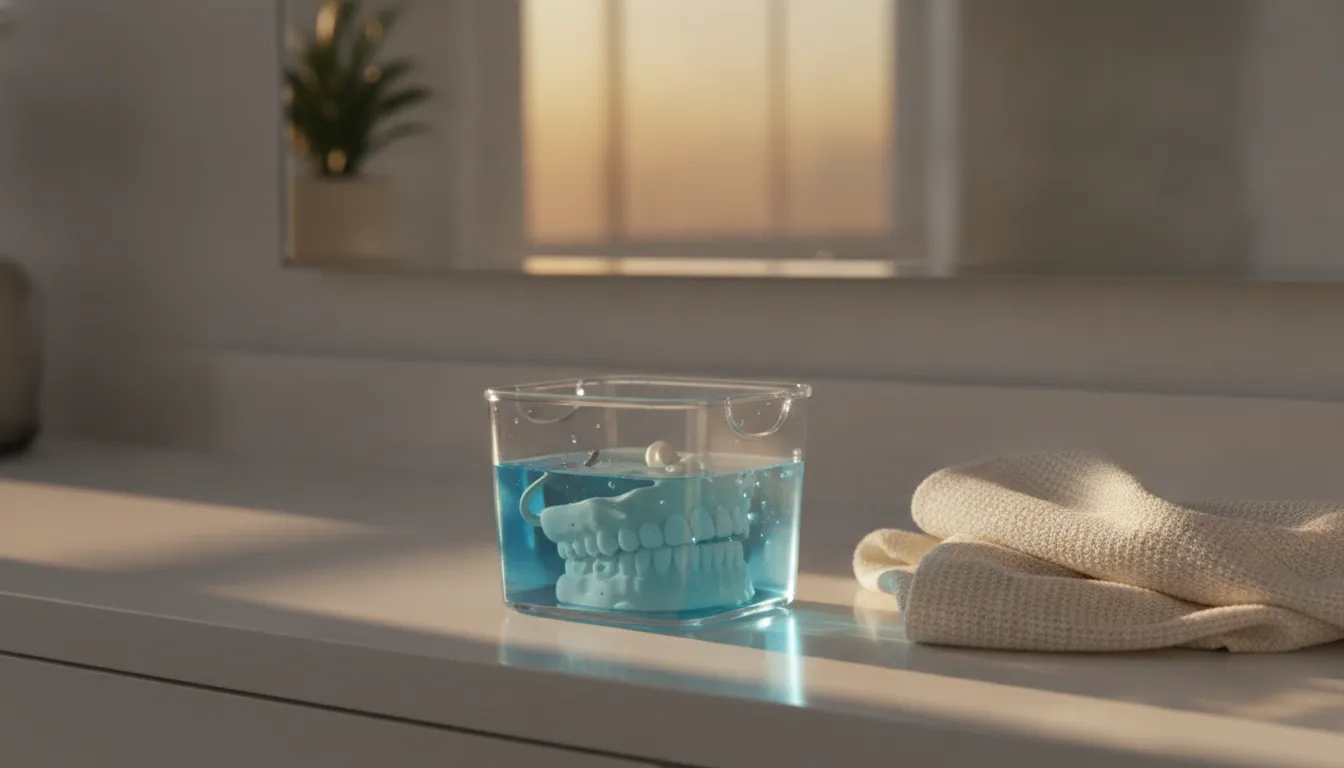
When you travel, bring the container and approved cleaning products. If you wear an implant-supported denture, ask whether you should remove it or leave removal to the dental team. Mayo Clinic’s denture-care guidance emphasizes careful rinsing and handling. Use a towel or water-filled basin to reduce damage if an appliance slips.
How Do You Care for Your Gums and Remaining Teeth?
Denture care includes the mouth beneath and around the appliance. Even when a denture replaces natural teeth, the gums, tongue, palate, and any remaining teeth still need daily attention. Gentle cleaning removes buildup and gives you a chance to notice changes that deserve professional evaluation.
- Remove a removable denture before cleaning your mouth.
- Use a soft toothbrush or the tool recommended by your dental team to clean the gums, tongue, and roof of the mouth.
- Brush any remaining natural teeth, including teeth that support a partial denture, according to your dental instructions.
- Clean around implant-supported components only with the brush, flossing aid, or other device recommended for your specific design.
Partial dentures and implant-supported dentures are not all built the same way. Clasps, bars, locator attachments, and other components can create areas where food and plaque collect. Your dental provider can show you how to reach those areas without bending a clasp or stressing an attachment. If you use an implant-supported system, do not assume that a traditional denture routine is enough for the implants or surrounding tissues.
Pay attention to comfort without trying to diagnose the cause. A new sore spot, bleeding, swelling, persistent dryness, unusual odor, or change in how the appliance sits may have several possible explanations. A dental examination is the appropriate next step. It can assess your tissues, remaining teeth, bite, denture, or implant-supported restoration.
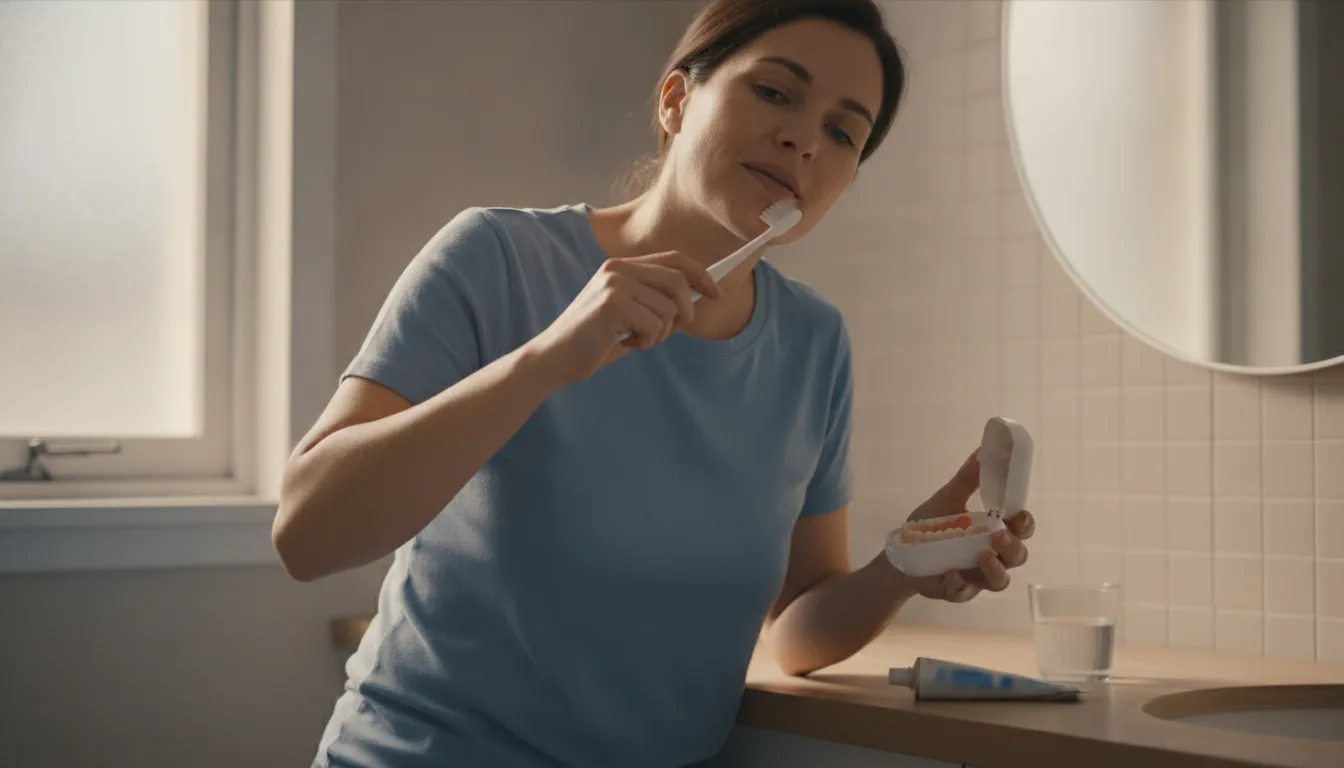
Marcos Ortega DDS provides restorative dentistry and replacement-tooth options in a comfort-focused setting. The right home routine depends on your oral health and denture type. Implant components add another reason to bring questions to your next visit.
What If Dentures Feel Loose, Painful, or Different?
A denture that feels different deserves attention. This is especially true when the change persists or affects eating and speaking. Oral tissues can change over time. An appliance, bite, clasp, or implant-supported attachment may also need professional review. Symptoms alone do not identify the cause, so avoid trying to diagnose or correct the problem yourself.
Contact a dentist if you notice:
- Persistent pain, rubbing, or a sore that does not settle.
- Bleeding, swelling, unusual drainage, or a persistent change in odor.
- Sudden looseness, repeated slipping, or difficulty chewing or speaking.
- A crack, broken tooth, sharp edge, bent clasp, or missing component.
- A change around an implant-supported denture, such as discomfort, movement, or difficulty seating it.
Until you receive guidance, remove a painful removable denture and store it safely rather than forcing it into place. Do not file the appliance, bend a clasp, add household glue, use extra adhesive to mask a fit problem, or attempt a home repair. Those steps can make the appliance harder to evaluate and may injure oral tissues.
Bring the denture, its case, and a list of cleaning products or adhesives to an appointment if your dentist asks you to do so. The provider may examine your gums, remaining teeth, bite, appliance, and any implant-supported components. The next step depends on those findings and your goals. It may involve an adjustment, repair, replacement discussion, or a revised home-care plan, but no option should be assumed without an examination.
If you are in Hillcrest, Mission Hills, or Downtown San Diego and want help deciding what to do next, contact Marcos Ortega DDS for a denture evaluation. A comfort-focused visit can clarify the next step. It can show whether the change is routine maintenance or something that needs timely care.
How to Care for Dentures When Your Restoration Uses Implants
Traditional removable dentures and implant-supported dentures both replace missing teeth, but their cleaning and follow-up needs are not identical. A traditional denture may be removed by the patient for routine cleaning and overnight storage. An implant-supported system may connect to implants through attachments or another design that requires additional cleaning around the components.
What stays consistent
- Clean the removable restoration as directed and handle it carefully.
- Clean the gums, tongue, palate, remaining teeth, and accessible supporting areas.
- Do not use hot water, bleach, abrasive products, household glue, or tools to alter the appliance.
- Keep scheduled dental visits, even when the restoration feels comfortable.
What may be different
Implant-supported dentures may require a specific brush, flossing aid, water irrigator, cleanser, or removal schedule. The correct approach depends on the attachment and restoration design, the health of the tissues around the implants, and the instructions from the treating team. Do not remove or manipulate components unless you have been shown how to do so safely.
| Care area | Daily focus |
|---|---|
| Removable appliance | Rinse, brush gently, and store as directed. |
| Mouth and tissues | Clean gums, tongue, palate, and remaining teeth. |
| Implant-supported design | Follow attachment-specific instructions from your dental team. |
Traditional dentures also need professional follow-up. Changes in the supporting tissues can affect fit, while remaining natural teeth in a partial denture require their own preventive care. If a partial denture has clasps, ask how to clean around them without bending them.
This maintenance focus is different from a guide that compares which denture type may fit a person’s goals. If you are considering options, review dental implants and implant-supported restorations. Discuss your oral health, bone support, comfort preferences, and treatment goals with a dentist. Marcos Ortega DDS also provides restorative dentistry with individualized planning.
In short, the best home routine is the one matched to your restoration. Ask for written instructions and bring the appliance or its product information to visits when questions arise. A professional can check fit, tissues, remaining teeth, and attachments instead of asking you to guess.
A Simple Denture-Care Routine for San Diego Patients
A repeatable routine makes denture care easier to remember at home, at work, and while traveling. Details may vary for a full, partial, or implant-supported denture. Keep written instructions from your dental team with your care supplies.
Morning
- Wash your hands before handling the appliance.
- Rinse and clean the denture as directed before placing it in your mouth.
- Brush your gums, tongue, and palate gently. If you have remaining natural teeth, clean them with the brush and toothpaste recommended for you.
- Check for a new crack, sharp area, unusual odor, or visible change before wearing the denture.
During the day
- Rinse your mouth and, when practical, rinse a removable appliance after eating.
- Handle the denture over a folded towel or a basin partly filled with water to reduce the chance of damage if it slips.
- Do not use household glue, a file, a knife, boiling water, bleach, or an unapproved chemical on the appliance.
- If it suddenly becomes loose, painful, or difficult to use, set it aside safely and contact your dentist.
Evening and travel
Clean the appliance before storing it according to your clinician’s instructions. Use a clean, labeled container and keep it away from children and pets. When traveling, bring the container, cleaning supplies approved for your denture, and any written instructions. Do not leave the appliance loose in a tissue, where it can be mistaken for waste.
Regular dental visits still matter even when the routine feels comfortable. A professional can evaluate your tissues, remaining teeth, attachments, and fit. The plan can then change when your oral health or restoration changes. Patients in Hillcrest, Mission Hills, and Downtown San Diego can use the practice’s comprehensive dental services page to review related care.
Frequently Asked Questions
Should I remove my dentures at night?
Many people should remove removable dentures overnight, clean them, and give the gum tissues a rest. Store them in room-temperature water or an approved soaking solution unless your dentist has given different instructions for your denture or implant system. Avoid hot water, bleach, and harsh household cleaners. Cleveland Clinic explains nighttime removal and denture care.
Can I clean implant-supported dentures the same way as traditional dentures?
Not always. Implant-supported dentures may use different attachments and restoration designs, so cleaning around the implants and removing or soaking the denture may require product-specific steps. Follow your provider’s instructions and ask which brush, cleanser, adhesive, and removal schedule are appropriate for your system. The FDA’s dental implant information offers general context, but your treating team should guide your routine.
When should I call a dentist about a denture problem?
Contact your dentist if you have persistent pain, sores, bleeding, swelling, a broken denture, sudden looseness, difficulty chewing, or a change involving an implant. Do not file, bend, glue, or otherwise repair the appliance yourself. An evaluation can determine whether the denture, supporting tissues, bite, or implant components need attention.
How often should dentures and implants be checked?
Keep regular dental visits even when your dentures feel comfortable. Your dentist can examine the oral tissues, remaining teeth, denture fit, and implant-supported components, then adjust home-care instructions as your needs change. The appropriate schedule depends on your denture type, tissues, implants, and overall oral health, so follow the interval recommended for you.
Schedule a Denture Evaluation
If your dentures feel different, or you want to confirm that your daily routine is protecting your appliance and oral tissues, an individualized evaluation can help clarify the next step. Schedule a denture evaluation or consultation with Marcos Ortega DDS by contacting the office. Bring questions about cleaning, storage, fit, or implant-supported attachments so your care team can tailor guidance to your needs.