
Whitening strips are simple to use, but the timing of your normal brushing routine can affect comfort. Because the strips place a peroxide-based gel against the front surfaces of your teeth, freshly irritated gums may be more likely to feel uncomfortable. Schedule a free consultation if you want guidance before whitening.
If you are wondering, should i brush my teeth before using whitening strips, follow the product label first. Some manufacturers advise against brushing immediately before application because brushing may contribute to gum irritation. There is no universal wait time, and over-the-counter strips, dentist-supervised trays, whitening toothpaste, and in-office whitening follow different protocols.
A gentle, consistent routine can help you use whitening products more comfortably. Sensitivity or gum irritation may signal that you should pause and ask a dental professional for guidance. Start by looking at how brushing pressure and product instructions work together.
Should I brush my teeth before using whitening strips?
Usually, keep brushing as part of your normal oral hygiene routine, but avoid assuming that brushing immediately before every whitening-strip application is best. Check the product label first, because timing recommendations vary.
Whitening strips use a peroxide-based gel placed against the front surfaces of the teeth. Brushing helps remove plaque and supports healthy gums, but aggressive or poorly timed brushing can make the gums feel more irritated when the whitening gel is applied. Some product makers, including Crest, advise against brushing immediately before applying their strips for this reason. You can review that guidance on the manufacturer’s instructions about brushing and Whitestrips.
There is no universal wait time that applies to every whitening product. Over-the-counter strips, dentist-supervised take-home trays, whitening toothpaste, and in-office whitening use different materials and protocols. Follow the directions for the specific product you have, including instructions about brushing, rinsing, application time, and frequency.
A practical approach
- Brush gently as part of your regular routine, using a soft-bristled toothbrush and comfortable pressure.
- Read the product directions before your first application, and let those directions control the timing.
- If your gums are already sore, bleeding, or irritated, pause whitening and consider getting dental guidance.
- Stop using the strips if you develop significant discomfort, and contact a dentist if pain is severe, keeps returning, or lasts longer than expected.
It is also helpful to distinguish routine brushing from scrubbing the teeth immediately before whitening. The goal is clean, healthy teeth and gums, not extra pressure or repeated brushing.
If you are unsure whether strips fit your smile, a dental evaluation can account for your oral health, sensitivity, and treatment goals. You can also compare at-home products with professional teeth whitening and take-home whitening options.
In short, brushing matters, but more brushing is not automatically better. Use a gentle routine, follow the label for your product, and do not apply a one-size-fits-all waiting rule to every whitening method.
Why can brushing immediately before whitening irritate gums?
Brushing is important for oral health, but brushing immediately before applying whitening strips can be uncomfortable for some people. The concern is usually not ordinary, gentle brushing. It is the combination of recent brushing, pressure near the gumline, and a peroxide-based whitening gel sitting against the teeth and nearby soft tissues.
If brushing is vigorous or uses a firm-bristled brush, the gum tissue may feel more tender afterward. Whitening gel can then make that irritation more noticeable. Some product manufacturers, including Crest, advise against brushing immediately before applying their strips because brushing may contribute to gum irritation. Follow the instructions for the specific product you are using rather than assuming that one schedule applies to every strip.
What can make irritation more likely?
- Brushing with too much pressure or using a firm-bristled toothbrush.
- Brushing directly over a tender, inflamed, or already irritated gumline.
- Allowing whitening gel to extend onto the gums instead of keeping the strip positioned as directed.
- Using strips more often or for longer than the product label recommends.
- Continuing treatment when sensitivity or gum discomfort is becoming more pronounced.
The American Dental Association identifies temporary tooth sensitivity and gum irritation as potential side effects of tooth whitening. That does not mean whitening is appropriate for every smile, or that discomfort should be ignored. If a strip causes significant burning, marked gum irritation, or pain that does not settle after stopping, discontinue use and seek dental guidance. Whitening may need to wait while a dental professional evaluates the area.
Contact a dentist promptly if discomfort is severe, persists beyond the expected period, repeatedly returns, or is focused around one tooth. Swelling, fever, facial injury, or trouble breathing or swallowing warrants prompt care. These symptoms should not be self-treated with additional whitening products. Product directions, gentle brushing, and attention to your own symptoms are safer guides than trying to whiten through discomfort.
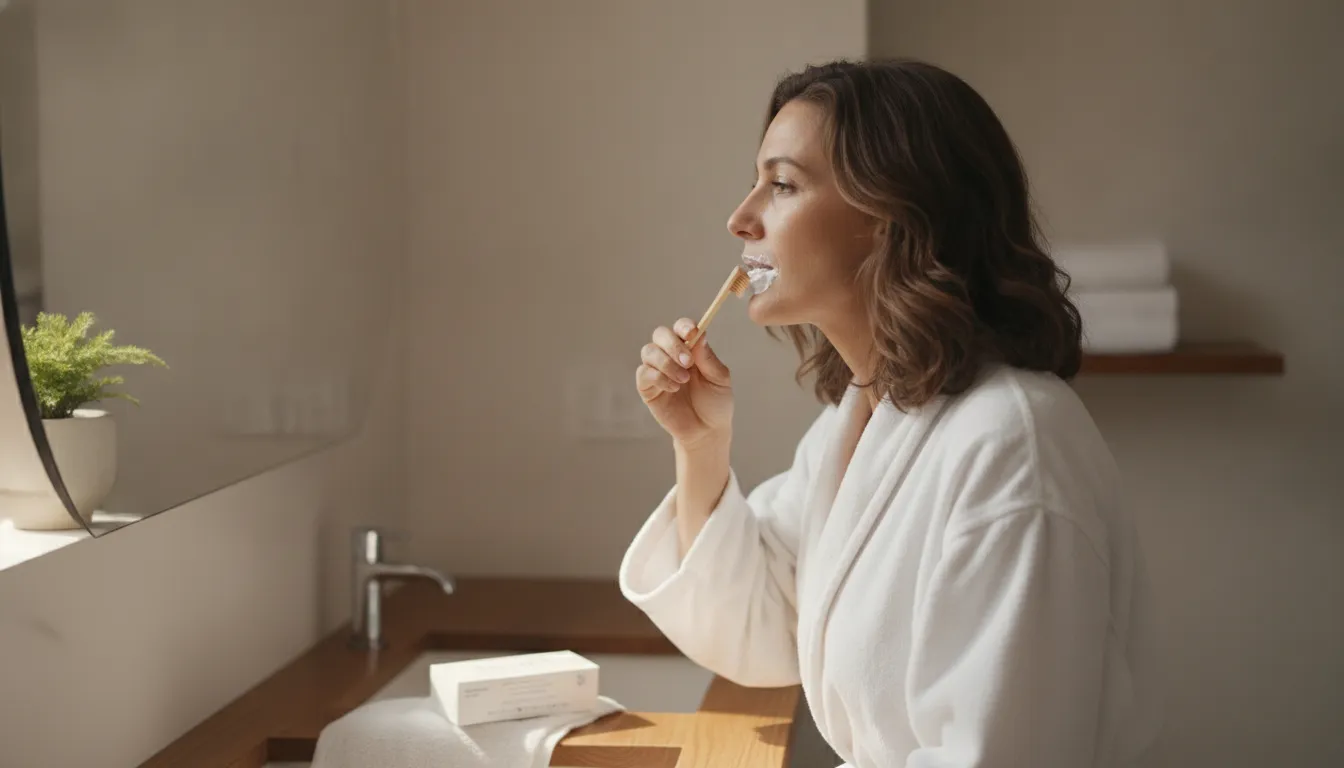
How should you plan brushing, flossing, meals, and strips?
A simple routine can make whitening strips easier to use and may help you avoid unnecessary gum irritation. The important detail is that the package directions take priority. There is no universal wait time that applies to every whitening product, because over-the-counter strips, dentist-supervised trays, whitening toothpaste, and in-office whitening use different materials and protocols.
- Read the label before choosing a time. Check how long the strips should remain in place, how often they should be used, and whether the manufacturer gives specific instructions about brushing, eating, or drinking. Do not automatically apply advice written for a different brand or whitening method.
- Plan meals before the application. If you expect to feel hungry, eat first so you are not tempted to remove the strips early or snack while they are in place. Follow the product’s directions about what to avoid during and after treatment. If the label does not specify a universal waiting period, do not invent one. Use its stated instructions or ask a dental professional.
- Floss gently as part of your normal routine. Flossing can help clear food from between the teeth, but aggressive flossing immediately before treatment may irritate the gumline. Use a gentle technique and stop if the gums bleed or feel sore. Persistent bleeding deserves an evaluation rather than more whitening.
- Brush at a comfortable time, not automatically right before the strips. Some product makers, including Crest, advise against brushing immediately before applying their strips because brushing may contribute to gum irritation. If you have just eaten, brush according to your usual oral-care routine, then allow the label’s directions to guide when the strips should be used. A soft-bristled brush and light pressure are generally more comfortable than scrubbing.
- Apply the strips exactly as directed. Center them on the teeth and keep the gel from sitting on the gums when the instructions show how to position them. Do not extend the wear time or use extra strips to accelerate results. Whitening gel is intended for the surfaces and schedule described by the manufacturer.
- Finish with the label’s aftercare instructions. Remove the strips at the recommended time and follow the directions for rinsing, brushing, or waiting before eating. Temporary sensitivity and gum irritation are recognized potential side effects of tooth whitening, so pause and seek guidance if discomfort is significant, persistent, or repeatedly returns.
This approach keeps the routine practical without treating one schedule as right for every smile. If the instructions are unclear, or if your teeth or gums already feel uncomfortable, ask a dentist before continuing. An evaluation can help determine whether strips are appropriate for your oral health and goals.
Can you brush after whitening strips?
Usually, you can return to your normal oral hygiene routine after removing whitening strips, but the product label should guide the timing. Start by removing the strips carefully and rinsing away any remaining gel. If your teeth or gums feel sensitive, wait until the discomfort settles before brushing, then use a soft-bristled toothbrush and light pressure. Avoid scrubbing as though you are trying to remove the whitening gel.
There is no single schedule that applies to every strip. Over-the-counter products use different formulas and wear times, so follow the manufacturer’s directions rather than copying instructions intended for another brand. Some product makers caution against brushing immediately before application because brushing may contribute to gum irritation. The manufacturer’s guidance and the label for your specific product should take priority.
| Timing | Practical approach | Why it matters |
|---|---|---|
| Before use | Brush gently as part of your routine, not aggressively right before strips. | Brushing can irritate some gums. |
| After removal | Rinse first. Brush gently when your mouth feels comfortable. | Helps avoid adding friction to sensitive areas. |
| Product directions | Follow the label for wear time and aftercare. | Formulas and protocols differ. |
Temporary tooth sensitivity or gum irritation can occur with whitening. The American Dental Association recognizes these as potential side effects. If discomfort is severe, persists longer than expected, returns repeatedly, or is concentrated in one tooth, pause whitening and contact a dentist. Swelling, fever, facial injury, or trouble breathing or swallowing calls for prompt care. A dental evaluation can help determine whether strips are suitable, especially if you already have significant sensitivity or dental concerns.
Are whitening strips safe for every smile?
Whitening strips may be reasonable for some healthy natural teeth, but they are not a universal solution. Existing restorations, the cause of discoloration, gum health, and sensitivity can all affect whether they are a sensible choice.
Whitening strips place a peroxide-based gel against the front surfaces of natural teeth. That process can lighten certain surface stains, but it does not change every type of discoloration. If a tooth looks darker because of an underlying dental concern, strips may not address the reason for the color change. An evaluation can help clarify the options without assuming that every smile needs the same treatment.
What happens if you have crowns, veneers, or fillings?
Whitening changes the color of natural tooth structure. Crowns, veneers, fillings, and other tooth-colored restorations do not whiten in the same way, according to the American Dental Association. If a restoration is visible near the front teeth, whitening natural teeth may create a color difference rather than an even result. That does not automatically mean whitening is inappropriate, but it is worth considering before you begin.
A dentist can discuss how the location and shade of a restoration may affect your goals. The same applies if discoloration is concentrated in one tooth, appeared suddenly, or does not respond as expected. These patterns are reasons to ask for professional guidance rather than repeatedly applying more product.
When is an evaluation a better next step?
Consider speaking with a dental professional before using strips if you have untreated dental problems, gum irritation, significant sensitivity, or questions about existing dental work. Stop using the product and seek guidance if discomfort is severe, persists beyond the expected period, returns repeatedly, or is focused in one tooth. Swelling, fever, facial injury, or trouble breathing or swallowing requires prompt care. These symptoms are not a reason to diagnose yourself, but they should not be ignored.
- Restorations: Ask how crowns, veneers, or fillings may affect the final shade.
- Gum concerns: Delay whitening and seek advice if your gums are irritated, sore, or bleeding.
- Sensitivity: Discuss a plan if ordinary foods or drinks already cause sharp or lingering discomfort.
- Uncertain discoloration: Arrange an evaluation if one tooth is notably darker or the change is unusual.
For patients in Hillcrest and Downtown San Diego, preventive dental care and evaluation can provide a clearer starting point. Marcos Ortega DDS emphasizes individualized planning, so the recommendation can account for your oral health, restorations, and cosmetic goals rather than relying on a one-size-fits-all whitening routine.
When should you consider professional teeth whitening?
Professional whitening may be worth considering when you want a more individualized plan. Have concerns about sensitivity or uneven color, or are unsure whether whitening is appropriate for your smile.
Over-the-counter strips can be convenient, but they are not designed around your specific teeth, gums, existing dental work, or cosmetic goals. A dental evaluation can help identify factors that may affect the experience, such as sensitivity. Gum irritation, untreated dental problems, or discoloration that may not respond evenly to a whitening product. It also gives you an opportunity to discuss what kind of change is realistic before starting treatment.
Professional care is especially useful when you want guidance rather than another product to try. The material, application method, and timing vary between strips, dentist-supervised trays, and in-office treatment. The right option depends on your oral health and the result you hope to achieve, so there is no single approach that is best for everyone.
What professional whitening options are available?
Marcos Ortega DDS offers professional teeth whitening and take-home whitening options for patients who want a dentist-guided plan.
- Zoom! in-office whitening: This is a light-activated professional treatment described by the practice as taking about one hour. The team can review whether an in-office approach fits your needs and comfort level.
- Custom take-home trays: These trays are made for your smile and used according to professional instructions. Treatment commonly takes one to three or more weeks, depending on the desired result.
- Cosmetic treatment planning: If whitening is only one part of your goal, a discussion of cosmetic dentistry options can help place it in context with your overall smile plan.
A professional consultation does not mean you must choose an in-office treatment. It can simply clarify whether strips, custom trays, or another option makes sense for you. It may also reveal that existing crowns, veneers, or fillings will not change color in the same way as natural teeth. Which can affect how an even result is planned.
For patients in Hillcrest and Downtown San Diego, the practice’s long-standing approach to individualized care is grounded in understanding patient needs rather than applying the same whitening routine to everyone. Consider an evaluation if whitening causes persistent discomfort, produces significant gum irritation, or leaves you uncertain about your next step.

Schedule a free whitening consultation in San Diego.
Frequently Asked Questions
Should I brush my teeth before using whitening strips?
Keep your teeth clean, but avoid aggressive brushing immediately before applying strips. Brushing can irritate the gums for some people, so follow the product label and use a gentle technique. Some manufacturers specifically advise against brushing right before use because of possible gum irritation. See the Crest guidance.
How long should I wait after brushing before using whitening strips?
There is no universal wait time for every whitening product. Check the package instructions for your specific strips rather than assuming a set interval. If the label does not explain the timing, a dental professional can help you choose a cautious routine based on your oral health and sensitivity.
What should I do if my teeth or gums feel sensitive?
Stop or reduce use according to the product directions if sensitivity or gum irritation develops. Avoid brushing forcefully, and contact a dentist if discomfort is severe, persistent, repeatedly returns, or is concentrated in one tooth. Swelling, fever, or trouble breathing or swallowing requires prompt professional care. Temporary sensitivity and gum irritation are recognized potential effects of whitening. See the American Dental Association.
Will whitening strips change the color of crowns, veneers, or fillings?
Whitening changes the color of natural teeth, but crowns, veneers, fillings, and other tooth-colored restorations do not whiten in the same way. If you have visible restorations or uneven discoloration, an evaluation can help clarify which options fit your smile.
When should I consider professional whitening or a dental evaluation?
Consider an evaluation if you have significant sensitivity, gum concerns, untreated dental problems, restorations, or discoloration that does not respond as expected. Professional options may include in-office whitening or custom take-home trays, with the approach selected around your goals and oral health.
Schedule a Whitening Consultation
If you are unsure when to brush before using whitening strips. Or you are noticing sensitivity or gum irritation, a personalized review can help you choose a safer next step. Marcos Ortega DDS can discuss your whitening timing, product concerns, and whether professional whitening fits your goals. Schedule a free consultation to talk through your options.