
Dental anxiety can turn a routine appointment into something you postpone for months or years. That delay may allow a small concern to become a more involved restorative or cosmetic need. Sedation can make treatment more accessible for anxious patients while helping the dental team provide attentive, individualized care.
Schedule a free consultation to compare sedation options dentist San Diego patients trust for comfortable, anxiety-free dental care.
The right sedation options dentist San Diego patients consider depend on anxiety level, health history, planned treatment, and how alert you want to remain. Nitrous oxide is typically the mildest and fastest-reversing choice. Oral conscious sedation offers deeper relaxation. IV sedation can be adjusted for longer or more complex care. A dentist should review your needs and screen you for safety before recommending an option.
Understanding how each method affects awareness, recovery, and the appointment experience can make the decision feel more manageable. Below is a practical breakdown of each approach so you can discuss your options with confidence during a consultation.
What Is Nitrous Oxide and How Does It Work?
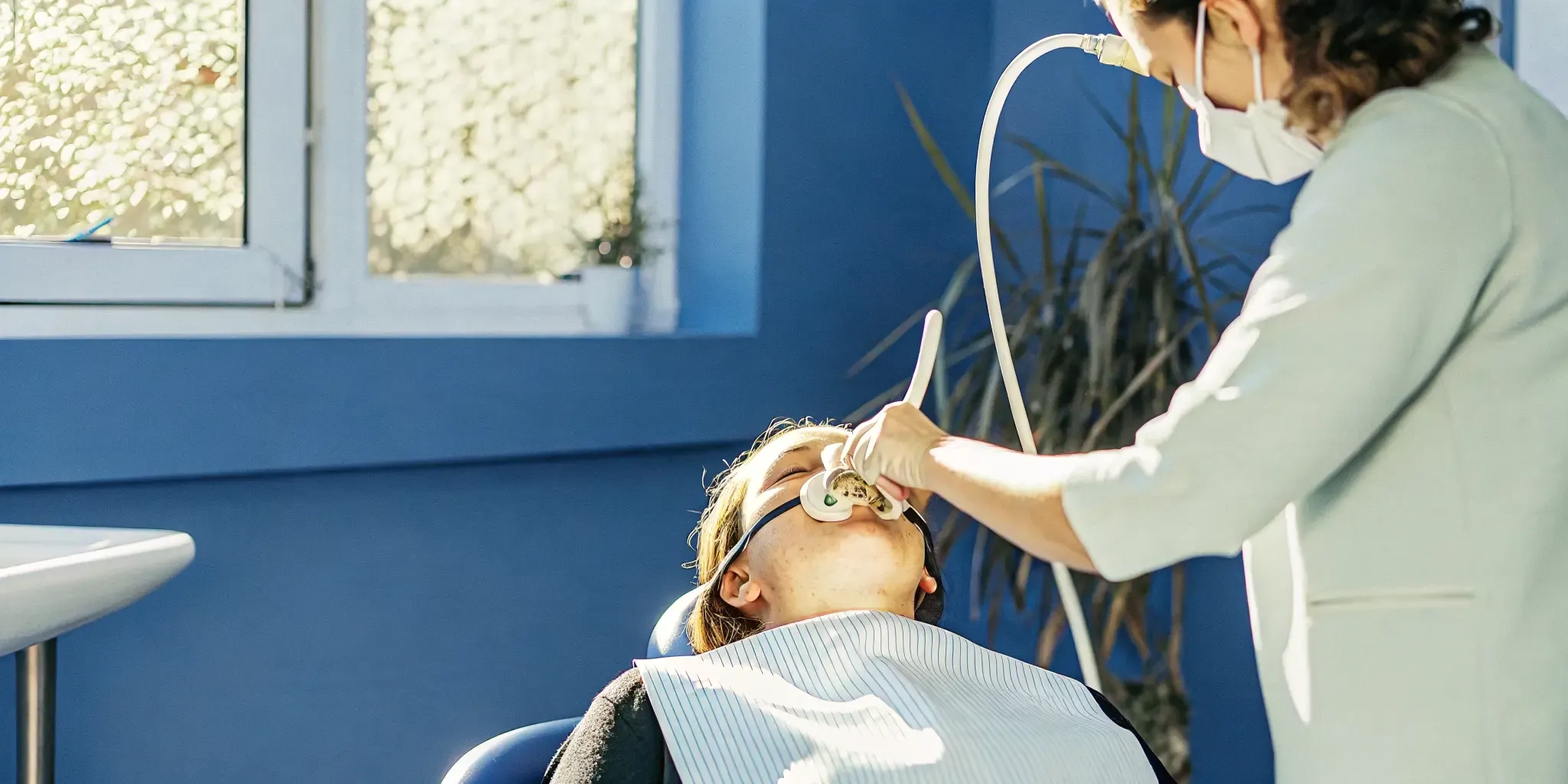
Nitrous oxide, commonly called laughing gas, is a mild sedative inhaled through a nasal mask that begins working within seconds. It reduces anxiety and perception of discomfort while you remain awake, responsive, and able to drive yourself home afterward.
Nitrous oxide is a colorless, odorless gas delivered through a small nasal mask. It begins working within seconds, creating a gentle sense of calm while allowing you to remain awake and responsive. For many patients, this fast-acting option is a practical first step when dental treatment brings mild nervousness.
Nitrous oxide offers both anxiolytic and analgesic benefits. The National Center for Biotechnology Information describes nitrous oxide as an effective analgesic and anxiolytic agent used in dental settings. It is often considered the safest and most reversible sedation option for mild anxiety. Though your dentist should still review your health history and treatment needs before recommending it.
What the experience is like
As you breathe through the mask, you may feel relaxed, light, or pleasantly detached from the sights and sounds of the dental office. You remain conscious and can communicate with the dental team throughout the appointment. Key features of nitrous oxide include:
- Onset: Works within minutes.
- Awareness: Fully awake and responsive throughout.
- Best for: Mild anxiety, routine checkups, cleanings, and short procedures.
- Recovery: Effects fade immediately after the gas stops.
- Escort: Not needed; patients usually drive themselves home.
This option is often a good fit for mild dental phobias, checkups, cleanings, fillings, and other minor restorative procedures. A personalized assessment is important because the right choice depends on your anxiety level, health, and planned procedure.
If you are exploring sedation dentistry services in San Diego, a consultation can help determine whether nitrous oxide provides enough support or whether another option would better match your needs.
How Does Oral Conscious Sedation Compare to IV Sedation?
Oral conscious sedation uses a pill taken before the appointment for moderate relaxation while you remain conscious. IV sedation delivers medication through a vein for deeper relaxation that the dental team can adjust throughout longer or more complex procedures.
Both oral and IV sedation address more significant anxiety than nitrous oxide alone, but they differ in depth, onset, and the type of appointment they suit best.
Oral Conscious Sedation: Moderate Relaxation for Deeper Anxiety
Oral conscious sedation is designed for patients who need more than a little extra reassurance at the dentist. Instead of receiving medication in the office, you take a prescribed pill before your appointment, typically about an hour beforehand. Diazepam, a benzodiazepine, is one medication commonly used for oral sedation, although the dentist determines what is appropriate for your health history and treatment plan. Learn more about what oral conscious sedation feels like before your consultation.
The goal is deep relaxation while you remain conscious and responsive. You can still answer questions or follow simple instructions, but the dental environment may feel much less overwhelming. Many patients describe the appointment as passing quickly, with little to no memory of the procedure afterward. Key features include:
- Onset: Pill taken about one hour before the appointment.
- Awareness: Awake and deeply relaxed; may remember little of the procedure.
- Best for: Moderate to severe anxiety, longer restorative procedures.
- Recovery: Residual drowsiness may last several hours.
- Escort: Adult escort required to drive home.
Oral sedation has helped patients complete restorative work they had delayed for years because fear kept them from returning for care. Before recommending sedation, the dental team reviews your health information and discusses the medication, monitoring, and recovery instructions during a free consultation.
IV Sedation: Deep Relaxation for Complex Procedures
When dental treatment is extensive or anxiety is especially strong, IV sedation can provide a deeper level of relaxation. Medication is delivered through a vein, allowing the dental team to adjust the dose throughout the appointment based on your response and the treatment being performed. A commonly used medication is midazolam, a benzodiazepine used for its anxiety-reducing effects.
Many patients describe IV sedation as feeling similar to being put to sleep. You may become very drowsy and have little awareness of the procedure. However, with conscious sedation, patients generally retain protective reflexes, can breathe on their own, and may respond to verbal or light-pressure stimulation. IV sedation may be appropriate for:
- Complex procedures: Root canal treatment, multiple extractions, implant placement.
- Greater anxiety: Patients who feel they cannot tolerate treatment while awake.
- Time-intensive care: Multi-stage procedures completed in fewer appointments.
IV sedation requires more extensive monitoring and an adult escort home. A consultation gives your dentist the opportunity to review your medical history. Discuss your anxiety and goals, and determine whether IV sedation is the safer fit for your care.
Compare Sedation Options From a Dentist in San Diego
Each sedation method serves a different purpose based on anxiety level, procedure complexity, and recovery needs. The table below summarizes the main differences to help you understand your options before a consultation.
| Method | Onset | Awareness Level | Best For | Recovery | Escort Needed |
|---|---|---|---|---|---|
| Nitrous Oxide | Within minutes. | Awake and responsive. | Mild anxiety, cleanings, short procedures. | Rapid; normal activities may resume immediately. | Usually no. |
| Oral Sedation | About one hour before appointment. | Awake, deeply relaxed, may remember little. | Moderate anxiety, longer treatment. | Residual drowsiness possible. | Yes. |
| IV Sedation | Rapid and adjustable during procedure. | Deeply relaxed; may feel asleep while responsive. | Greater anxiety, complex time-intensive treatment. | Longer recovery, activity restrictions apply. | Yes. |
As a general planning guide, nitrous oxide is often the lowest-cost tier, oral sedation falls in a middle tier. And IV sedation is commonly a higher tier because of medication, monitoring, and staffing requirements. A free consultation determines exact pricing and whether sedation is appropriate for you.
During a consultation at our Hillcrest office, the dental team considers your anxiety level, procedure complexity, medical history, medications, and recovery support. That conversation helps identify the safest practical option rather than choosing sedation based on a table alone.
Ready to explore your options? Schedule a free consultation with Dr. Ortega’s team to discuss which approach fits your needs.
What Safety Protocols Protect Patients During Sedation?
Safety begins with a thorough health review before any sedation is given. During conscious sedation, trained staff monitor your heart rate, breathing, and oxygen saturation throughout the procedure to keep you within the intended relaxation level.
A thorough health review helps the dental team determine whether sedation is appropriate for you and which approach best fits your medical history. Current health, anxiety level, and planned treatment. This assessment is an important part of individualized care, not a formality. It gives you an opportunity to discuss medications, health conditions, previous reactions, and questions about the appointment.
During conscious sedation, patients retain the ability to breathe independently, maintain protective reflexes, and respond to verbal or light physical stimulation. These characteristics distinguish conscious sedation from deeper levels of anesthesia, although the exact experience varies by method and patient.
What the team monitors
Throughout the procedure, trained staff use appropriate monitoring equipment to supervise vital signs, including heart rate, breathing, and oxygen saturation. The team follows established safety protocols that include:
- Pre-screening: Health history review and medication check before selecting a method.
- Continuous monitoring: Vital signs tracked throughout the procedure.
- Trained personnel: Staff qualified to assess and manage the planned sedation level.
- Recovery planning: Written instructions and escort requirements for oral and IV sedation.
These protocols are central to trustworthy care at Marcos Ortega DDS. If you want a more detailed overview of screening, monitoring, and recovery expectations, read about sedation dentistry safety San Diego.
Patients who receive oral or IV sedation must arrange for a designated adult escort to take them home after the appointment. A careful evaluation, continuous monitoring, qualified staff, and clear recovery planning make it possible to consider sedation with greater confidence.
Cost Considerations and Free Consultations
Cost varies by method, with nitrous oxide typically the most affordable and IV sedation the highest tier. Marcos Ortega DDS offers a free consultation to provide a treatment-specific cost estimate without pressure to commit.
Cost is an important part of choosing sedation, but the right option depends on more than a fee. Your dental needs, anxiety level, medical history, planned treatment, and the type of monitoring required all shape the recommendation. At Marcos Ortega DDS, a consultation helps determine which approach is appropriate and provides a treatment-specific cost estimate.
How sedation methods affect cost
- Nitrous oxide: The most affordable option, typically billed per session. Suitable for mild anxiety and shorter procedures.
- Oral sedation: Mid-range cost due to prescribed medication and additional preparation and monitoring.
- IV sedation: The highest tier because it provides deeper relaxation and requires more extensive monitoring and trained personnel.
Payment options such as CareCredit may be available for eligible patients who want to spread treatment costs over time. The office can explain current options during your consultation.
It is also worth considering the cost of postponing care. Avoiding the dentist because of fear can allow a small problem to become more complex, which may require more extensive treatment later. Sedation can make it easier to address needed care sooner, with a plan tailored to your comfort and clinical needs. Contact our office to schedule a free consultation and discuss which sedation approach may be right for you.
Frequently Asked Questions
What is the safest sedation for dental work?
For mild dental anxiety, nitrous oxide is often considered the safest and most reversible option. It provides anxiolytic and analgesic benefits, and its effects usually wear off quickly after the gas is stopped. The safest choice still depends on your health history, anxiety level, and planned treatment, so a dentist should assess you before recommending a method.
Can I request to be put to sleep at the dentist?
You can discuss that goal during a consultation. IV sedation may create a sleep-like experience, but the actual depth depends on the practice’s certifications, your procedure, and your individual health needs. Conscious sedation generally preserves protective reflexes and the ability to respond to verbal or light-pressure stimuli, so it is not the same as general anesthesia.
What are the four levels of dental sedation?
The four generally recognized levels are minimal sedation, moderate sedation, deep sedation, and general anesthesia. Nitrous oxide commonly fits the minimal-sedation range, while oral and IV methods may provide moderate or deeper sedation depending on the dose and protocol. The level is selected based on the treatment and your response to sedation, not simply by preference.
How do I choose the right sedation method?
Your dentist will consider the severity of your anxiety, the length and complexity of treatment, medical history, medications, and recovery arrangements. Nitrous oxide may suit a brief visit, while oral or IV sedation may be considered for more involved care. Oral and IV sedation require a trusted adult escort home, and both require careful pre-sedation planning.
Schedule a Free Consultation to Explore Your Sedation Options
Choosing between nitrous oxide, oral conscious sedation, and IV sedation depends on your comfort level, health history, and planned treatment. A personal consultation gives you space to ask questions and discuss an approach that fits your needs. At Marcos Ortega DDS in Hillcrest, you will find a team with over 34 years of experience and a commitment to patient comfort.
Schedule your free consultation today by contacting our Hillcrest office. We offer free parking and a no-pressure conversation about your options. Contact us online to take the first step toward comfortable, anxiety-free dental care.