
A denture that shifts during dinner can affect more than the meal. It can change how freely you speak, laugh, and smile. For patients comparing implant supported dentures San Diego options with traditional dentures, the key difference is support: traditional dentures rest on the gums, while implant-supported dentures connect to anchors placed in the jaw.
Schedule a free dental implant consultation to compare the options based on your oral health, comfort needs, and goals.
Both approaches can replace a full arch of missing teeth, but they involve different procedures, maintenance routines, timelines, and costs. An exam and appropriate imaging are necessary before a dentist can recommend either option. This guide explains the practical tradeoffs so you can arrive at a consultation with useful questions.
Implant Supported Dentures San Diego: The Core Difference
Traditional dentures sit on the gums and rely on their shape, suction, and muscle control for support. Implant-supported dentures attach to dental implants placed in the jaw. That connection generally provides greater stability, but it also requires surgery, healing, careful daily cleaning, and ongoing professional maintenance.
A traditional full denture is a removable appliance shaped to fit over the gums. Its fit depends on the contours of the jaw ridge, saliva, and how the cheeks and tongue control it. Traditional dentures can restore the appearance of a smile and support basic chewing without implant surgery. However, the tissues beneath the appliance can change over time, which may cause the fit to loosen.
An implant-supported denture uses dental implants as anchors. Implants are small posts placed in the jaw during a planned surgical procedure. After healing, the denture connects to them. Some designs snap onto attachments and can be removed by the patient for cleaning. Other designs remain fixed in place and are removed only by a dental professional.
| Feature | Traditional Dentures | Implant-Supported Dentures |
|---|---|---|
| Support | Rest on the gums | Connect to implants in the jaw |
| Stability | May shift during eating or speaking | Usually offers greater stability |
| Procedure | No implant surgery | Requires evaluation, placement, and healing |
| Cleaning | Removed for daily cleaning | Care depends on removable or fixed design |
| Bone stimulation | Does not replace tooth roots | Transfers some chewing forces to nearby bone |
| Maintenance | May need relining as the ridge changes | Attachments and tissues require routine checks |
Neither option is automatically better for every person. Traditional dentures may suit someone who wants to avoid surgery or is not a candidate for implants. Implant-supported dentures may be worth considering when movement, recurring fit problems, and chewing confidence are major concerns.
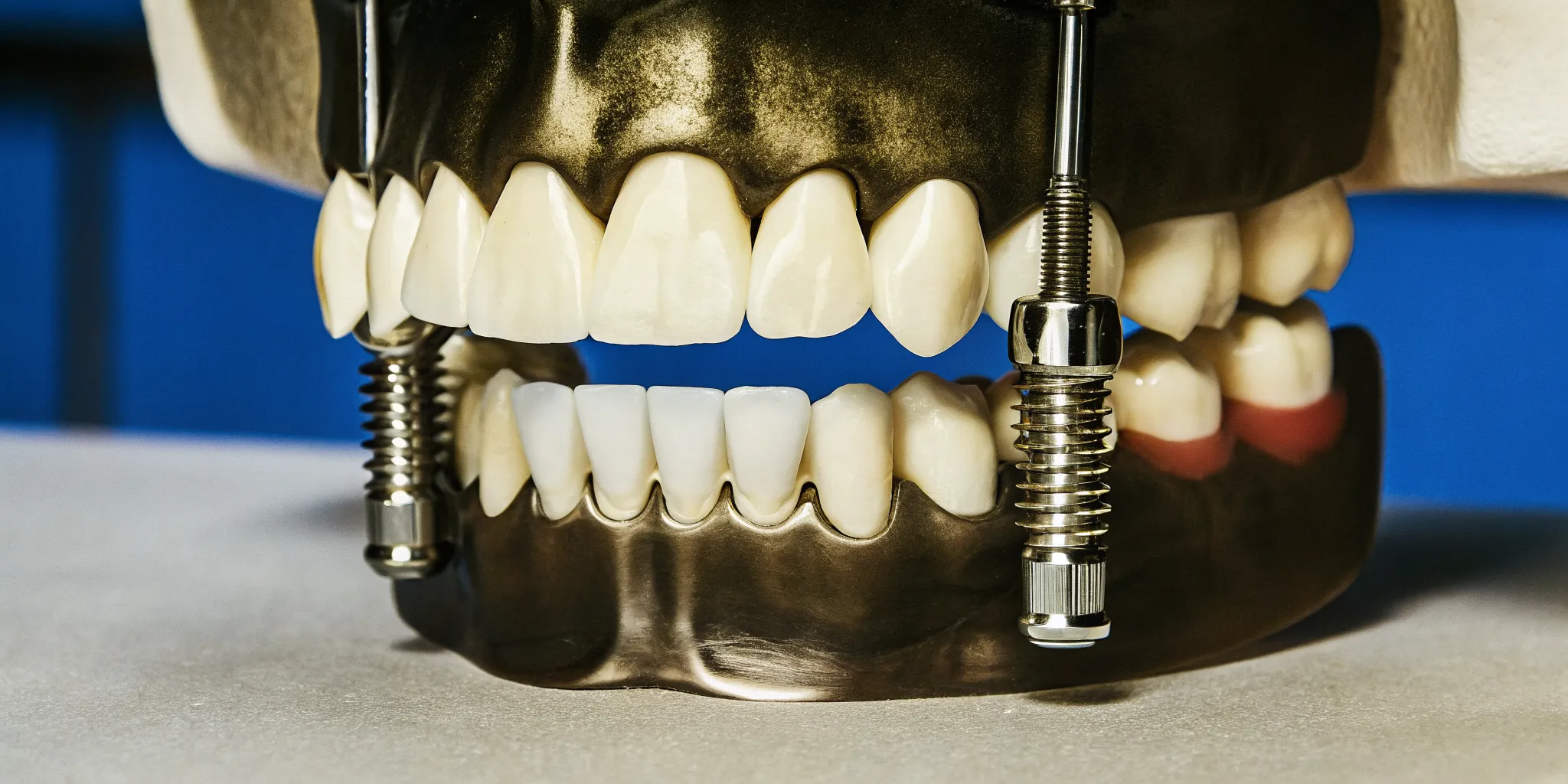
How Do the Options Compare for Eating and Speaking?
Implant support generally reduces the sliding and lifting that can occur with a traditional denture. That added stability may help patients feel more confident while biting, chewing, speaking, or laughing. Even so, neither option recreates natural teeth exactly, and both require an adjustment period and routine dental checks.
A traditional lower denture can be especially challenging to keep steady because the tongue and cheeks move around it. A well-made appliance may still function well, but fit and control vary. Adhesive may help some wearers, although it should not be used to hide an appliance that no longer fits properly.
Because an implant-supported restoration connects to anchors, it is less likely to slide across the gums. The practice’s denture service page describes implant-supported dentures as a stable option that can support more normal eating. The practical benefit depends on the specific restoration, bite, implant health, and foods being eaten.
There is an adjustment period with either choice. Speech may feel different at first, and the cheeks and tongue need time to adapt. Starting with softer foods, taking smaller bites, and chewing on both sides may help. A sore spot, repeated clicking, or looseness should be checked rather than ignored.
Questions that reveal the day-to-day difference
- Which foods are difficult to eat with your current denture?
- Does the appliance move when you speak or laugh?
- Do recurring sore spots interfere with daily wear?
- Are you comfortable removing and cleaning the restoration?
These details help a dentist understand whether the primary problem is fit, design, bite, or lack of support. Sometimes adjusting or replacing a traditional denture is appropriate. In other situations, adding implant support may better address the underlying concern.
What Happens to the Jawbone Over Time?
After teeth are lost, the jaw no longer receives the same stimulation from natural roots and the ridge can gradually change shape. Traditional dentures do not replace roots. Dental implants transfer some chewing forces to nearby bone, which may help maintain bone around healthy implant sites, but they do not stop every age-related change.
Changes in the ridge can affect facial support and the fit of a traditional denture. That is one reason a previously comfortable appliance may later need an adjustment, reline, or replacement. Continuing to wear a poorly fitting denture can contribute to irritation and should prompt an evaluation.
Implants need enough healthy bone for initial stability and long-term support. A dentist will assess bone volume, quality, anatomy, and health factors before recommending treatment. Some patients may require an added procedure before implant placement, while others may be better served by a different plan.
The practice’s dental implant information notes a 95% success rate for dental implants. That figure is not a guarantee for an individual patient. Outcomes depend on health, healing, hygiene, tobacco use, implant position, bite forces, maintenance, and other factors assessed during treatment planning.
Concerned about the procedure? Explore the practice’s sedation dentistry options and ask which comfort measures may be suitable after screening.
Daily Care and Long-Term Maintenance
Both traditional and implant-supported dentures require daily plaque removal and regular professional care. Traditional dentures need cleaning outside the mouth. Implant-supported designs require careful cleaning around the implants and beneath the restoration. The exact routine differs depending on whether the design is removable or fixed.
Caring for traditional dentures
- Remove and rinse the denture after meals when practical.
- Brush it with a suitable denture brush and cleaner.
- Clean the gums, tongue, and any remaining teeth gently.
- Store the denture as directed when it is out of your mouth.
- Bring it to routine visits for fit and condition checks.
Do not reshape or repair a denture at home. Household glue and do-it-yourself adjustments can damage the appliance and irritate oral tissues. A dentist can identify whether discomfort is caused by the fit, a damaged area, or a change in the mouth.
Caring for implant-supported dentures
A removable implant-supported design is taken out as directed so the appliance and implant areas can be cleaned. A fixed design stays in place, so special brushes, floss aids, or an oral irrigator may be recommended to clean underneath it. Your dental team should demonstrate the technique and check that it is working.
Implants cannot develop cavities, but the tissues around them can become inflamed. Consistent home care and professional maintenance help protect the gums, bone, attachments, and restoration. Attachment components and prosthetic teeth can also wear with use, so long-term care should be included when comparing options.
Who May Be a Candidate for Implant-Supported Dentures?
Many adults missing most or all teeth in an arch may be considered for implant-supported dentures, but candidacy is individual. A dentist must evaluate gum health, bone, medical history, medications, tobacco use, hygiene, bite, treatment goals, and ability to complete follow-up care before recommending implants.
Health conditions do not always rule out implants, but they can change the plan or affect healing. Coordination with a physician may be appropriate. People who smoke or have difficulty cleaning around implants may face added risks and should discuss those concerns openly during the consultation.
- Bone and anatomy: Imaging helps determine whether the proposed implant sites can provide suitable support.
- Oral health: Active gum disease, decay, or infection may need attention first.
- General health: Medical conditions and medications can influence surgery and healing.
- Daily maintenance: The patient must be willing and able to clean the restoration consistently.
- Expectations: The dentist should explain benefits, limits, alternatives, and likely maintenance.
Traditional dentures remain a useful option when implants are not desired or advised. They avoid implant surgery and can often be made on a different timeline. The decision should reflect the complete treatment experience, not a single feature.
Cost, Timeline, and Comfort: What Should You Ask?
Implant-supported dentures usually involve more treatment stages and a higher initial investment than traditional dentures. Exact cost and timing depend on the number of implants, restoration design, diagnostic needs, healing, and any preparatory care. A consultation-based estimate is more useful than a broad price range because it explains what is included.
Traditional dentures generally involve fewer stages because there is no implant placement or healing phase. Implant-supported treatment may include planning, surgery, healing, attachment selection, try-in appointments, and delivery of the final restoration. Some patients also need preliminary dental care before either type is made.
Marcos Ortega DDS offers a free dental implant consultation and performs implant procedures in the office. The practice also provides payment options, including CareCredit financing information. Approval and terms depend on the financing provider, and treatment pricing depends on the individual plan.
Bring these questions to your consultation
- Is my current denture fit the main problem, or should I consider another design?
- Do I appear to have suitable bone for implants?
- Would the planned restoration be removable by me or fixed in place?
- How will I clean it each day?
- What follow-up care and future maintenance should I expect?
- Which comfort or sedation options may be appropriate after screening?
- What does the estimate include, and what payment options are available?
For anxious patients, comfort planning is part of informed care. Marcos Ortega DDS takes a comfort-first approach, but sedation is not suitable for everyone. Health screening, medication review, monitoring, and recovery instructions are necessary before it can be recommended.
Frequently Asked Questions
Are implant-supported dentures removable?
Some are removable by the patient and snap onto implant attachments. Other designs are fixed in place and can be removed only by a dental professional. Your dentist should explain the cleaning routine, maintenance, and tradeoffs of the proposed design before treatment.
How many implants are needed for an implant-supported denture?
The number varies according to the arch, available bone, anatomy, restoration design, and treatment plan. An exam and imaging are needed to determine an appropriate number and position. A general number quoted online cannot replace individualized planning.
Can I get implant-supported dentures if I already wear traditional dentures?
Possibly. Current denture wear does not by itself determine candidacy. A dentist must evaluate your bone, gums, health history, current appliance, and goals. In some cases, a new implant-supported restoration is planned rather than modifying the existing denture.
Do implant-supported dentures prevent all bone loss?
No. Implants transfer some chewing forces to the bone around them and may help maintain that area, but they do not stop every change in the jaw. Healthy tissues, good cleaning, appropriate bite forces, and ongoing professional care remain important.
How long do implant-supported dentures last?
Longevity varies. The implants, attachments, and denture teeth do not necessarily have the same service life. Home care, health, bite, tobacco use, routine maintenance, and normal wear all affect the result. Your dentist can explain which components may need future service.
Can dental sedation help during implant treatment?
Sedation may help some anxious patients complete treatment more comfortably, but it requires suitability screening and monitoring. Ask about available options, preparation, transportation, recovery, and whether sedation is appropriate for your health and planned procedure.
Choose a Denture Option With a Clear Plan
The right denture option is the one that fits your clinical needs, priorities, and ability to maintain it. Traditional dentures avoid implant surgery and remain a practical choice. Implant-supported dentures may offer greater stability for suitable patients who accept the procedure, healing, cleaning, and long-term maintenance involved.
Marcos Ortega DDS has served San Diego for more than 34 years and provides comprehensive restorative care in Hillcrest for patients from Mission Hills, Banker’s Hill, Park West, Downtown San Diego, and nearby communities. Recommendations are based on exam findings, oral health, and patient goals, with a focus on clear explanations and comfort.
Schedule your free dental implant consultation or call 619-295-4545 to compare traditional and implant-supported dentures in San Diego.
A consultation does not commit you to one path. It gives you a chance to understand the benefits, limits, maintenance needs, costs, and next steps before making a decision.